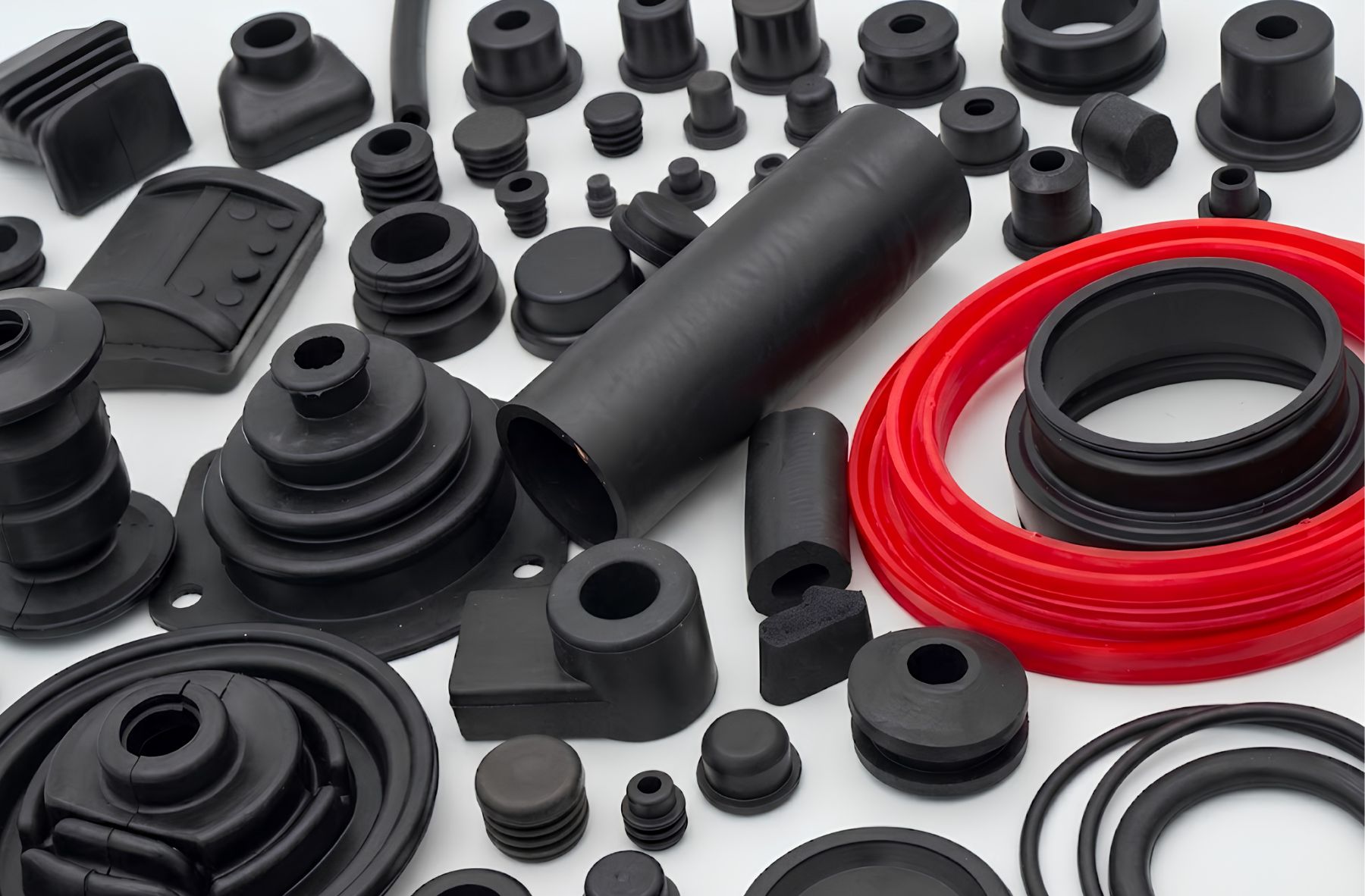
Rubber plays a vital role in the pharmaceuticals industry in multiple applications, from medical devices and drug delivery systems to sealing and packaging medications.
The primary applications of pharmaceutical rubber are maintaining sterility and integrity in drug packaging and delivery. Unlike regular rubber products in domestic and industrial applications, the medical types don’t simply seal containers.

© PeopleImages.com – Yuri A / Shutterstock
Rubber stoppers must completely isolate the medicine to ensure the container remains sterile and prevent any type of contamination from entering.
Common materials used in the medical sector include synthetic rubbers such as silicone and butyl and also natural rubber.
Pharmaceutical packaging
Unlike in industries where secure packaging protects goods against damage in transit and storage, the packaging of pharmaceuticals is vital to the health and wellbeing of patients. If medications are contaminated, this can have a lethal effect on patients.
Rubber caps are essential to keep medicines properly sealed. In particular, they are used to protect the integrity of parenteral drugs, which are those given to patients by means other than orally, such as by infusion or injection.
An integrated packing system for parenteral medications comprises a bottle containing the drugs in a powder or liquid form, sealed with a rubber stopper adhered to the bottle’s neck, with a simple tear-off aluminium covering that secures and wraps the bottle.
Protecting the medication is just one function of the packaging, as it also provides information about the drug including dosage instructions, storage conditions and expiry date.
Medical devices
Rubber mouldings are used for various medical devices including vials, syringes and pumps to ensure accurate dosing, proper sealing and good functionality. They are used for drug delivery systems, such as infusion sets, inhalers and transdermal patches to maintain precise dosing and preserve the medications without contamination.
Rubber tubing is used on a widespread level as a sanitary means of transferring fluids, including blood. The number one choice for flexible hospital products, rubber is used to make the leg straps to attach fluid bags to the body, for example.
It creates components for needles used for injections; blood pressure cuffs; cardiac pacemaker leads; catheters and rubber cords. Medical staff in all departments rely on rubber gloves for hygiene reasons, and the wheels and castors on hospital beds and trolleys have rubber parts.
Biomedical applications
Natural rubber latex is a biocompatible material that can be used to stimulate tissue repair. It can also be used as an occlusive dressing to help wound healing by stimulating cell proliferation and to aid angiogenesis.
NRL is used as an occlusive membrane for guided bone regeneration. An integral part of modern drug release systems, it is used to release medication locally in a controlled and sustained manner.
Types of pharmaceutical rubber
There are two main compounds widely used for pharmaceutical rubber stoppers, providing good elasticity, low gas permeability and strength during the curing processes. This avoids elements being created during curing that could be extracted, altering the drug formulation when in use.
Bromo butyl rubber comprises a halogen bromine element and a butyl elastomer base, with characteristics that include a lower tendency to absorb moisture, making it suitable for any pharmaceutical products that must be freeze dried.
Comprising a chloro-halogen element and a butyl elastomer base, chlorobutyl has a higher resistance to heat. Each compound can be treated by vulcanisation to improve its elasticity, which is vital to ensure the stopper’s efficiency doesn’t deteriorate over time.
Vulcanised rubber can withstand the various sterilisation methods used in medical settings to remove microbial contamination including ethylene oxide, dry heat, electron beams, steam autoclaving and gamma radiation.
Synthetic rubber such as SBR (styrene-butadiene rubber) is commonly used in medical products that need sterilising often, such as syringes.
In addition, FDA-approved silicone sheeting is widely used for medical applications. Silicone rubber materials are regulated by the US Food and Drug Administration to ensure their safety for various uses, including when they come into contact with consumables.
A synthetic rubber, silicone is widely used for medical sealing and packaging and for drug delivery systems. FDA-approved, silicone rubber assures products meet the highest quality and safety standards.
Future of rubber in pharmaceuticals
The use of elastomers in pharmaceuticals isn’t new, as their potential usefulness as components of delivery devices and packaging was recognised soon after the vulcanisation process was discovered in the 19th century.
Processed rubbers’ unique properties including resilience, elasticity, general chemical compatibility and the ability to act as a gas barrier, have been a driving force behind their adoption for many medical applications during the 20th and 21st centuries, in particular as closures for glass vials.
In the future, there will be greater demands on the medical industry due to the world’s ageing population, according to the Global Health and Ageing report, which estimates the number of people aged 65 and older will increase from 771 million to 1.6 billion by 2050.
In the UK, the number of people aged 80 and over is expected to grow from 1.6 million to more than six million by 2050. The large post-war Baby Boomers generation senior citizens and geriatrics will result in twice as many doctors’ visits and hospital admissions by 2030.
To cope with increasing demands; the medical industry must develop, with rubber playing a vital role in providing a cost-effective means of keeping pace with healthcare innovations. Scientists believe the ultimate goal of having broadly applicable, cost-effective and functional pharmaceutical rubber materials has only been partially realised.
Research continues into potential developments and future innovations in rubber compounding, composition, processing and utilisation.