Autumn brings changing conditions that can affect how safely outdoor areas are used. For businesses, the transition into wetter weather is a useful time to review whether paths, entrances, access routes and other external areas remain suitable for employees, customers, visitors and deliveries.
© Coruba
A seasonal review can identify issues that may become more difficult to manage as rainfall increases and daylight hours shorten.
Why autumn creates extra risks
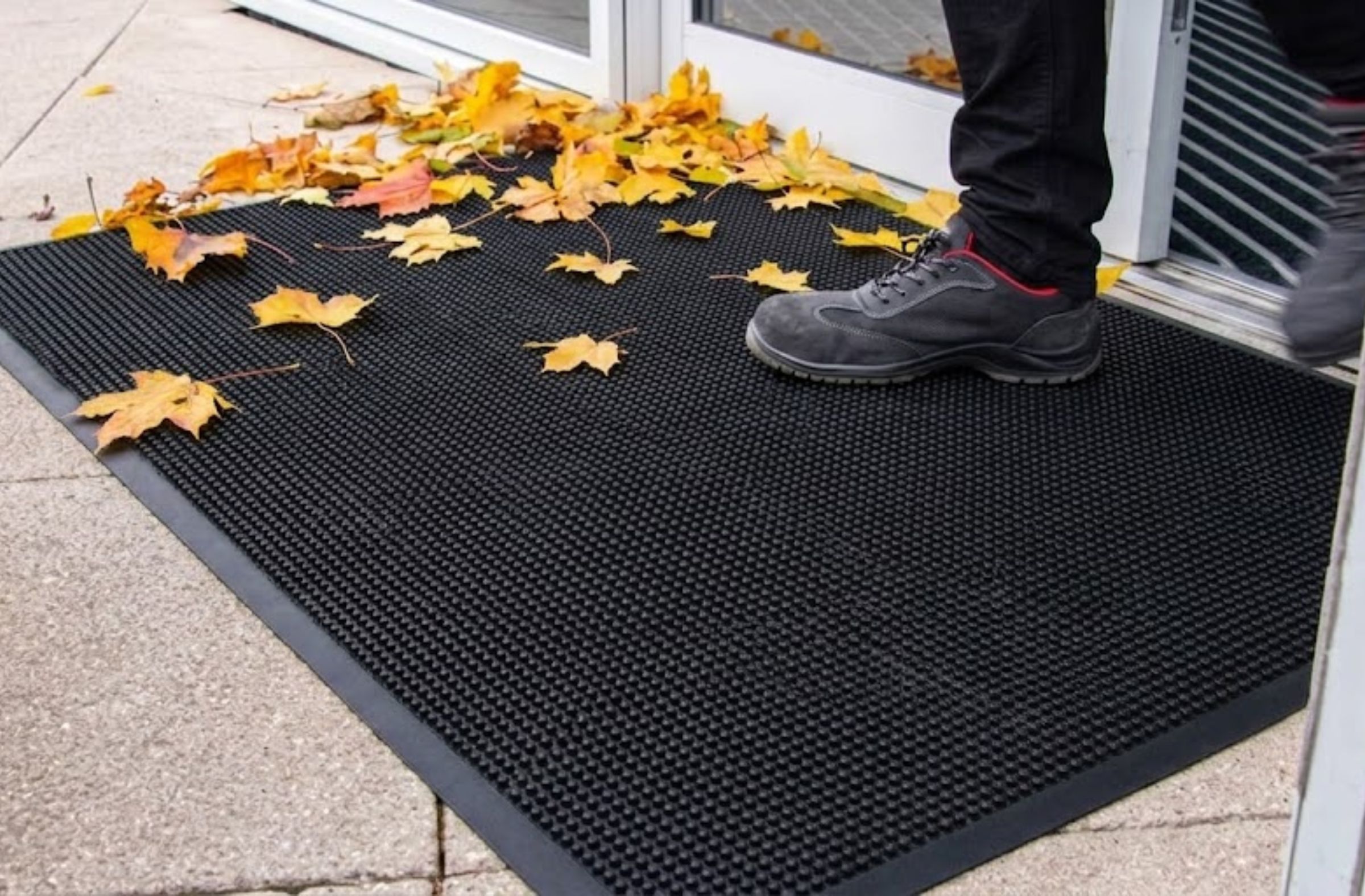
The combination of rainfall, falling leaves and reduced daylight can change conditions across an outdoor site. Wet leaves can create slippery surfaces over paving and tarmac, while also concealing cracks, uneven surfaces and changes in ground level. Non-slip matting can provide additional grip in areas where wet conditions are a recurring concern.
Rain can also turn areas beside grass, flowerbeds or building work into muddy paths. Footwear can then transfer mud onto smoother surfaces, particularly around entrances. Rather than checking only formal walkways, consider how the site is used. Where do staff cut across the car park? Which entrance do delivery drivers use? Where do customers queue? Are there areas beneath trees where leaves collect? These observations can reveal routes or problem areas that may not be obvious from a standard site plan.
HSE guidance also recommends considering puddles, mud patches and lighting when assessing outdoor slip and trip risks.
Keep leaves and debris under control
Leaves, mud, grit and other debris need to be managed as conditions change rather than according to a fixed cleaning schedule alone. Areas affected by strong winds or heavy rainfall may need additional attention. If debris repeatedly appears on a pedestrian route, identify its source and consider whether it can be prevented from reaching the area in the first place.
Good housekeeping is also relevant to legal responsibilities. Under the Occupiers’ Liability Act 1957, businesses have duties relating to the safety of visitors to their premises, and negligence can result in liability where those duties are not met.
Don’t overlook drainage
Check gullies, drains and channels before wetter weather arrives. If water repeatedly collects in one location, investigate the cause rather than relying solely on warning signs.
Standing water can create slippery surfaces, while prolonged saturation may contribute to deterioration of paving, joints and surrounding areas. Downpipes and rainwater discharge points should also be checked: a functioning drainage system will not prevent a problem if water is being discharged directly across a pedestrian route.
Inspect steps and all access routes
Check for loose or cracked paving, potholes, worn surfaces, raised edges and unexpected changes in level. Steps and ramps deserve particular attention because small defects can be harder to identify when surfaces are wet or visibility is poor.
Check that lighting is adequate around entrances, paths, steps and other areas used after dark. HSE guidance recommends keeping mats and floor coverings secure and in good repair, particularly where they could otherwise create an additional trip hazard.
How can outdoor mats help?
Outdoor mats can provide an additional control in areas exposed to rain, mud and debris.
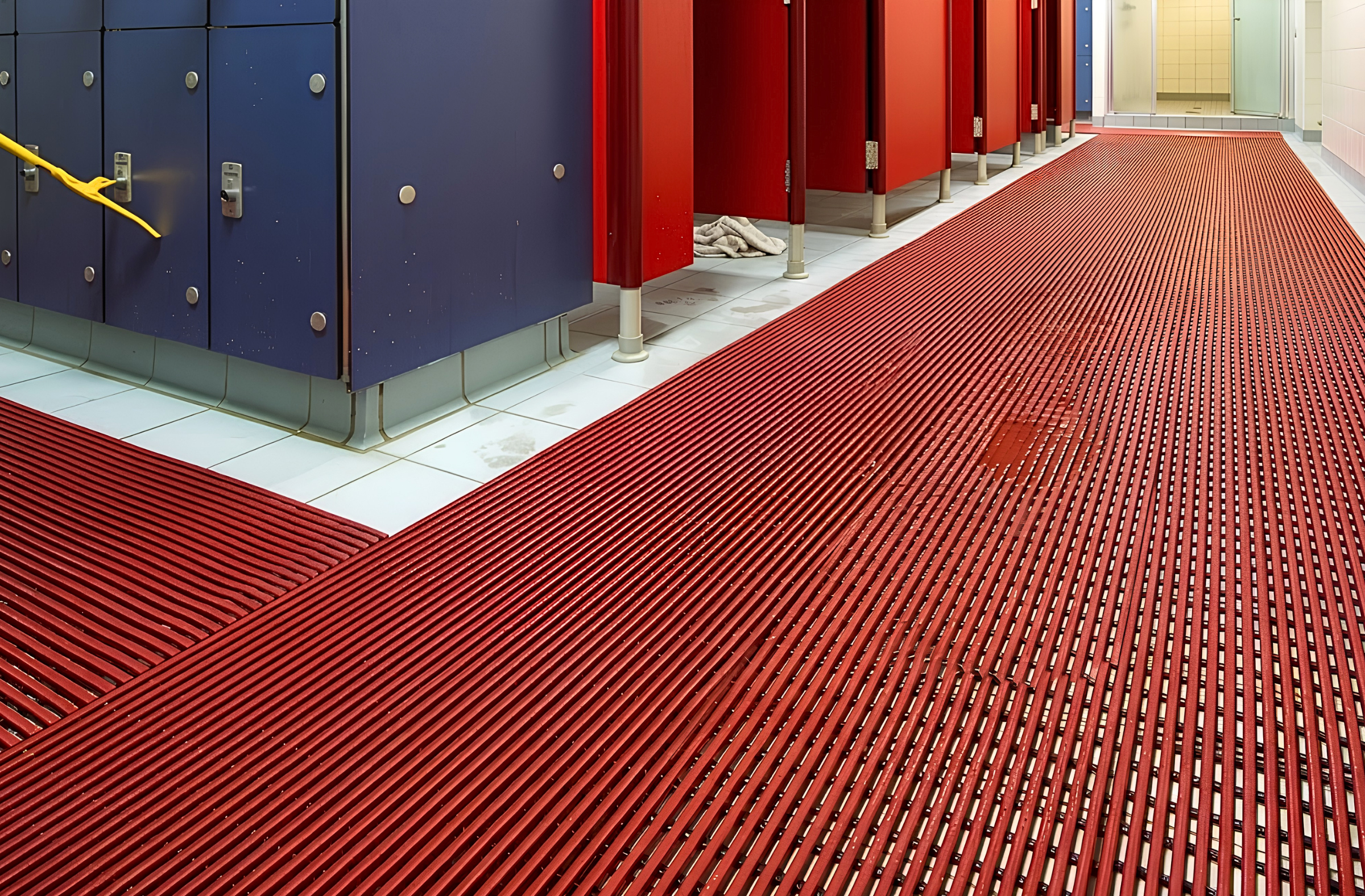
The right mat depends on where it will be used. At an exposed entrance, drainage may be important so that water does not remain trapped beneath footwear. Where people are likely to bring soil indoors, mud matting can help remove contamination before it reaches internal flooring.
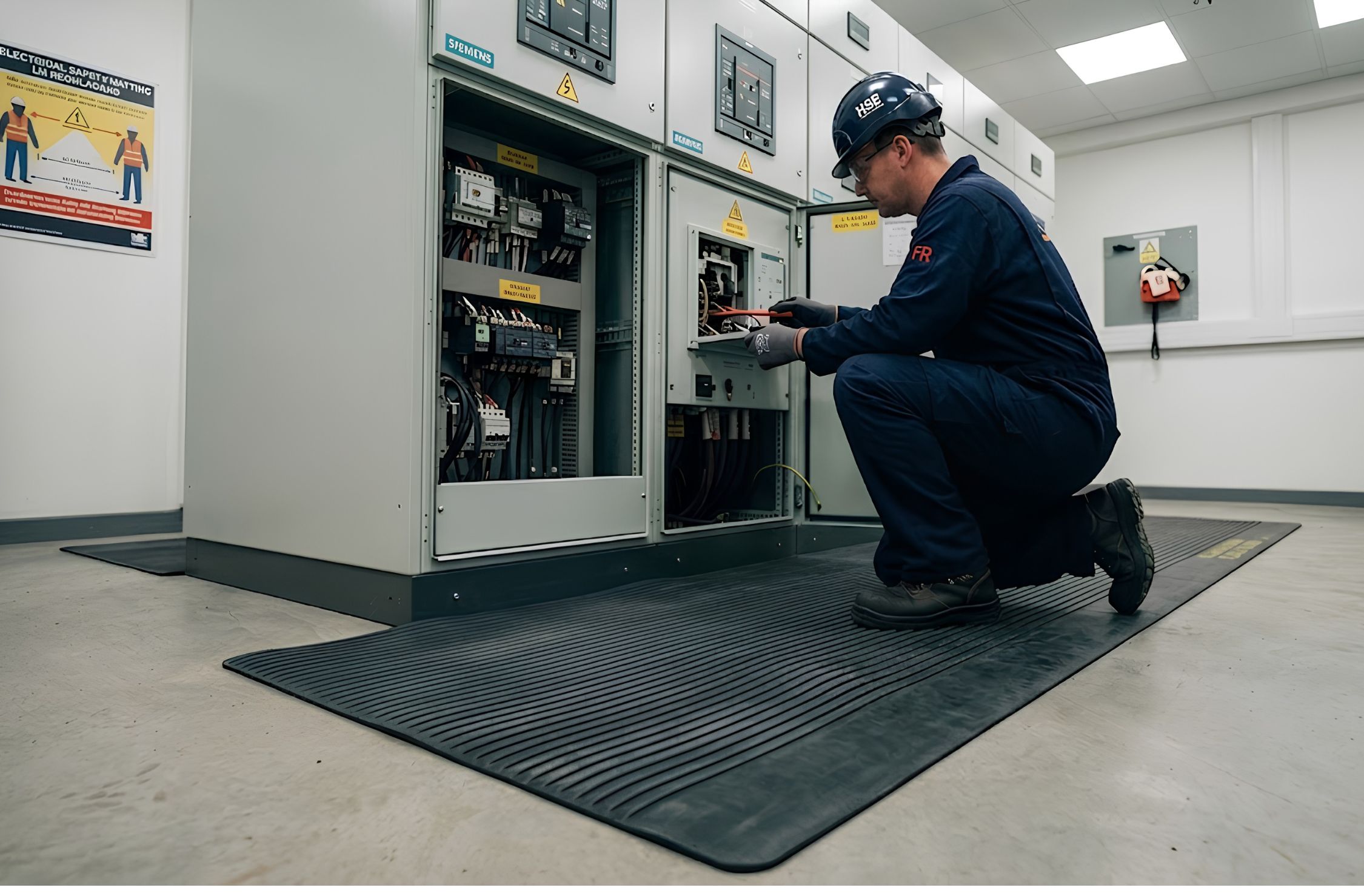
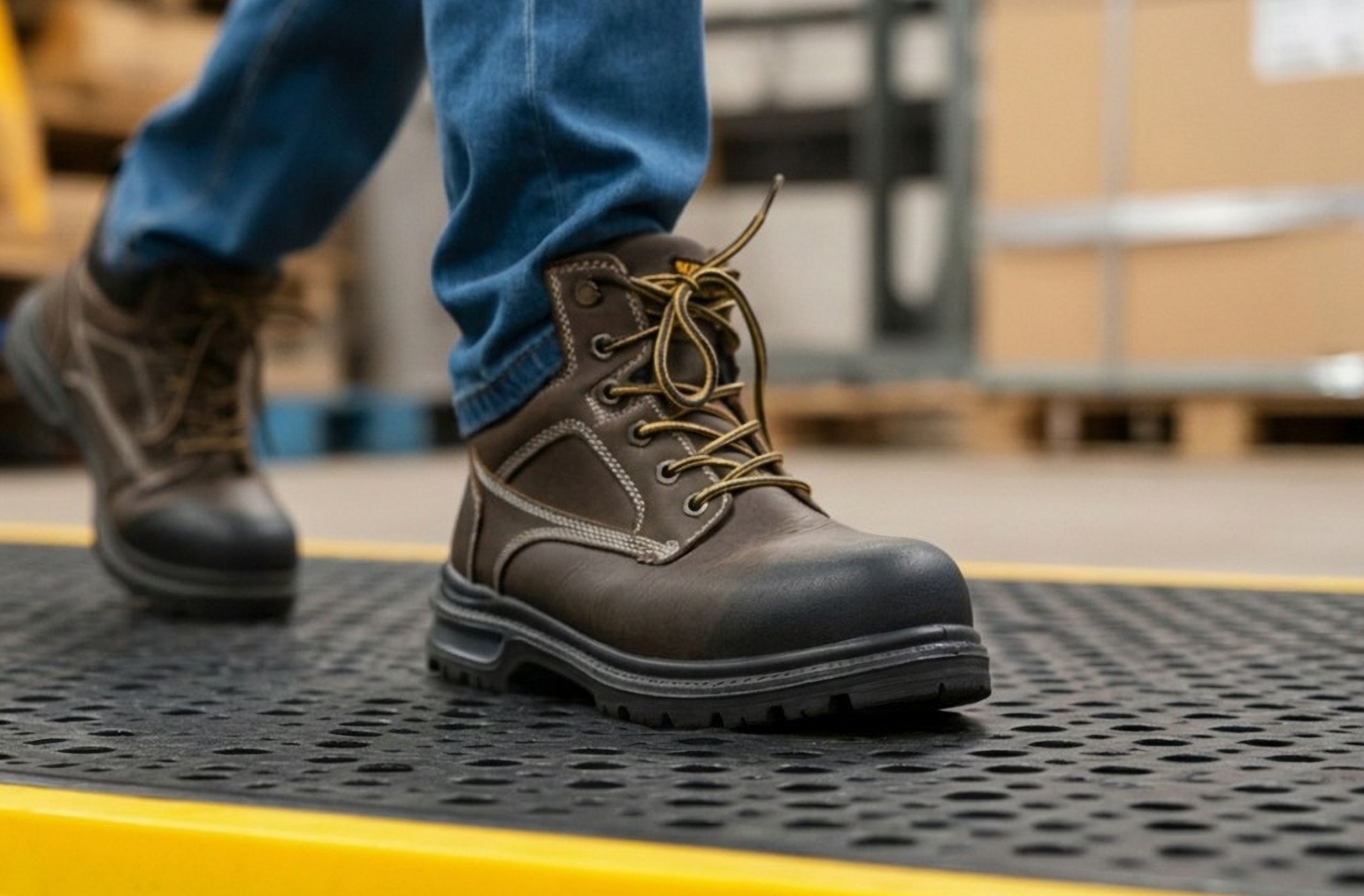
In busy commercial areas, safety matting needs to cope with regular foot traffic while remaining stable and suitable for the conditions. Rubber safety mats can offer a durable option in demanding environments, but factors such as surface profile, construction and drainage still need to suit the application.
Choosing outdoor matting for the conditions
Consider:
- Foot traffic: busy entrances may need a more robust solution than lightly used doorways.
- Exposure: fully exposed areas have different requirements from covered walkways.
- Contamination: mud, oil and other substances may require different matting characteristics.
- Cleaning: consider how easily the mat can be removed and maintained.
- Stability: the mat should remain secure when walked over with wet footwear.
- Floor condition: uneven surfaces can affect how securely a mat sits.
Most importantly, matting should not introduce a new trip hazard. HSE guidance recommends ensuring mats are secure and free from curling edges.
Importance of entrance matting
Entrance matting has a specific role in managing the transition between external and internal areas. It can help remove moisture and debris from footwear before it reaches the main floor.
Coverage is important. A small mat immediately inside a doorway may be insufficient in a busy premises, particularly where several people enter at once. Where space allows, a suitably sized entrance system can provide more opportunity for moisture and debris to be removed.
Matting also needs maintaining. Once it becomes heavily soiled or saturated, its performance can be affected, so cleaning and inspection should form part of the normal maintenance routine.
Ongoing site management
Seasonal preparation should not be a one-off exercise. Conditions can change quickly following heavy rain, high winds or other weather events, so recurring problem areas should be recorded as part of normal site management.
Where the same issue keeps appearing, investigate whether a more permanent change is appropriate. This might involve altering drainage, repairing a surface, changing an access route or reviewing the suitability of existing matting.
The cost to UK businesses
Slips trips and falls at work can result in injury, lost working time and disruption, making prevention relevant throughout the year rather than only during autumn.
HSE reports that slips and trips cost UK employers approximately £512 million each year through lost production and other costs. Its guidance identifies measures such as suitable flooring, effective matting and appropriate maintenance as part of managing slip and trip risks.
The financial impact reinforces the value of identifying hazards before they result in an incident.