Choosing the right swimming pool matting involves more than finding a surface with good grip underfoot. In a busy leisure environment, matting must cope with water exposure, heavy footfall, chemicals and everyday wear.
© Coruba
Around poolside areas, constant splashing and standing water on poorly drained or unsuitable flooring can create a slipping hazard. Contamination can also be an issue, with soap residue, biofilms and small amounts of algae making surfaces particularly slick.
Although the leisure centre entrance, swimming pool changing room, poolside walkway and showers may all experience wet conditions, they don’t necessarily need the same solution.
Consider how the area is used
When choosing mats for wet areas, consider whether users will be barefoot, how much water the area receives and whether the matting will be permanently installed or regularly lifted. For example, a lightweight mat is convenient to move but may not provide enough stability in a busy commercial environment.
Drainage is as important as grip
Anti slip flooring is an important part of managing wet floor hazards, but a mat that performs well in dry conditions may not provide the same level of protection when exposed to water, soap or other contaminants.
The Health and Safety Executive uses the Pendulum Test Value when assessing slip potential. As a general guide, a wet PTV of 36 or above represents a low risk of slips. The suitability of a product should always be assessed in relation to its intended environment, rather than relying on the figure alone.
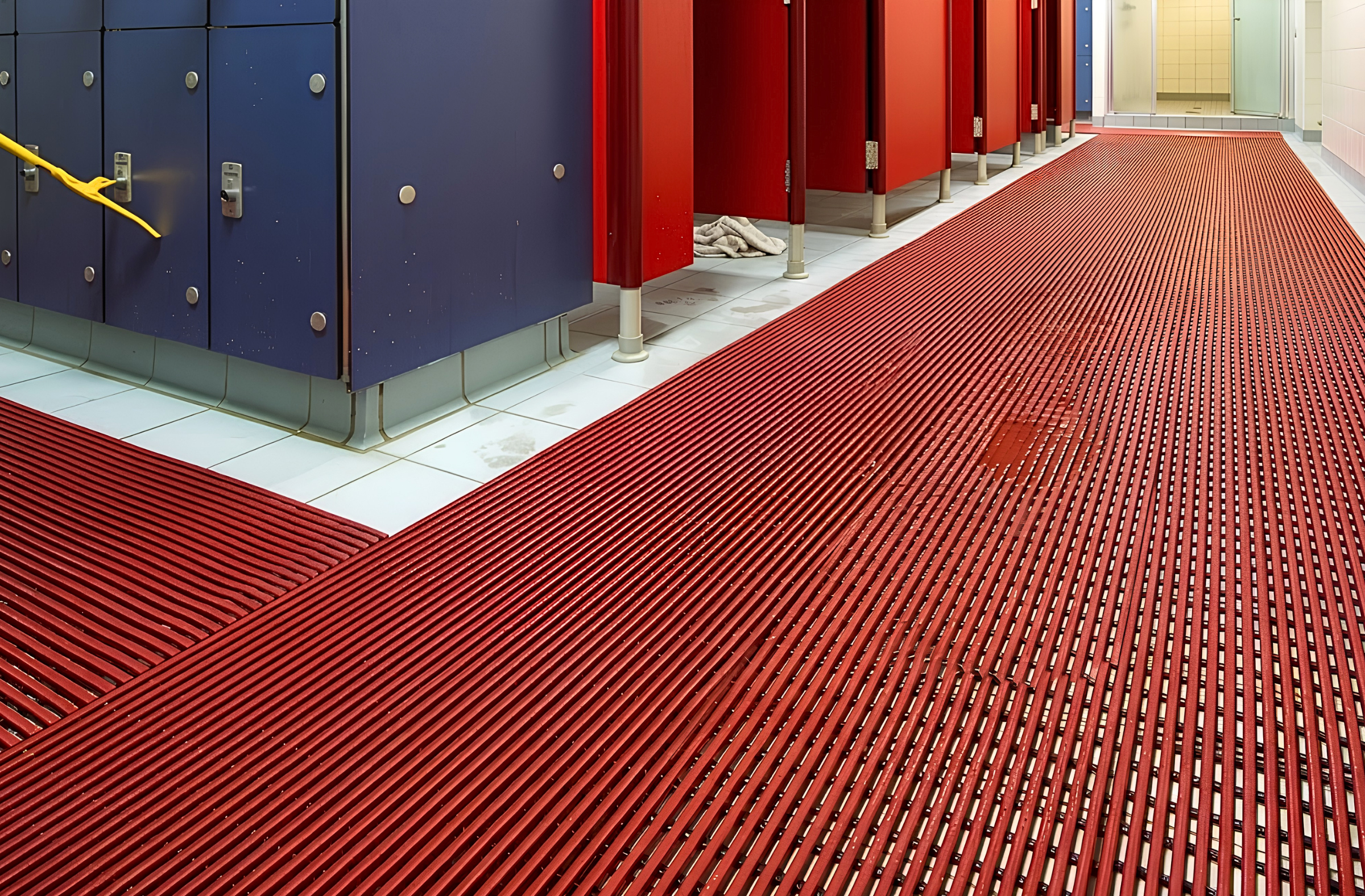
Effective drainage is equally important because it allows water to pass through the surface. This is where drainage mats offer a practical advantage. Open-grid or perforated matting allows water to pass through the surface rather than remaining stagnant underfoot.
Hygiene: a big part of the decision
Wet leisure environments require regular cleaning because moisture, skin particles, hair, dirt and cleaning residues can accumulate quickly. Matting with complicated profiles or inaccessible areas can be more difficult to keep hygienic.
When comparing pool flooring options, consider how easily the mat can be removed, rinsed and maintained. Permanently installed matting should also allow for thorough access underneath. The manufacturer’s recommendations should always be followed. Using inappropriate chemicals or excessively aggressive cleaning methods could damage the material and reduce its performance.
Think comfort as well as safety
Pool users are often barefoot, so comfort can make a noticeable difference. A hard tiled surface may be functional, but it can be less comfortable for prolonged standing, particularly in queues or around busy pool areas.
Good poolside flooring needs to balance grip with underfoot comfort. This is particularly relevant for employees who may spend considerably more time working around wet areas.
Durability matters in busy areas
The amount of traffic a mat receives should influence your choice. A small spa will have relatively light footfall compared with a large leisure centre operating from early morning until late evening.
Look at the thickness, construction and material of the matting and consider whether it’s designed for commercial use. Chemical exposure is another consideration, so check that the selected material is suitable for water-treatment chemicals and the products used to maintain the facility. Outdoor applications, exposure to sunlight and changing temperatures should also be allowed for. A material that performs well indoors may not be the best choice for an exposed area.
Maintenance requirements
Even the best slip resistant flooring requires regular maintenance. Matting should be inspected routinely for movement, cracking, worn areas, damaged edges or changes in surface texture. Any deterioration that could affect stability or grip should be addressed promptly.
A curled or shifted mat can create a trip hazard, meaning a product installed to improve poolside safety could introduce a risk.
Don’t choose on price alone
A mat that wears quickly or fails to cope with the environment can result in additional replacement and labour costs. Consider the expected lifespan, environmental suitability, upkeep requirements and ease of replacement. A more expensive product that performs consistently may offer better value over its working life.
Speak directly with the supplier if you’re unsure which product is appropriate. Providing details about the location, expected footfall, water exposure and cleaning routine can help ensure the specification is based on the conditions it will face.
Making the right choices
For businesses reviewing their wet-area requirements, Coruba’s range of wet-area matting solutions offers options for balancing drainage, grip, durability and day-to-day practicality.