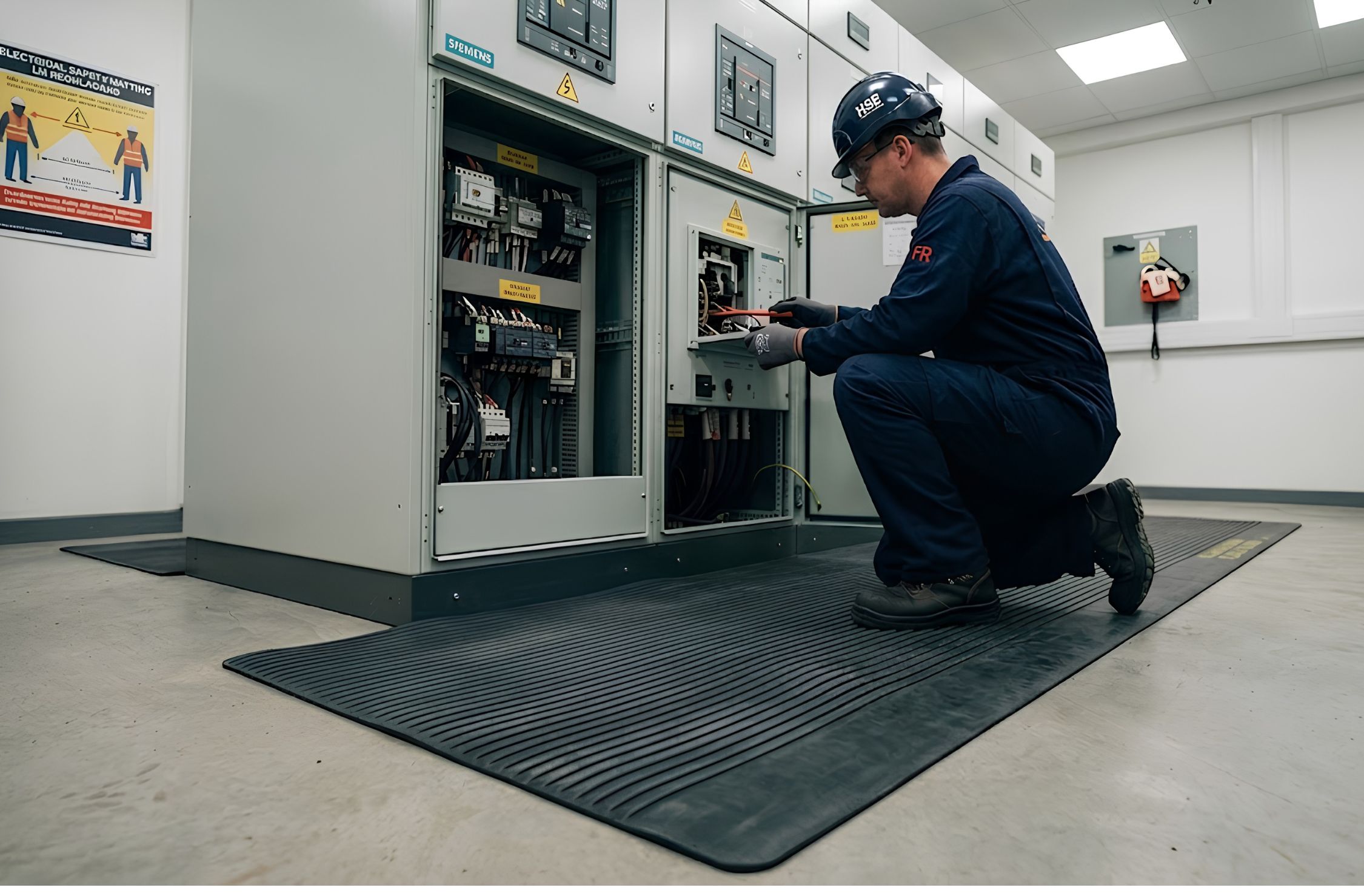
Workplace electrical safety is crucial for every employer, as failing to follow the law can result in serious injuries and even death.
Every year, around 1,000 workplace accidents involving electric shocks or burns are reported to the Health and Safety Executive. Tragically, these include around 30 employee fatalities every year. You might be surprised to learn that the majority are caused due to contact with overhead or underground cables.

© WUT.ANUNAI / Shutterstock
Even non-fatal shocks can cause severe and life-changing injuries. Not only are employees who are working with electricity at risk of injury, but poor electrical installations can also cause fires, endangering the whole workplace and staff.
This is why electrical safety is vital, no matter what industry you work in. Any employer who fails to take action to protect their staff may be found liable by law if there’s an accident.
What injuries can workplace electrical hazards cause?
Various types of injuries can arise from workplace electrical accidents, putting employees at serious risk. One of the most dangerous is electrocution, which can be fatal. If workplace electrical equipment is installed poorly, there’s a real risk of electrocution.
Burns caused by an electrical fault can be equally serious and even life changing. They can potentially cause an extremely serious disfigurement.
Injuries from electrical burns commonly occur on the hands and feet, where the current enters and leaves the body. If they are particularly severe, this can impact the victim’s ability to work in the future.
An electric shock can occur if wiring or electrical equipment isn’t grounded properly. A shock can happen suddenly if a person makes direct contact with faulty wiring or sockets, for example.
A secondary injury is common in the event of an electrical accident. If an employee working at height receives an electric shock, it is likely they will suffer a fall, potentially from a ladder or roof.
Electrical safety facts
While all live electrical equipment is dangerous, usually, it’s the high voltage items that can prove fatal. While employees must take care around all live equipment, there are greater hazards around HV equipment.
Electrical safety PPE is made for all voltage areas, as even the small voltage areas present risks. Never underestimate the danger from any electrical source – even components with a low voltage of 50v can prove fatal.
In the UK, there are around 19,000 fires on business premises every year, with around 33% being electrical fires. According to the fire service, these are often due to electrical faults, or employees misusing electrical equipment. This may be due to a lack of training.
The fire service says employers must take responsibility, by law, for ensuring all electrical equipment is installed and used correctly. It must be professionally maintained on a regular basis, whether it is leased, or owned by the company.
The relevant laws applying to electrical hazards in the workplace are primarily the Electricity at Work Regulations 1989 and the Health and Safety at Work Act 1974.
Why use electrical safety matting?
To combat the risks, businesses use electrical insulation mats in workplaces.
One of the most serious and potentially fatal encounters with electricity in the workplace is a static discharge. This is where an electrical rubber mat could save lives, avoiding the occupational injuries caused as a result of an accident, or by failing to adhere to electrical safety procedures.
Companies must determine the type of electrical insulation mats they need by carrying out a risk assessment and then draw up a plan accordingly. A qualified electrician must be employed to ensure the installations and safety procedures have been completed to a suitable standard. The employer must provide enough sockets to reduce the risk of overloading.
The workplace must be safe for employees, contractors, visitors, the public and anyone else who may be on the premises at any time.
The employer must also make everyone aware of the dangers of electricity in the workplace. Educating employees to avoid risks is the recognised approach to electrical safety.
Employers should also carry out regular portable appliance testing (PAT) of all electrical items within the workplace. An electrician should test equipment such as computers, printers, kettles and all other electrical items to ensure they remain safe to use.