The hospitality sector faces many winter safety challenges caused by cold and wet weather, including a greater risk of employees and customers slipping and falling on wet floors.
Nine out of ten major slips in the workplace cause injuries, including broken bones, according to watchdog the Health and Safety Executive.

© Southworks / Shutterstock
Slips, trips and falls are the most common cause of employee injuries in the UK, with 20% of staff who have fallen needing at least three days off work to recover. This costs employers £512 million a year in lost production, and teams may be less efficient due to being short-staffed.
In addition, slipping accounts for half of all reported accidents suffered by members of the public in various settings, including restaurants and pubs. Consequently, businesses are choosing rubber safety mats to reduce the risk of accidents at this time of year.
What are the main winter challenges in hospitality?
Typical winter conditions such as rain and ice increase slip-and-fall risks, as guests walk moisture inside, creating slippery surfaces in high-traffic areas.
Slips and trips are more likely in certain sectors including catering, food and drink, hospitality, retail and cleaning. According to the HSE, they often lead to serious injuries like dislocations and broken bones, requiring victims to take more than seven days off work to recuperate. Each workplace injury in the UK costs the company an average of £7,400 in sickness absence, lost productivity and compensation for the injured party.
Companies aiming to minimise the risks of people slipping on wet floors are choosing non-slip mats to improve safety. Anti-slip matting is particularly effective in the hospitality sector during winter. As well as offering natural slip resistance, it provides durability in cold and wet conditions and won’t become worn, even in areas of heavy footfall such as entrances, kitchens, bar areas and walkways.
It’s also advisable to provide winter safety tips for employees as part of a health and safety at work course to further minimise accident risks.
In addition, rubber matting with anti-fatigue properties can help staff who are on their feet all day to remain comfortable and reduce aches and pains. Health issues associated with hospitality workers who are standing a lot can include general muscular fatigue, swollen legs, varicose veins, lower back pain and stiff shoulders and neck.
According to studies, anti-fatigue matting can reduce pain in the lower back by up to 50% compared with standing on a hard floor, as it keeps the muscles engaged, promotes blood flow and helps your body to “balance the load” more evenly.
What are the key areas where matting is essential?
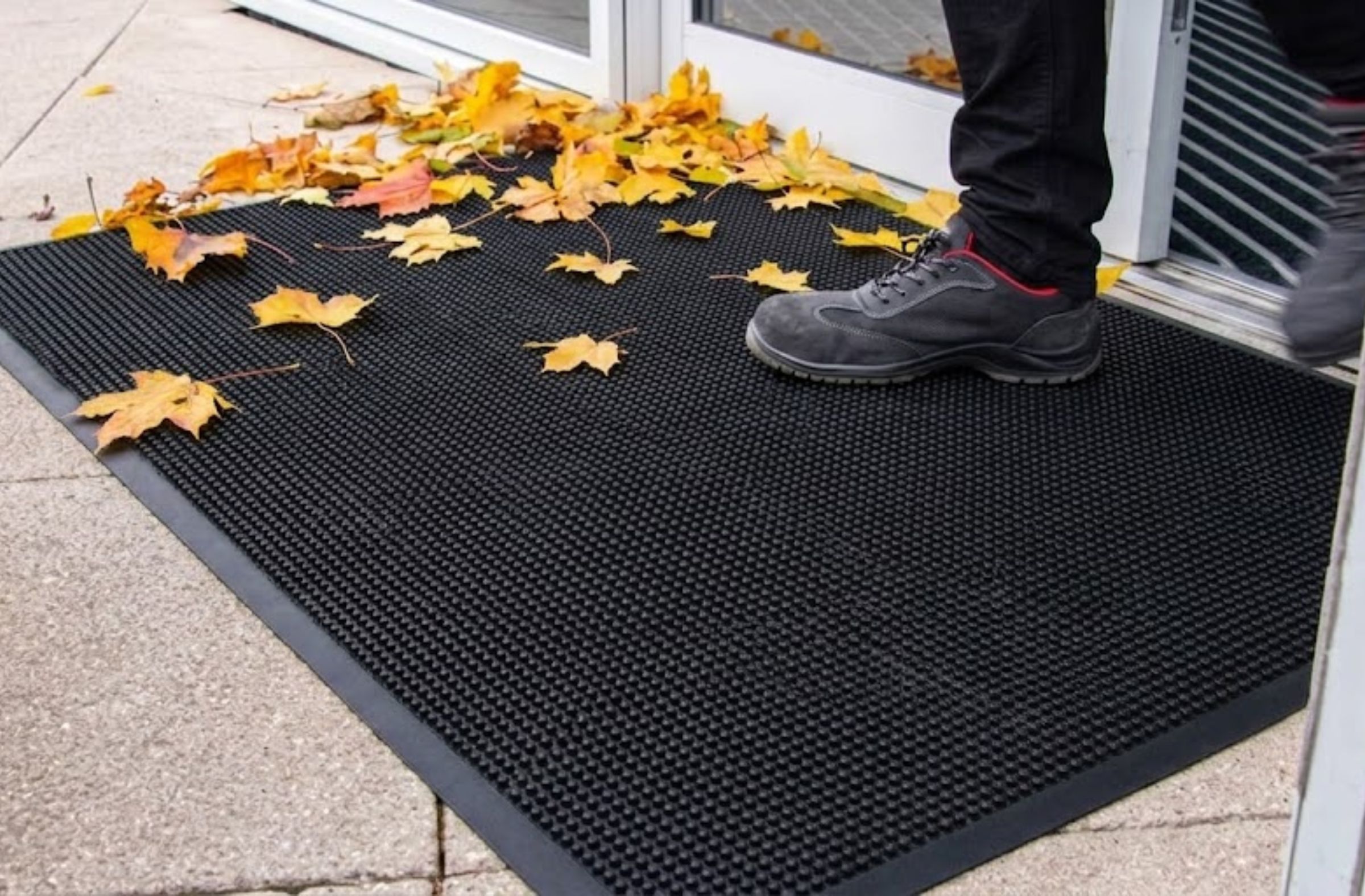
Hotel entrance mats are a must in winter, as it’s easy to walk rainwater into the foyer, which can be lethal if someone slips. According to the HSE, one of the biggest issues is businesses not taking the risks seriously. Placing a rubber safety mat in the entrance to a hotel can make all the difference, as it will help to keep the interior floors cleaner and more slip-resistant. While falls can happen just about anywhere including the foyer, stairs, kitchen and other back-of-house areas, the worst thing that can happen is for a guest or staff member to slip and fall the moment they walk in.
A poll of 1,000 adults were asked how they would feel if a slip-and-fall accident occurred at a restaurant where they were dining. One-third said it would give them a negative impression of the business and may influence their decision whether to go there again or not, according to the study by Harris Interactive on behalf of Cintas Corporation.
Other areas where rubber matting is crucial include food and drink preparation areas, which can be slippery due to spills on the floor. Installing restaurant, bar and kitchen matting for hospitality businesses enhances employee safety and comfort.
More than 4,700 accidents occur every year in UK commercial kitchens, the majority of which are falls due to wet or slippery floors. This equates to 13 injuries every day, although in reality, the number could be higher, as minor injuries aren’t always reported.
How do you maintain rubber mats?
When you work in the food sector, it’s vital to comply with health and safety regulations. During the winter season, as with any other time of year, cleaning rubber mats regularly to remove dirt and debris is a must. A rubber floor, with its easy-to-clean surface, is ideal for commercial kitchens. Mop or wipe up food and drink spills as soon as they occur to prevent hygiene issues.
Minimising the risk of slips and trips is particularly important in a workspace where staff are carrying dangerous objects, such as hot dishes and sharp knives. The key benefits of rubber kitchen mats include their durability, slip-resistance and easy installation. They are also oil, water and chemical-resistant and shock-absorbent.
Inspect rubber mats for wear on a regular basis to ensure their slip-resistance properties haven’t declined. The lifespan of a rubber mat varies, depending on its type and use, but you can extend their life by washing them daily to prevent grease and dirt build-up.
The outcome of a claim depends on whether an accident was caused by a company’s negligence. According to the Legal Expert website, if wet weather has resulted in a large amount of water gathering in the entrance to a building and anti-slip matting isn’t installed, this might be classed as negligence.