A review of the UK’s water industry has concluded that improving the national infrastructure to meet climate goals and increase economic growth is affordable and achievable.
The National Infrastructure Commission’s second five-yearly review has set out a long-term timetable to transform Britain’s water, energy and other vital networks.

© Britain from Above / Shutterstock
According to the organisation’s National Infrastructure Assessment, it’s crucial that the relevant policy steps are introduced now to ensure the water industry can meet future sustainability goals.
The major challenge is how to ensure our supply of water in the UK keeps up with demand.
Water industry challenges
The report recommends that “significant” private and public investment is needed to improve the UK’s water infrastructure and ensure it meets “climate obligations”. This encompasses “enhancing the natural environment” and “improving the resilience” of the infrastructure.
In short, this means increasing the water supply, while also reducing demand by encouraging people to save water. In addition, the report says the UK must tackle pollution.
In order for the programme of improvements to meet their goal, the NIC says investment from the private sector must increase to £12 billion a year between 2025 and 2030. This is a big ask, even though investment in the water industry has increased since it was privatised in 1989. After a dramatic rise during the 1990s, subsequently the amount has levelled off.
The total annual investment has been around £10 billion a year since 2000, according to data from watchdog Ofwat.
The report estimates that if investment of £12 billion per annum can be achieved between now and 2030, the amount can then decrease to £8 billion a year until 2050 to remain on track.
Currently, on average, around £6 billion a year is spent on wastewater assets including equipment, buildings and technology. The remainder is ploughed into different types of investments, including modern innovations to create environmentally friendly and sustainable solutions.
What sustainability solutions have been suggested?
The NIC suggests the water supply shortage should be reduced by preventing leakage in the current system and increasing the infrastructure. In addition, it suggests launching mandatory water metering to encourage people to use less water in general.
A further step could be providing devolved funding for local councils to develop joint flood risk plans with other relevant organisations. This would include a data sharing system to protect more properties.
The NIC is calling for a stable long-term investment programme for the next 30 years in both sea and river flood risk management to reduce the number of at-risk properties. However, the report stresses that the only way to achieve these goals is to set out a plan now and stick to it. This would inspire confidence and trust in investors and build greater supply chains.
The government is also being urged to provide clear guidance on the nation’s priorities, the need for investment and the potential business models to match the developing technologies.
Water companies provide wastewater services and drinking water to more than 50 million people in England and Wales alone. The resulting sewage network is so long that if straightened out, it would circumnavigate the earth thirteen times.
The population is steadily increasing and Ofwat has realised the “urgent and undeniable challenges” faced by the water industry. Due to the changing climate, water chiefs say it’s “critical” that everyone, including the general public, works together to ensure sustainable water management.
Preventing contamination
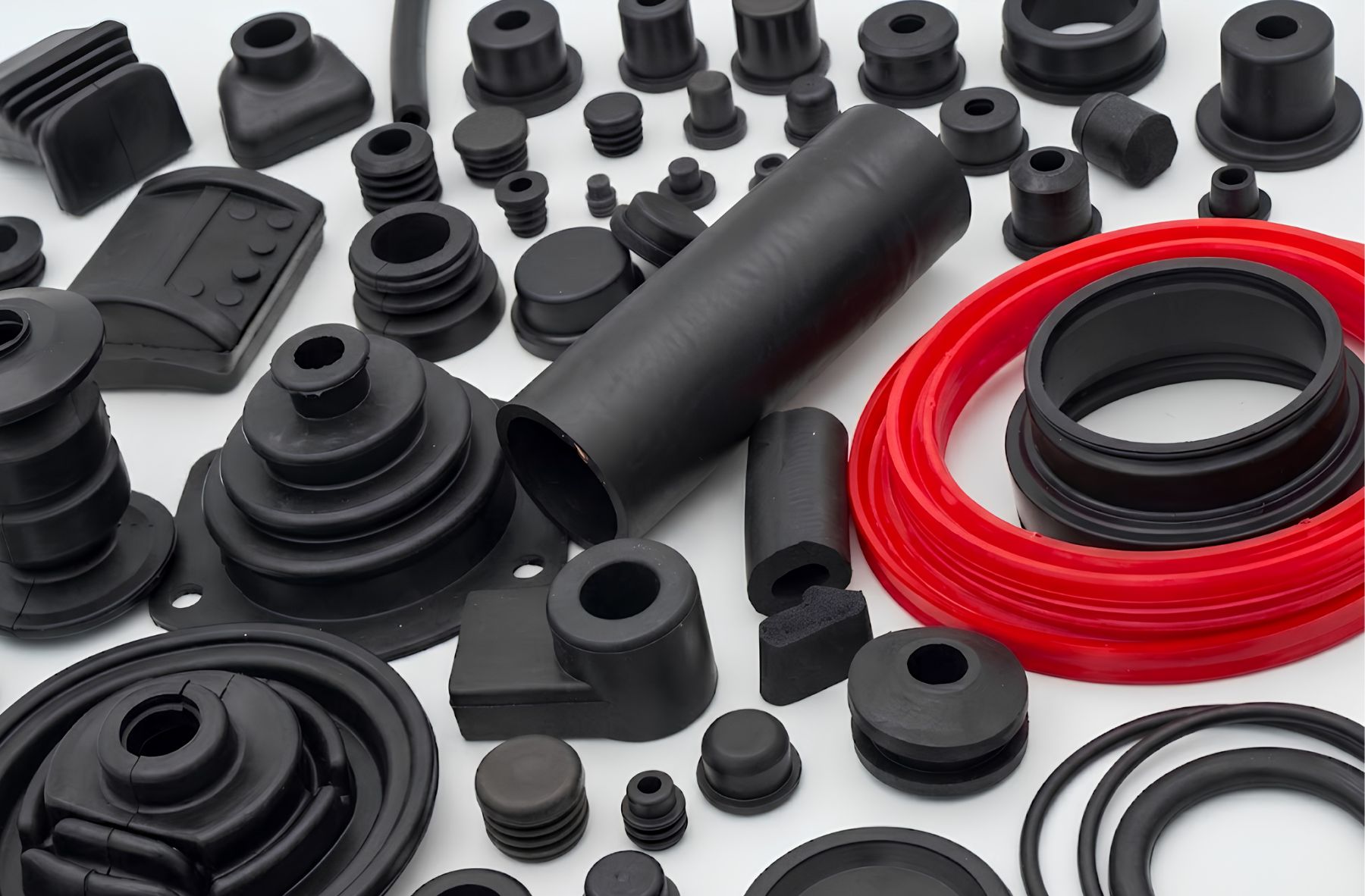
The rubber manufacturing sector works closely with the water and wastewater processing industry to prevent contamination. Rubber sheeting material that is KTW and WRAS approved can be used with potable water up to 23°C to suit the water industry’s bespoke requirements.
For applications in the wastewater processing industry, Viton is the ideal choice due to its excellent chemical and abrasion resistance.
Scientific research is looking to develop new ways of disposing of rubber processing wastewater in a more environmentally friendly and cost-effective way. A report published by Water Science and Technology detailed the success of tests using Pseudomonas species bacteria and Moringa Oleifera stem bark to treat the effluent.
A study revealed that both agents effectively reduced most of the toxins below safe discharge limits. Early indications were that Moringa Oleifera stem bark was best at biodegrading the waste materials.
The combined efforts to make the water industry sustainable could have a positive impact on householders if the relevant degree of private investment is received. The NIC estimates that the average household will save around £1,000 annually on water bills by the mid-2030s compared with today.
Ofwat is also calling on UK water companies to reduce their greenhouse gas emissions and align their environmental goals to the national net zero targets. Its Innovation Fund recognises new and innovative methods of working that go above and beyond usual practices in the water industry.
To date, it has awarded more than £105 million funding to 77 projects which have focused on collaboration between companies in the water sector and other organisations. These have included tech companies, retailers, universities and institutes, charities, startups and small businesses.
The award-winners have created initiatives to tackle environmental issues including preventing water leaks, reducing greenhouse gas emissions and monitoring pollution in local rivers.
Some water companies have introduced new state-of-the-art technology to combat climate change themselves such as sensors, drones, advanced reservoir systems, satellites and more, according to Ofwat.