Emphasising the importance of the sector in both financial and practical terms, the market value of the UK water industry is set to rocket to £401.47 billion by 2029, according to projections from economists.
© SpiritArt / Shutterstock
The UK uses an estimated 14 billion litres of water every day, which equates to around 150 litres per person. The industry provides water for commercial and domestic customers; maintains and improves wastewater treatment plants; operates hundreds of pumping stations; and manages more than 400,000 miles of pipes connecting 50 million properties across a large area. Its priorities are ensuring a safe and secure water supply and protecting public health, so maintaining the infrastructure efficiently is the key to meeting these objectives.
Life before the water industry
Having clean running water on tap is something we take for granted today, with most people not giving it a second thought. However, having access to fresh water was something reserved for the wealthy in years gone by, and it wasn’t until the 19th century that a hygienic system for everyone began to evolve.
Prior to the 1600s, residents collected water from springs, wells, rivers, fountains and pumps. Channels called conduits also carried water from springs to various locations, with historic maps of London showing the Standard and Cheapside Conduit during playwright William Shakespeare’s lifetime in the late 1500s.
Many residents traditionally relied on springs at the side of the River Thames, or collected rainwater in their own yard, for drinking and bathing. The laborious task of walking to collect buckets of water and carrying them home was something poorer communities took for granted. The wealthy often employed professional water carriers known as “cobs” to deliver their supply.
Without flushing toilets or a sewage disposal system, disease was rife, as many people used chamber pots that were emptied into the streets, or dumped waste in cesspits, which were unhygienic and had an unpleasant odour. Disease was rife, as the waste found its way back to the Thames and into streams that supplied drinking water, with the consequent pollution causing cholera.
First water supply system
Respective governments did little to alleviate the problems, but Welsh entrepreneur Sir Hugh Myddelton, a mine-owner, banker and engineer, saw a viable business opportunity. With the backing of King James I, he built a 30-mile canal stretching from Hertfordshire to Islington to supply fresh water to Londoners from the River Lea. Miles of pipes constructed from elm tree trunks were used to serve the New River, which opened in 1613. However, only rich residents who could afford the subscription fee had smaller lead pipes and a cistern provided for their homes, where the water was available for only a few hours each day.
The availability of running water led to the first flushing toilets in the late 18th century, when well-to-do households no longer suffered the indignity of using the chamber pot. Scottish inventor Alexander Cumming was granted the first UK patent for a flushing toilet in 1775.
By the early 19th century, London’s growing population was putting a strain on the steam pumps used to supply water, with the geographical range of the supply being relatively small. New high-pressure iron pipes replaced the old wooden ones, bringing water into more properties than ever before.
Finally, in the early 20th century, more water supply companies began to spring up all over the country, with the government viewing clean fresh water as being a fundamental right for everyone, no matter what their social status. In London, the old wooden pipes were simply buried under subsequent developments, although some were dug out and retained by collectors, including one that went on display in the capital’s Museum of the Home as a relic of bygone times.
Types of rubber components
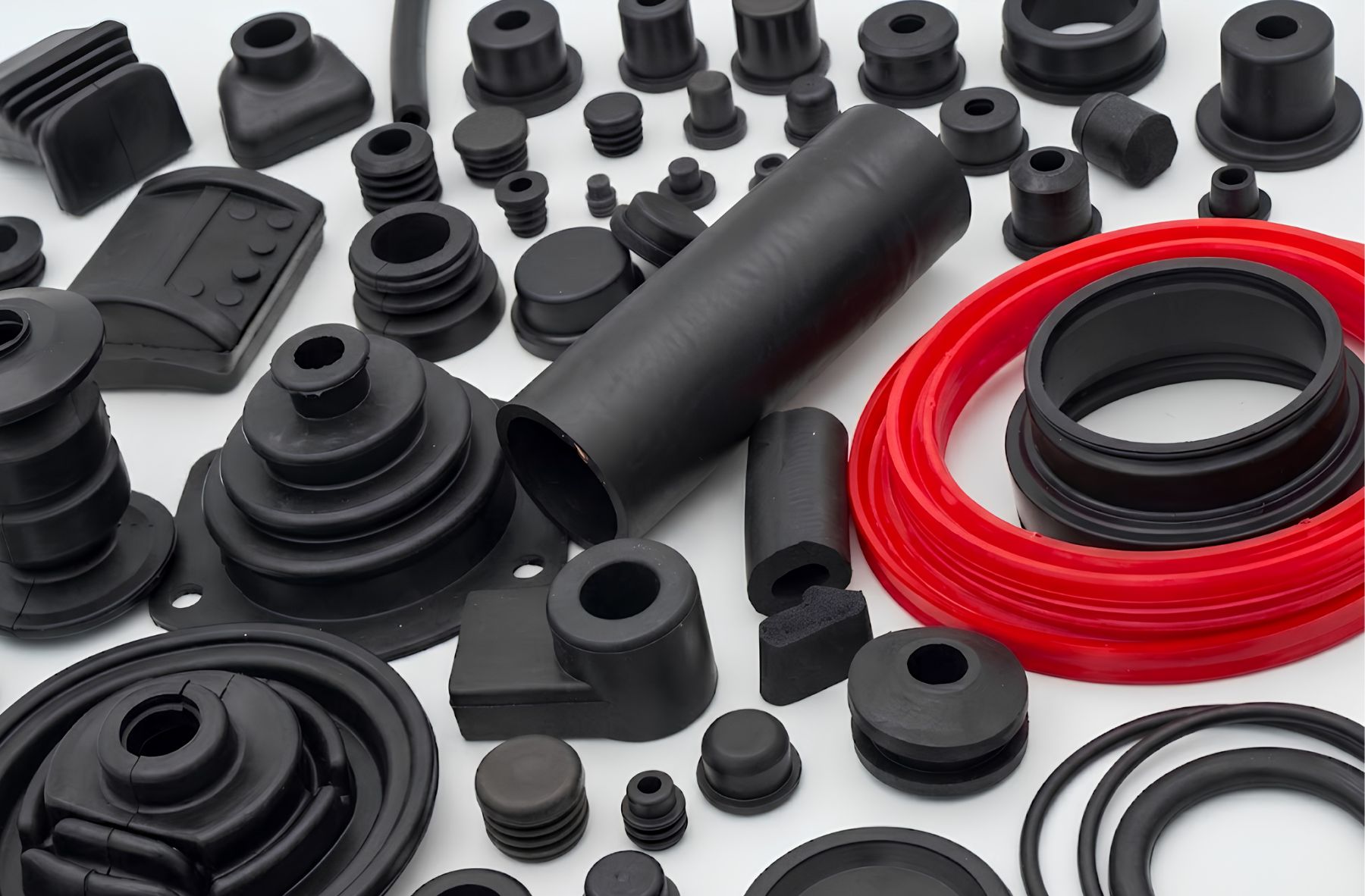
Rubber is central to the effective functioning of the water infrastructure, as its key properties of flexibility, durability and resistance to corrosion and chemicals contribute to the longevity of treatment and distribution systems. It helps maintain functionality, minimising wear and tear; rubber seals play a vital role for residential and commercial sectors. Other common uses include gaskets, sheeting, expansion joints, hoses and protective linings for pipes and tanks. Components can also include diffuser membranes, manhole connector boots, pipe seals, check valves and expansion tank diaphragms.
Rubber gaskets used in pipelines are commonly made of EPDM, which is a safe choice for potable water applications, as it’s resistant to temperature fluctuations, various chemicals and UV exposure, so can be used for hot and cold water lines. Other rubber materials that can be used in water system applications, depending on the conditions, include Neoprene, which can be used for potable water systems, particularly where chloramine resistance is required.
Compliance with regulations
Rubber used in the water industry in the UK, such as in wastewater systems, must meet stringent safety standards under the Water Regulations Advisory Scheme. The safety regulatory board approves only products that comply with their requirements, such as Coruba’s EPDM and Silicone rubber sheets, both of which can be used in gaskets and seals that come into contact with potable drinking water. The gaskets can be used safely for faucet pipes, drinking fountains and many more applications.
WRAS testing in the UK is carried out at the WRC-NSF laboratory, covering all water fittings, plumbing systems and equipment that comes into contact with the public water supply. In Britain, it’s illegal to install a rubber product that isn’t WRAS compliant.
Challenges in the water industry
Rubber components that are in constant contact with water need to be durable enough to withstand harsh conditions, high water pressures and extreme temperatures. These challenges are mitigated by choosing the right rubber formulations and designs tailored to each application. With reliable resistance to corrosion, this contributes to the longevity of water systems by preventing the degradation of metal components, which would deteriorate far quicker if left unprotected.
Latest water projects
One of the biggest current projects in the UK is upgrading the 1950s Haweswater aqueduct, a huge water pipe running from the Lake District to Manchester. The £2.9 billion Haweswater Aqueduct Resilience Project sparked debate when it was announced, with residents around the Ribble Valley in Lancashire suggesting alternative routes and water pumping technology should be considered. The current route includes almost 25 miles of water tunnels in the Forest of Bowland Area of Outstanding Natural Beauty, a protected status similar to National Parks.
Seven different district councils have been involved in discussing the plans, with the Bowland plans submitted by United Utilities being granted conditional approval by Ribble Valley Council in March 2023, subject to legal agreement and multiple conditions.
In January 2025, United Utilities announced its preferred bidder for the design, construction and maintenance of the six replacement tunnel sections after a tendering process, the STRABAG Equitix Consortium. The final stage of the preferred bidder procurement is subject to the consent of Ofwat, the UK’s water regulatory organisation.