Rubber plays a crucial role in the mining industry, where it has numerous uses, from conveyor belts and hoses to protective linings, seals and clothing. In a demanding sector, rubber is the preferred choice over metal and plastic, thanks to its ability to withstand the harsh environment. Abrasion resistance, shock absorption and flexibility are important to protect costly equipment from damage caused by repeated impacts.

© Wirestock Creators / Shutterstock
What did mines use before rubber?
The earliest known mining operations date from the Stone Age, with the oldest being the Ngwenya Mine in Eswatini, formerly Swaziland. Archaeologists estimate it was in use around 43,000 years ago, when Palaeolithic humans mined hematite to make ochre, a red pigment used in traditional body colourings and at burial ceremonies.
During the Neolithic Period, between 8000 BC and 2000 BC, miners dug shafts in Britain and mainland Europe to extract flint for tools and weapons, including knives and arrow-heads. The oldest known copper mines in the world are in Egypt, dating back 7,000 years.
The rubber conveyor belt was invented in 1905 by Irish mining engineer and inventor Richard Sutcliffe. Before the commercial use of rubber in mining, ancient miners used various techniques to extract substances from the ground. Miners dug pits with sloping walls, but there was a high risk of collapse. They continued digging until they found flint, often five to six metres down. Using picks fashioned from deer antlers, they dug horizontal passages to collect as much as possible, manually transporting it to the surface. This was always a risky trade.
Conveyor belts
The most common use of rubber today, conveyor belts are the key to mining operations, using rubber that’s resistant to wear and tear with high tensile strength. In conveyor systems, multiple belts can be used to transfer power between rotating shafts, reducing labour costs and managing materials more efficiently. If just one belt fails, it can spell disaster for any mining operation: conveyor belt failure is responsible for around 30% of unintentional downtime in mining operations.
To reduce the risk of equipment failure, various types of hardwearing rubber are used including synthetic, nitrile and neoprene.
Lagging and lining
Also extensively used for lining and lagging equipment such as chutes and hoppers, rubber provides extra armour for mining machinery.
A rubber sheet or membrane helps protect equipment from abrasion and corrosion – various types of rubber can be used for linings, including rubber-ceramic composites and natural rubber.
Hoses and pipes
Rubber hosing and piping are used to transport slurries and fluids in mining operations, providing resilience to corrosion and abrasion.
Suitable materials for rubber mining hose include EPDM, synthetic rubber compounds and natural rubber. Any hose can comprise multiple compound types.
Seals and gaskets
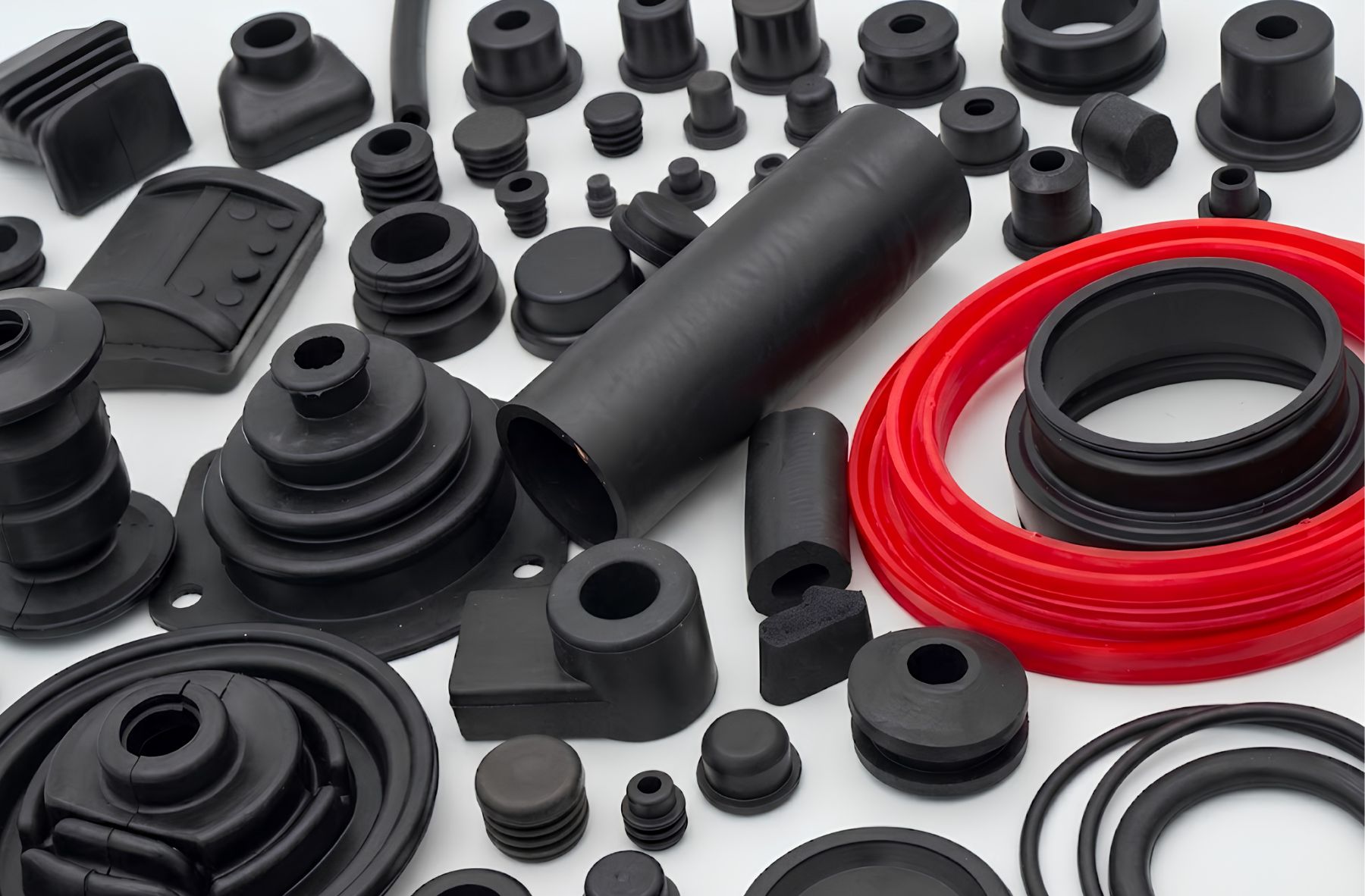
Rubber seals and gaskets play an essential role in mining, helping to ensure the safety, efficiency and reliability of equipment. Commonly used types in the mining industry include Viton, silicone rubber and EPDM.
Tyres and tracks
Rubber tyres and tracks are an integral part of operations, providing exceptional grip and traction for heavy mining equipment. Natural rubber and specialised compounds can be used for this purpose.
Vehicles fitted with rubber tracks are often used because they offer greater stability, produce less vibrations and minimise damage to the ground as they move.
Shock absorption
Rubber is used in suspension systems to absorb vibrations and shocks, contributing to the equipment’s longevity, as well as operator comfort. Shock absorbers protect the rotary blasthole drill rigs from damage due to vibrations.
Rubber protective clothing
Mining workers must wear protective clothing, including rubberised garments and footwear, to shield them from the harsh environment and chemicals. The materials used for PPE include EPDM and various synthetic rubbers.
In ancient times, miners had no protection from accidents, but the Coal Mines Regulation Act of 1860 introduced some significant changes, such as helmets to protect them from falling materials. Over time, PPE became more advanced, with gloves and protective clothing being invented to suit the specific hazards of the mining environment.
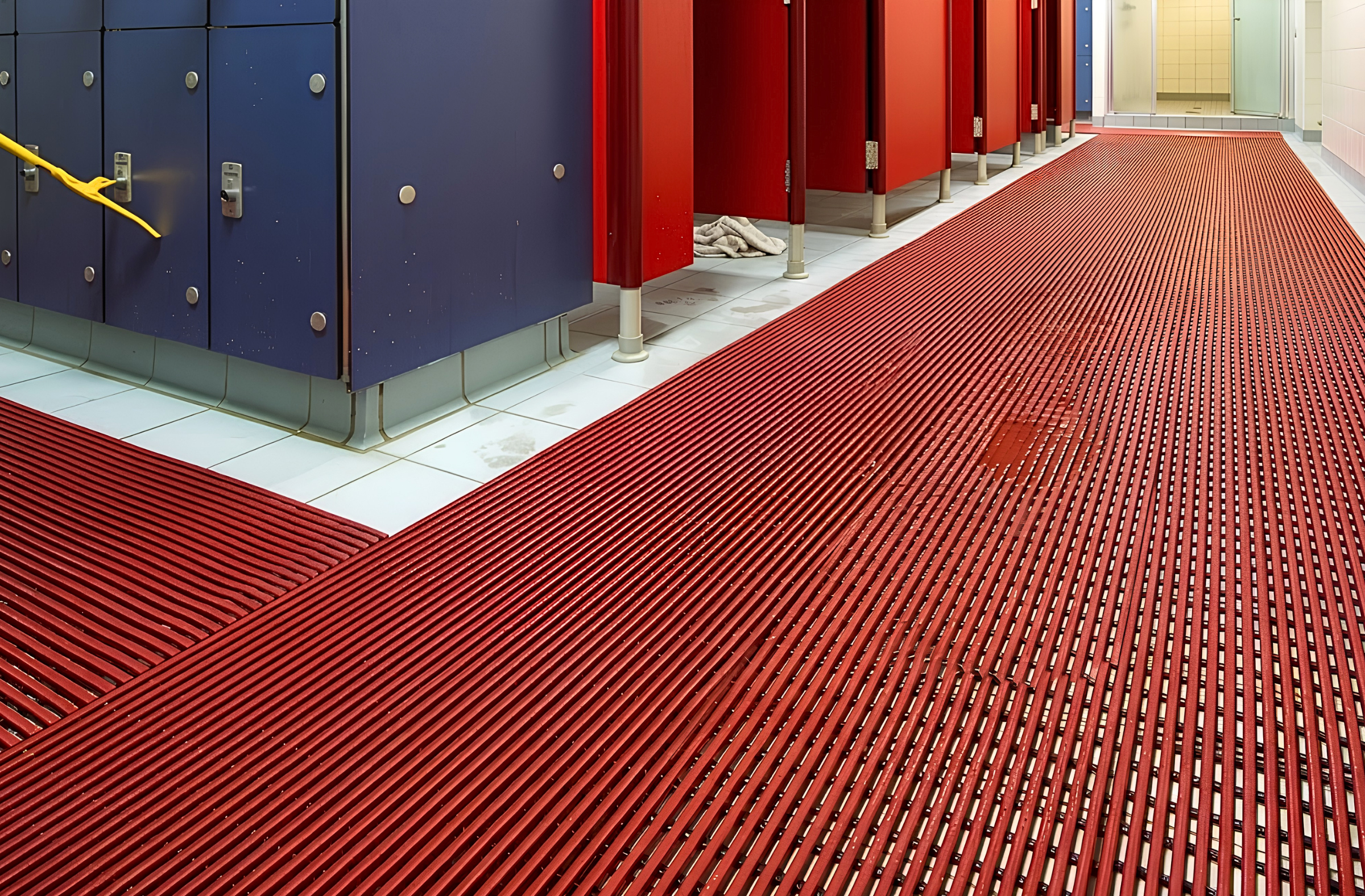
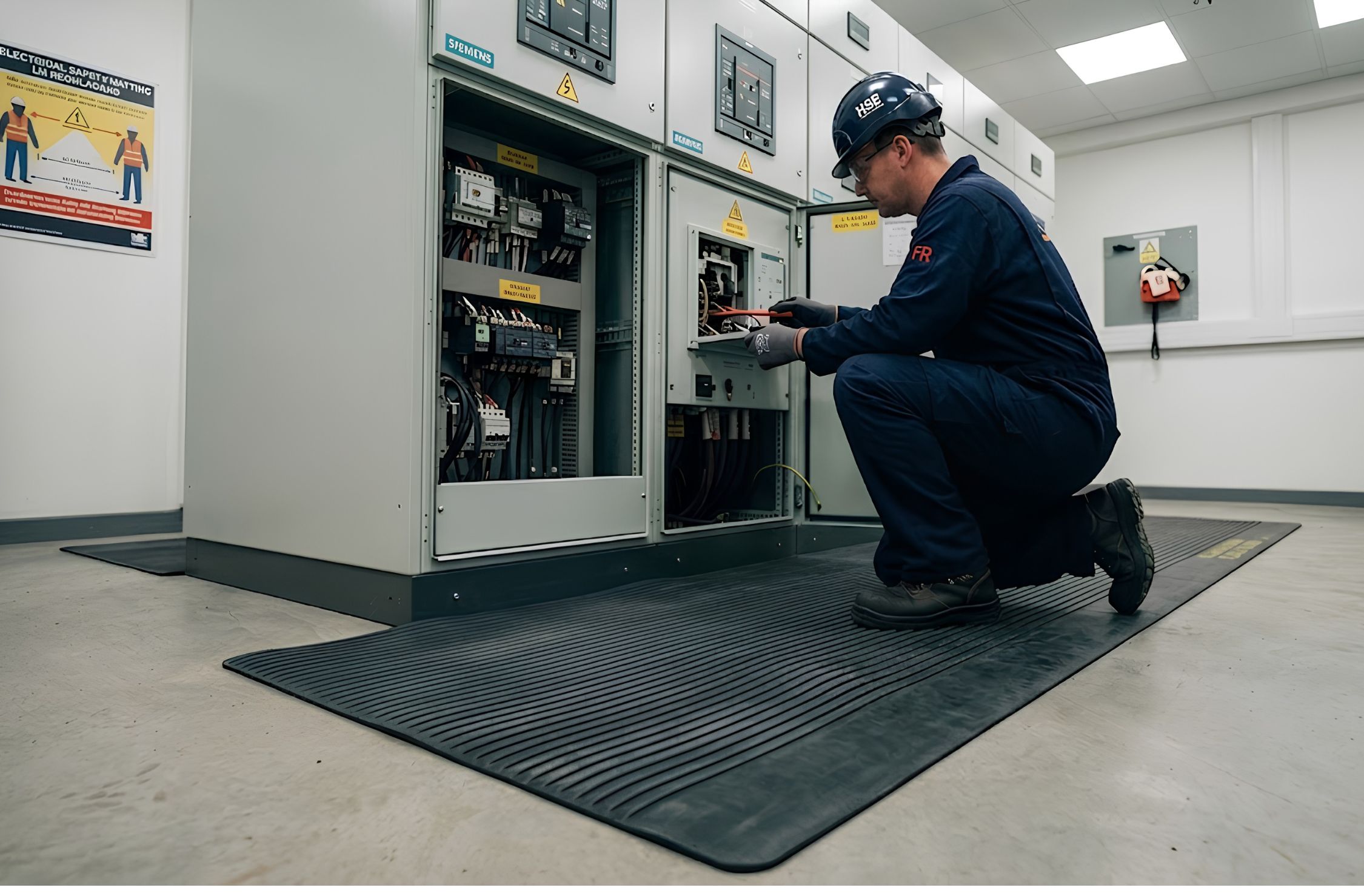
Rubber also plays a role in reducing noise, improving flooring and enhancing fire resistance, all of which are essential safety factors.
Other benefits
Rubber products often require less maintenance and have longer lifespans compared with other materials, offering cost benefits in the mining industry. Heavy-duty equipment is expensive and requires regular maintenance, as well as immediate repairs if it malfunctions to prevent downtime.
Repairing and maintaining equipment makes up between 30% and 50% of total operational costs in a mine, according to research by Caron Business Solutions. The machinery is subject to a massive amount of stress, as it’s used for constant rock breaking, drilling and lifting, all of which are strenuous activities. Rubber can help keep machinery remain functional and safe for longer.
New technology
Advances in technology are leading to innovations in rubber engineering, such as smart rubber components containing embedded sensors; advanced compounds and treatments designed to withstand extreme wear and tear; and eco-friendly methods of rubber production.
In addition, the development of self-healing rubber is ongoing, creating a material that can repair mechanical damage automatically, without human intervention. All of these innovations can help improve sustainability, safety and durability in the mining industry of the future.