Accidents in retail and warehouse environments are more common at this time of year for many reasons.
From customers rushing around doing their Christmas shopping, to warehouse workers being at their busiest, the potential for slips, trips and falls increases significantly.
© Ground Picture / Shutterstock
Combined with the likelihood of rain causing wet floors, it’s important that measures are introduced to minimise the risk of accidents.
How many people fall at work?
Slips, trips and falls are the biggest cause of injuries in UK workplaces, according to the Health and Safety Executive, accounting for 32% of all incidents. Around 20% of the injured workers were off sick for more than seven days as a result. This type of accident happens more than twice as often in winter months, compared with the rest of the year.
The Labour Force Survey has revealed a massive 561,000 employees suffered an injury in the workplace in 2022/23. Retail and warehouse workers are particularly at risk in the run-up to Christmas.
Retail stores have a duty of care to ensure employees and customers aren’t injured on their premises as part of the Occupier’s Liability Act 1984.
Increased footfall, with everyone rushing around doing their Christmas shopping, makes it a high-risk environment, especially in the entrance area if it’s raining or snowing outside. More retail accidents occur during this period compared with any other time of year, according to the Amtrust Retail Sector Risk Report.
Wet floors from rain, snow and ice, merchandise left in walkways and tripping over frayed rugs and other uneven floor surfaces are common occurrences. Entrance areas are the highest risk area, with large numbers of shoppers entering and leaving being cited as increasing the hazards.
In warehouses, 26% of employees have been affected by a slip or fall in the workplace in the past year, according to HSE statistics. Winter is described as a “prime time” for these types of warehouse accidents. As in the retail environment, warehouses are particularly busy during December, as Christmas approaches.
The combination of employees rushing round to meet greater order demands, plus wet floors caused by workers coming in from loading and unloading delivery vehicles are the main causes. When the weather changes and snow, rain and ice are traipsed in from the outdoor loading bays, it suddenly becomes an incredibly high-risk environment.
Clearly mark wet floors with “wet floor” signs to help prevent slips and falls. In addition, clean up water hazards as quickly as possible.
How can employers reduce risks?
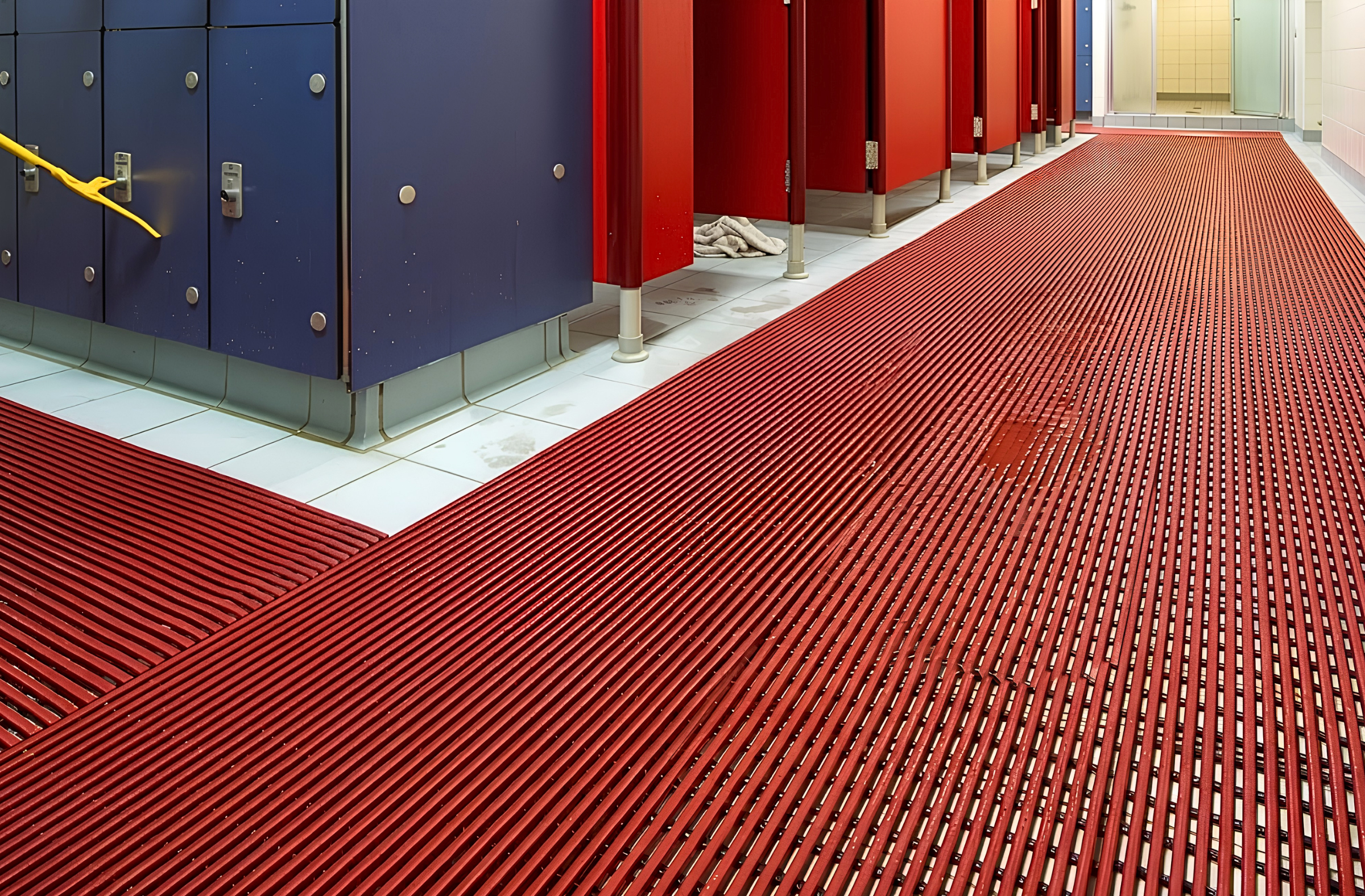
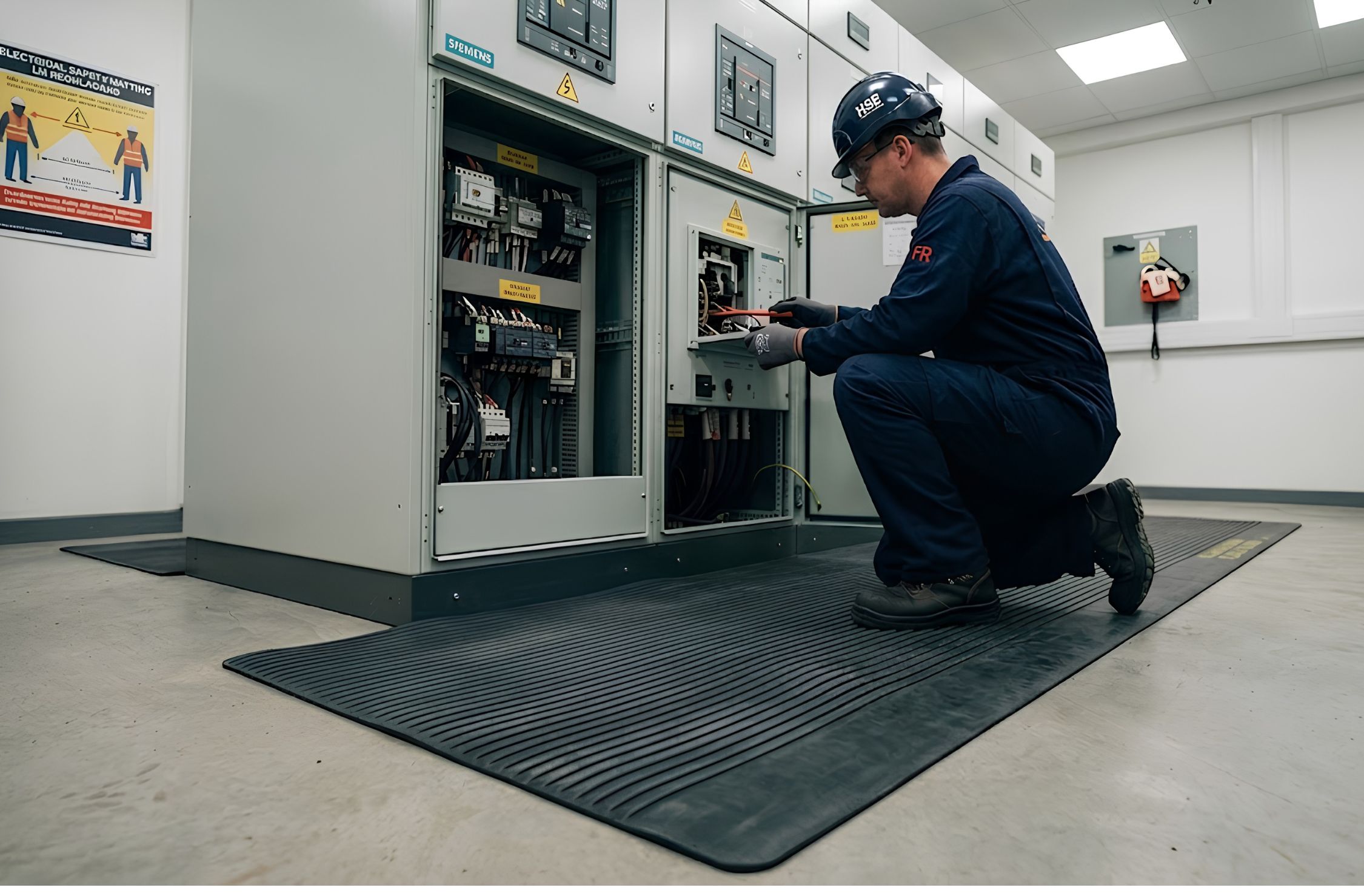
Reduce the risk of slips and trips by installing rubber matting in the workplace. They can be strategically placed outdoors and indoors.
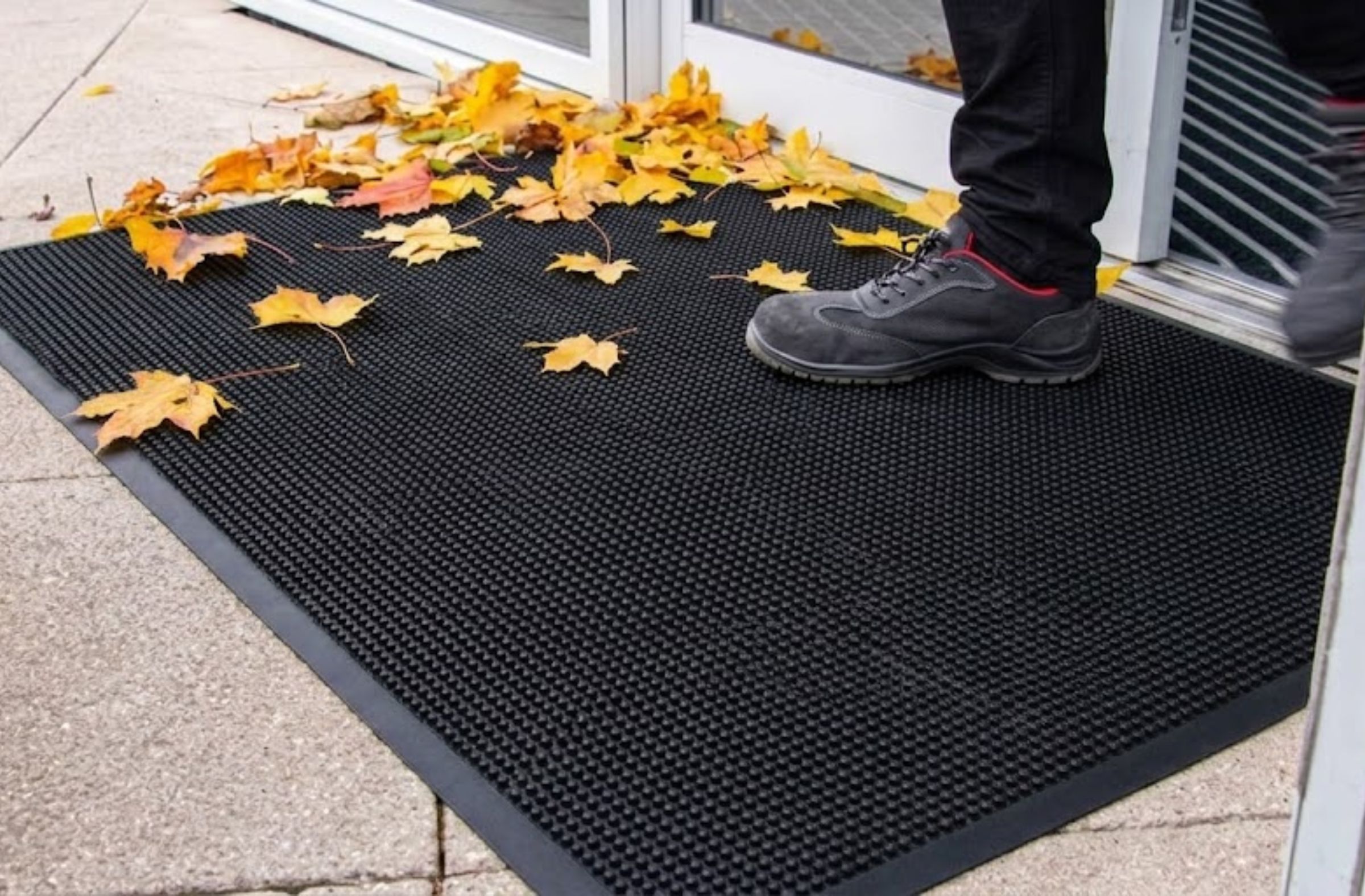
Entrance matting is a popular choice as general-purpose rubber matting. Abrasion and slip-resistant, it can survive even extreme weather conditions. These mats can scrape and remove moisture, dirt and grit from shoes before employees and customers enter the building.
You can also put salt down outside to minimise the risks of slipping on ice or hard-packed snow.
Once inside the building, the entrance area is the most hazardous in wet weather. This is why rubber matting is crucial for internal use. It will ensure that even if people still have excess moisture on their feet, there will be less chance of them slipping.
Large entrances with heavy footfall will require heavy-duty rubber mats. Even smaller entrance areas will still require a non-slip rubber surface for health and safety reasons. Budget ribbed entrance mats designed for less footfall can suffice for smaller retail stores.
Research has found 64% of business managers have admitted a lack of foresight and general ongoing maintenance has occasionally posed a safety risk, including with floor surfaces. This has led to 34% of managers having to go over their budget by carrying out emergency repair work to rectify failings.
The HSE is advising business owners to act now: minimise the risks of slips, trips and falls before an accident happens!