In any busy food service environment, kitchen flooring plays a central role in safety, hygiene and overall operational efficiency. Poor choices can lead to injuries, lost working hours, legal claims and even enforcement action.
Understanding what’s required is essential to keep people safe and business operations running smoothly. The Health and Safety Executive sets clear expectations for UK workplaces; from slip-resistance to maintenance standards, floor surfaces must comply with strict requirements.
Understanding catering health and safety
The HSE is Britain’s national regulator for workplace health and safety. It aims to reduce risks by setting guidelines, enforcing regulations and providing practical advice across industries. This includes monitoring kitchen workplace health and safety standards to ensure employers adhere to legislation, such as the Health and Safety at Work etc. Act 1974 and the Workplace (Health, Safety and Welfare) Regulations 1992.
Floors must be suitable, in good condition and free from hazards. Specifically, they shouldn’t be slippery or uneven in a way that could cause someone to fall. In practical terms, this means selecting flooring materials designed for high-risk environments and maintaining them consistently. It also means taking proactive steps to manage known hazards such as grease, water and food waste, all of which might be spilled during normal operations.
Why floor safety is crucial
Commercial kitchens are among the most demanding work environments: constant movement, high temperatures and frequent spills create conditions where accidents can and do happen quickly.
According to HSE data, slips, trips and falls account for around 30% of non-fatal workplace injuries each year. In kitchens, the risk is even higher due to the presence of oil, water and food debris underfoot. Consequences can be significant; injuries may range from minor bruises to serious fractures, leading to staff absence and reduced productivity. There are also financial implications including compensation claims and increased insurance costs. Beyond this, repeated safety issues can damage a business’s reputation, particularly if they result in enforcement action or poor inspection outcomes.
The reality is most of these incidents are preventable with the right flooring and safety measures in place.
Legal requirements for safety in commercial kitchens
HSE guidelines don’t prescribe a single type of flooring, but instead focus on performance. Floors must provide adequate slip resistance, especially in areas where contamination is likely. This is often measured using the pendulum test, which assesses the friction on a surface. A higher rating indicates better slip resistance, particularly in wet or greasy conditions. Kitchen flooring should achieve a level that remains effective even when contaminated.
The Workplace (Health, Safety and Welfare) Regulations also require that floors are properly drained where necessary. This is particularly relevant where water from cleaning or food preparation can quickly accumulate. The case of a UK pub restaurant chain that installed a new floor highlights how critical this is:
The HSE reported that after replacing the existing surface, staff reported the new one felt unusually slippery. Tests confirmed the slip resistance was inadequate, especially when wet. Despite attempts to improve cleaning processes, the issue persisted and the floor had to be replaced entirely. This example underlines the importance of selecting flooring that has been properly tested for real-world conditions.
How to identify flooring hazards
Maintaining safe flooring starts with regular inspections. Over time, even high-quality surfaces can degrade, particularly in areas exposed to heavy foot traffic and frequent cleaning. One of the first things to check is whether the surface has worn down. Slip-resistant flooring relies on texture, and as this wears away, the risk of accidents increases. Areas near cooking stations or walkways often show the most wear.
Pooling liquids are another clear warning sign. Water and grease tend to collect around sinks, dishwashing stations and preparation areas. If these areas are not draining properly, the risk of slips rises significantly.
Damage to the floor surface should also be addressed quickly. Cracks, chips, or uneven sections can create trip hazards and make cleaning more difficult. Over time, these small issues can develop into larger safety concerns.
Even the best flooring will become hazardous if grease and residue are allowed to build up. Regular, effective cleaning is essential to maintain slip resistance and meet compliance standards.
Kitchen matting
Purpose-made kitchen matting offers an additional layer of protection in high risk areas. In many commercial kitchens, mats are used strategically to address specific hazards that flooring alone cannot fully mitigate.
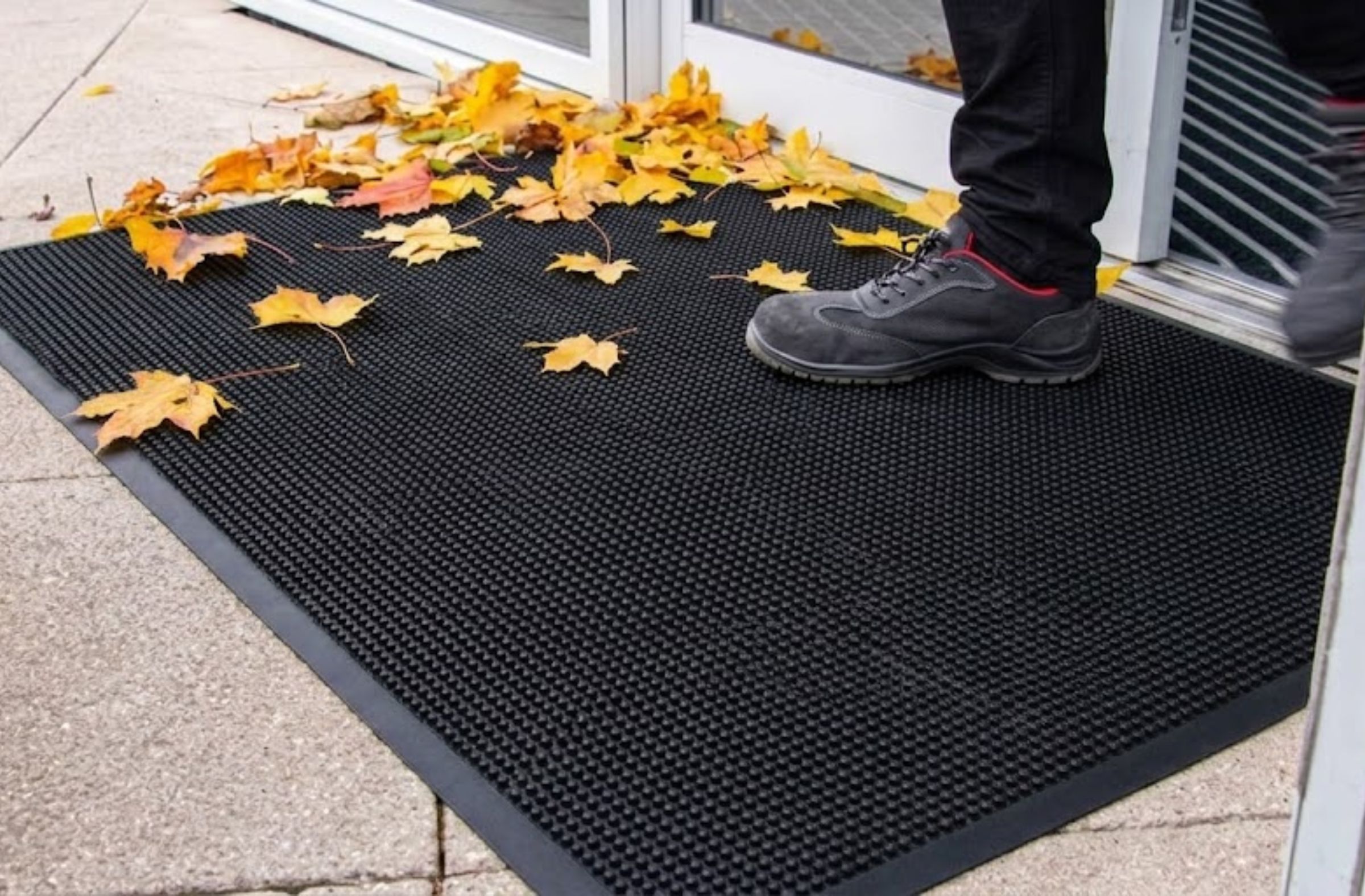
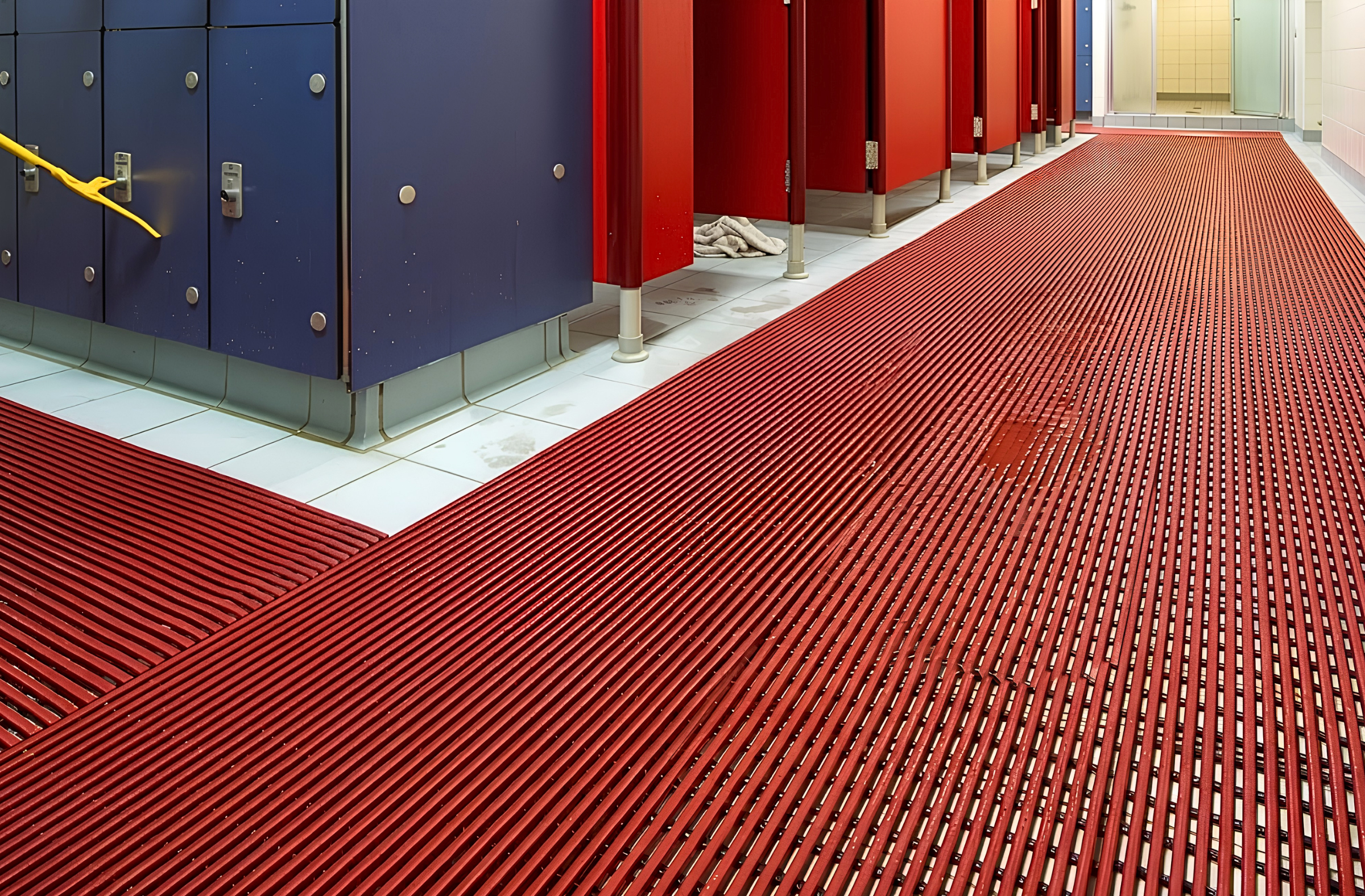
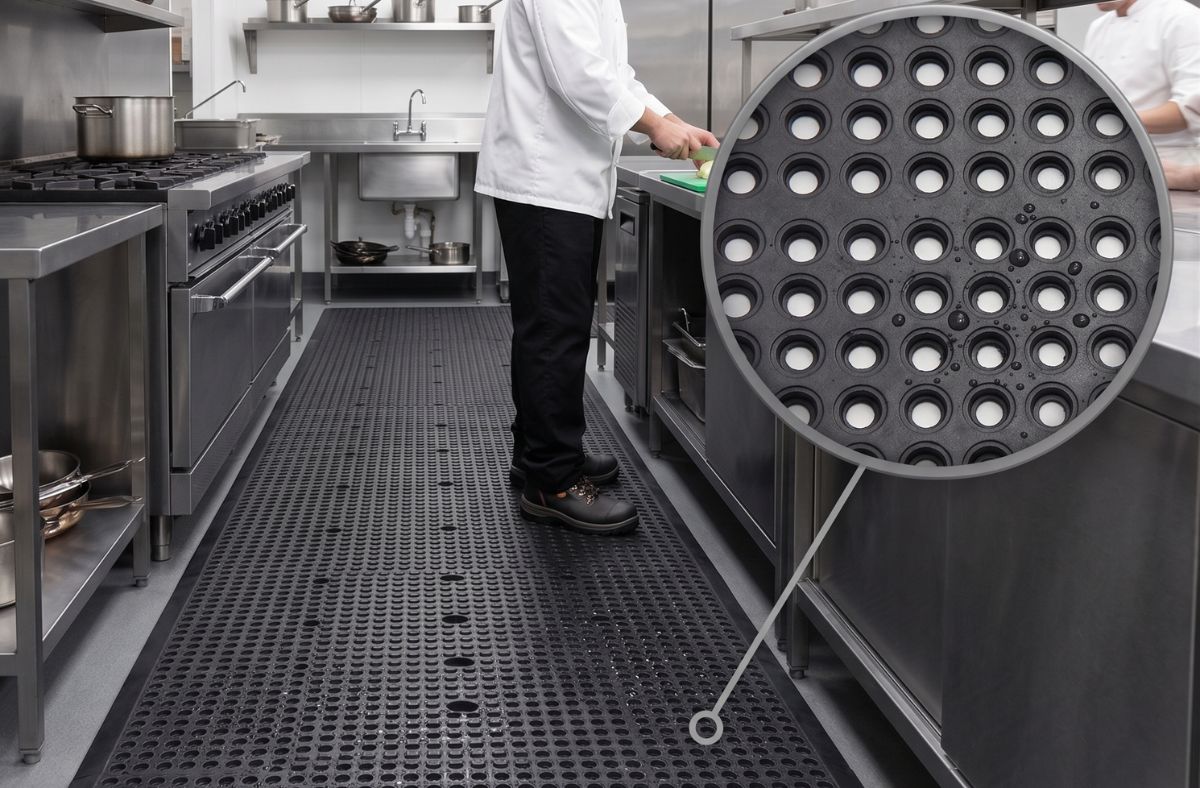
Rubber mats are particularly effective because they combine slip resistance with durability. Their textured surfaces improve grip underfoot, even in wet or greasy conditions. Many designs also include drainage holes, allowing liquids to pass through, rather than accumulate on the surface.
Kitchen staff often spend long hours on their feet; anti-fatigue matting helps reduce strain on the legs and lower back. This can improve overall wellbeing and productivity, particularly during busy service periods.
Mats also help reduce breakages. In fast-paced environments, dropped utensils or crockery are inevitable. A cushioned surface can absorb impact, lowering the risk of damage and potential injury from broken items.
From a hygiene perspective, matting plays an important role. By trapping dirt, grease and moisture, rubber mats help prevent these substances from spreading across the kitchen floor. This supports both cleanliness and safety, particularly in high-traffic areas.
Practical tips for installing and maintaining rubber mats
To get the most benefit, mats should be positioned in areas where the risk of slipping is highest such as near sinks, dishwashers, fryers and preparation stations. Coverage is also important. Mats should be large enough to provide consistent protection without creating additional trip hazards – poorly placed or undersized mats can be just as problematic as having none at all.
In most kitchens, daily cleaning is practiced as part of standard hygiene routines. Some mats are designed for easy washing, which helps maintain their effectiveness over time. It’s also important to inspect mats for signs of wear. Over time, edges can curl, surfaces can degrade and slip resistance can reduce. Replacing worn mats promptly ensures safety standards are maintained in the long term.
Commercial kitchens operate under constant pressure and safety can sometimes feel like just another task on an already long list. However, flooring is one area where small improvements can have a significant impact. Ultimately, compliance is not just about meeting legal requirements: it’s about protecting staff, maintaining standards and ensuring your kitchen continues to operate at its best, even under the most demanding conditions.