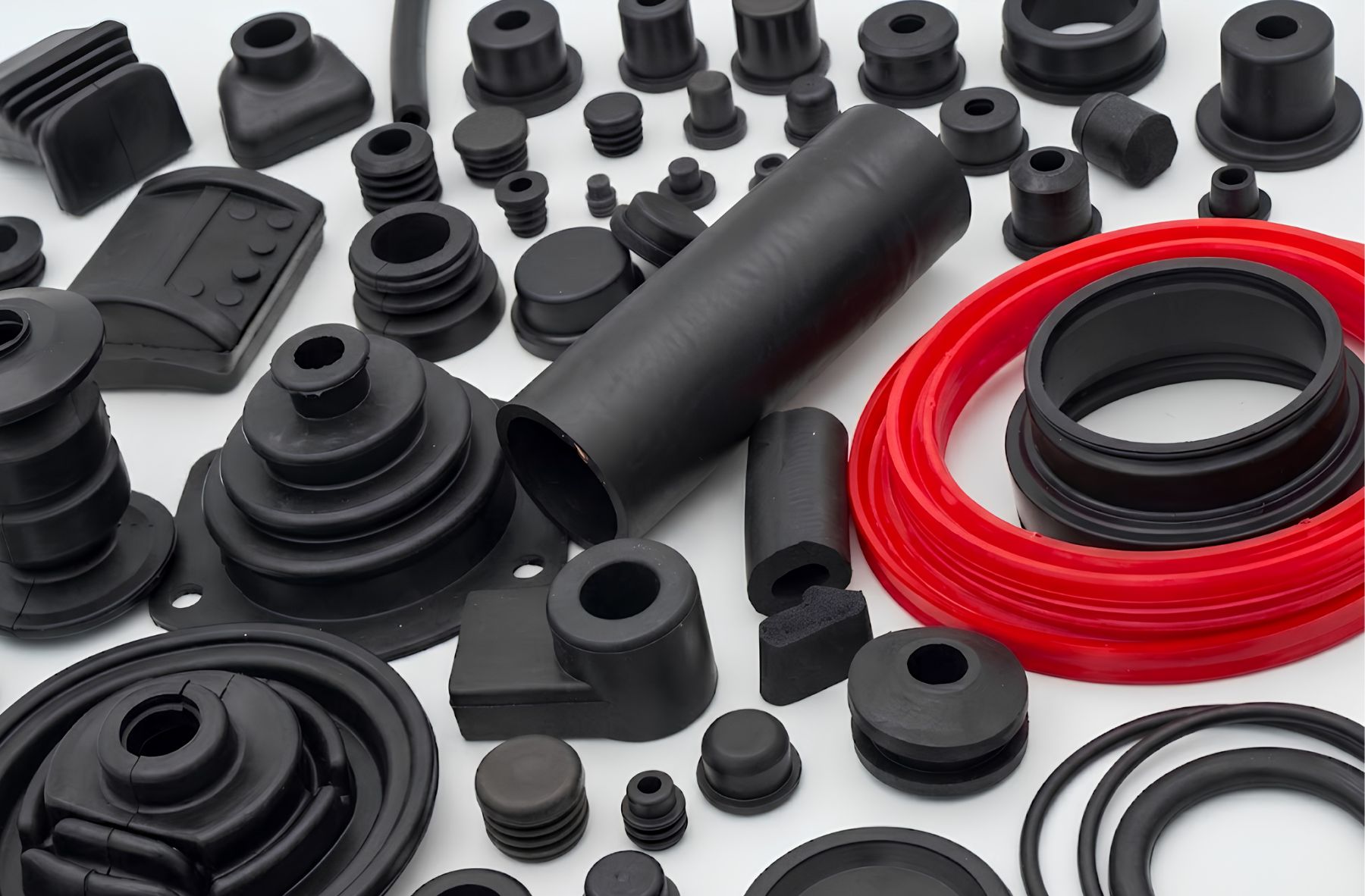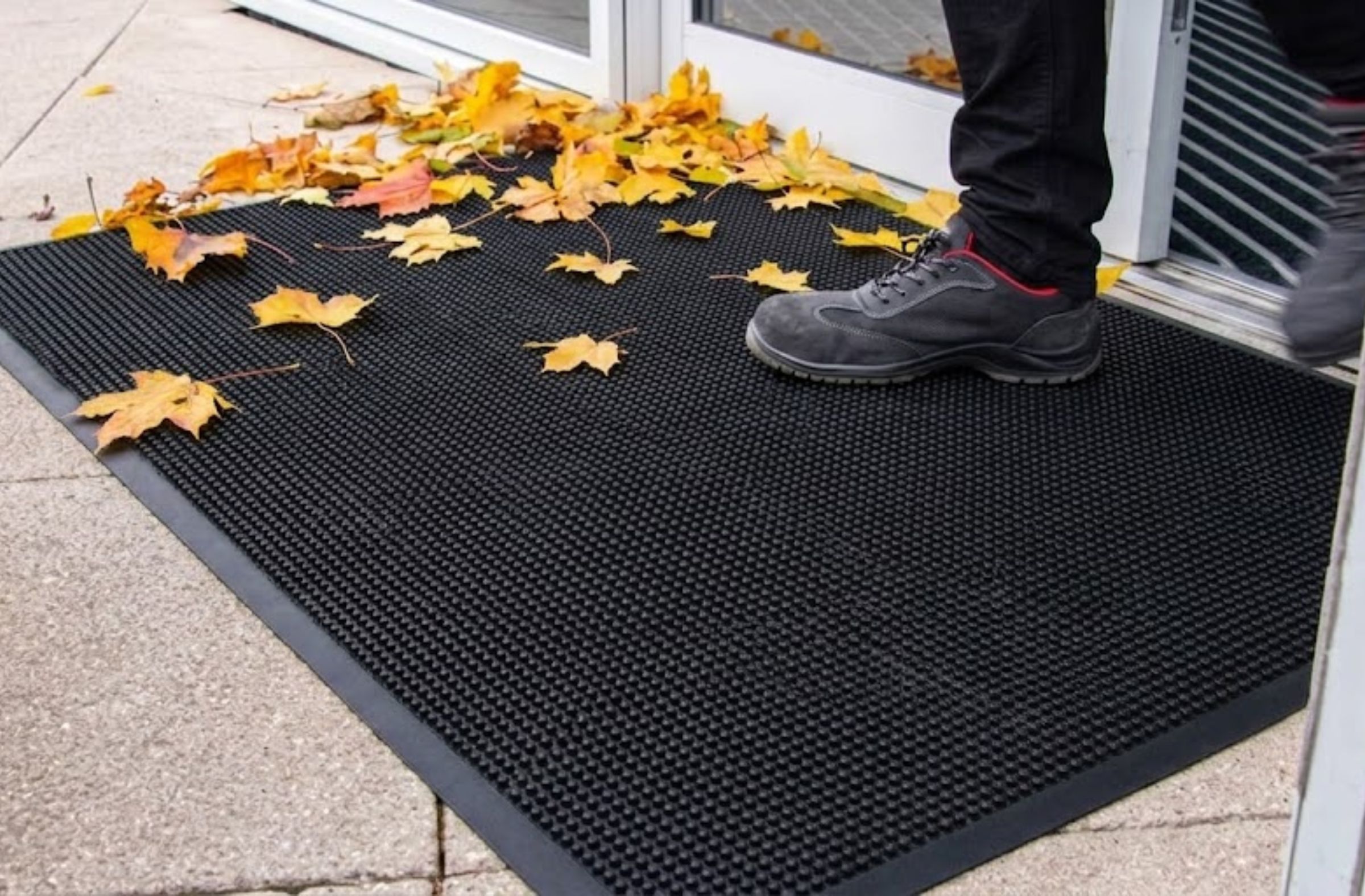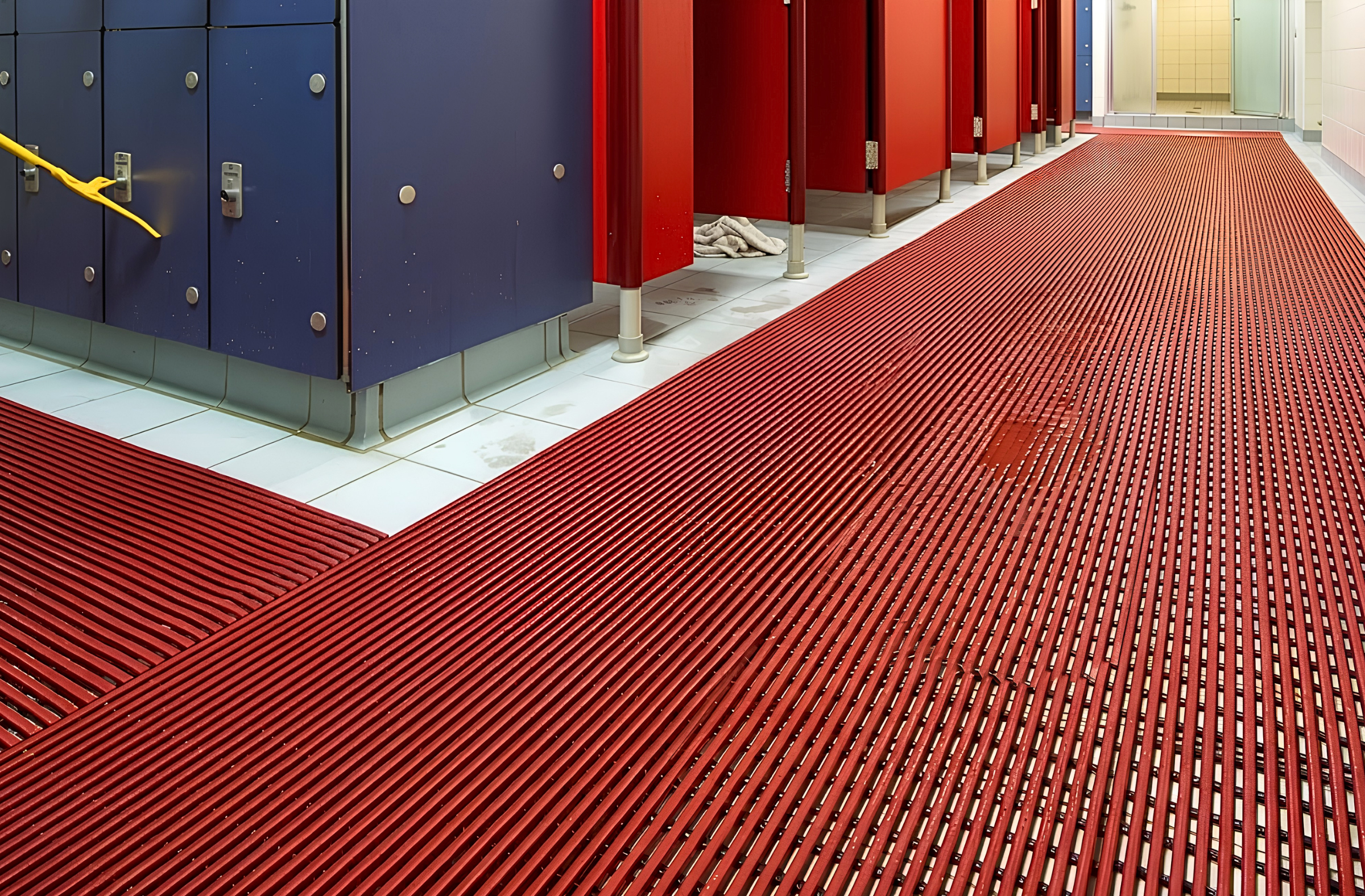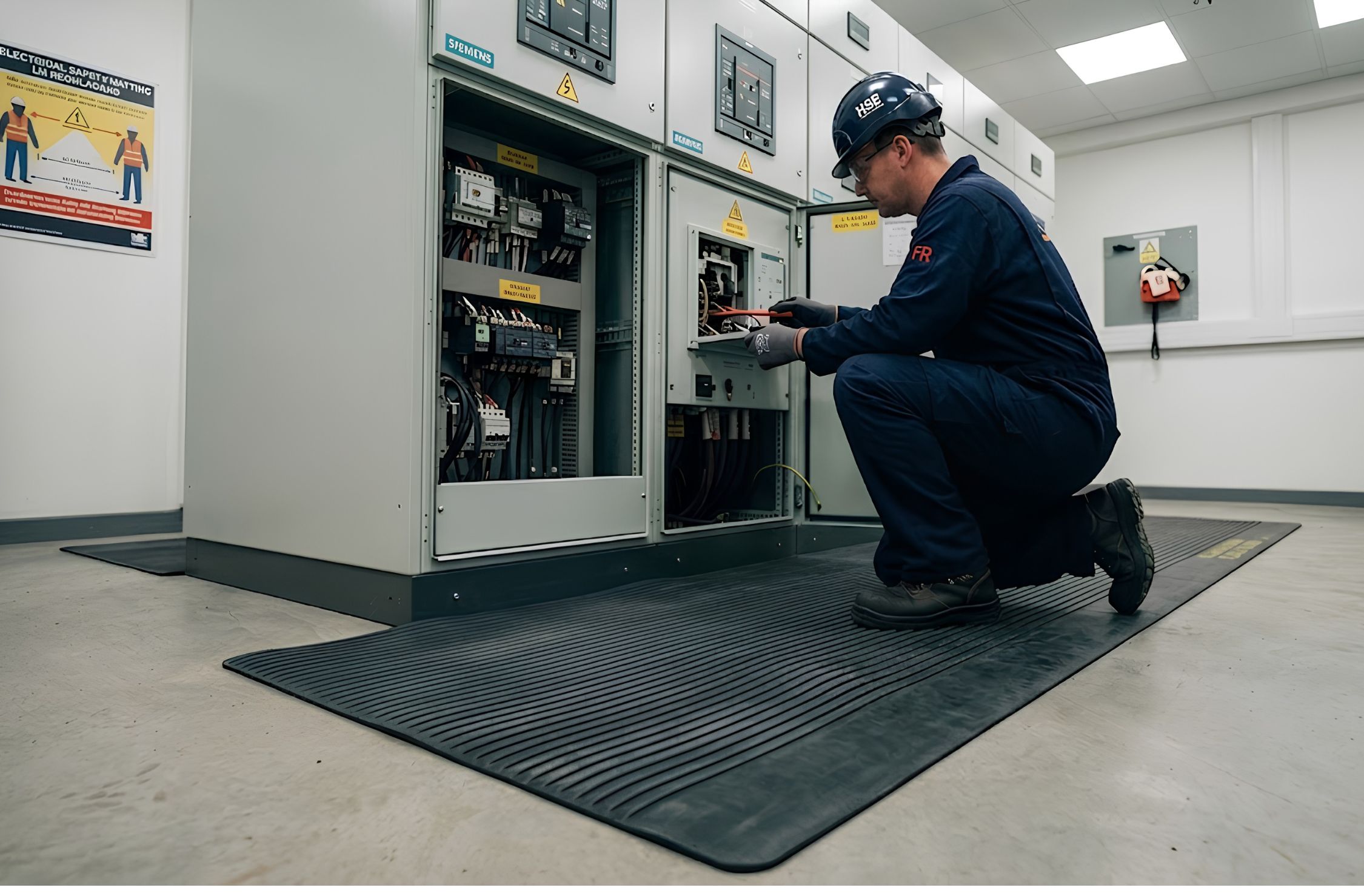
Rubber is everywhere; from sealing car doors and insulating our homes to building factory machinery and even helping to launch rockets into space. Manufacturing rubber products is a sophisticated process that balances engineering skills, materials, science and customisation.

High-performance parts are tailored to specific needs, using three primary rubber manufacturing processes. Extrusion, moulding and calendaring each bring a unique method of shaping and curing rubber into usable components. The choice depends on your product’s design, intended use, material requirements and budget.
Rubber extrusion: continuous and customisable
The extrusion process begins by feeding raw rubber, often in strips or pellets, into an extruder. Once inside, the material is softened by heat and pushed through a die that gives the rubber its final profile – think tubing, seals, or window gaskets. Once shaped, the extruded rubber is vulcanised or cured to set its final properties.
Extruded rubber products are continuous in length, which means the manufacturing process creates a long, unbroken piece of rubber. Generally featuring consistent cross-sectional profiles, extrusions are ideal for items such as edge trims, tubing and weather seals.
Here at Coruba, extruded rubber is supplied across industries where consistent long rubber profiles are needed, often with tight dimensional tolerances.
Rubber moulding: for complex 3D parts
Rubber moulding is the go-to method when a product requires complex, often three-dimensional shapes that can’t be achieved through simpler techniques like extrusion. This process allows for a high level of detail and structural integrity, making it ideal for components that need to fit precisely, or endure demanding conditions.
There are several ways to mould rubber, each suited to different needs. In compression moulding, a pre-heated piece of rubber is placed into a mould cavity, which is then closed and subjected to heat and pressure, shaping the rubber into the desired form. It’s a straightforward, yet highly effective approach, especially for larger parts, or low-to-medium production volumes.
Transfer moulding works a little differently. With this method, the rubber is placed into a chamber and then forced into the mould cavity. Particularly useful when the part needs to be bonded to metal, this process allows for smooth material flow and tight adhesion between rubber and other components.
Injection moulding, on the other hand, is designed for speed and precision. Heated rubber is injected into a closed mould at high pressure, allowing for the efficient production of complex parts in large volumes. This technique is often used when consistency, tight tolerances and fast turnaround are priorities.
Regardless of the method used, rubber moulding is an excellent choice for creating items such as seals, gaskets and shock absorbers. It’s particularly beneficial in applications that require intricate shapes or rubber-to-metal bonding, making it an essential process in industries like automotive, aerospace and heavy machinery.
Calendering: flat uniform sheets
Calendering is the go-to process for producing flat rubber sheets and films. It works by rolling rubber through heated rollers that gradually reduce its thickness to the desired measurement. The result is a smooth, uniform sheet that can be cut or layered as needed.
Especially useful for products like conveyor belts, flat roofing membranes and rubber linings, calendered rubber has high uniformity, but is limited to flat, two-dimensional formats.
How do these processes affect product performance?
The choice of manufacturing method directly impacts not just how the product looks, but also how it performs under real-world conditions.
Extruded rubber offers flexibility and durability for sealing applications. As the rubber is pushed through a die, the resulting profile is consistent and can be customised for resistance to weathering, chemicals, or temperature extremes. However, since it’s a continuous profile, it’s best suited for straightforward cross sectional designs.
Rubber mouldings allow for much more intricate parts. Injection moulding in particular produces high strength, complex parts with minimal material waste and tight tolerances. These mouldings can be engineered for high-impact and dynamic load applications, making them a common choice for suspension systems, engine mounts and other mechanical assemblies.
Calendered rubber excels in applications where uniformity and surface smoothness are crucial. This method produces highly consistent thicknesses and smooth surfaces – ideal for EPDM roofing membranes, for example. However, it’s less adaptable when you need parts with depth or complex features.
Ideal applications in the automotive industry
The automotive sector relies heavily on all three rubber manufacturing processes, each serving a distinct purpose.
Extruded rubber is found in vehicle door seals, boot linings and window gaskets. These parts must be flexible, weather-resistant and easy to install in long, continuous strips. Coruba produces extruded rubber for precisely these applications, ensuring a snug fit and optimal sealing performance.
Rubber mouldings are used in more complex components such as bushings, mounts and engine bay seals. These parts must withstand constant vibration, temperature fluctuations and exposure to oil and other chemicals. Moulded rubber is perfect here, especially when reinforced with metal components.
Calendered rubber shines in automotive flooring, sound dampening sheets and protective linings. Its flat, even surface and uniform density make it an excellent material for lining the boot, or damping road noise.
Cost, scalability and customisation
Each method of manufacture has its strengths and limitations when it comes to economics, volume, scalability and design flexibility.
Extrusion is highly cost-effective for producing long lengths of rubber profiles. The tooling cost is relatively low, and it scales well for large production runs. However, it’s less suitable for intricate shapes or three dimensional designs.
Moulding is more expensive upfront due to the cost of tooling, particularly for injection moulding. That said, once in production, it offers excellent repeatability, speed and quality, especially for high volume runs. Compression moulding, on the other hand, suits lower volumes and larger, more complex parts.
Calendering sits somewhere in the middle. It’s excellent for producing large volumes of flat rubber material with consistent thickness, but the process doesn’t offer the same flexibility shape wise as extrusion or moulding.
How Coruba delivers custom rubber products
Our 11,000 sq. ft purpose-built facility in Cambridgeshire gives us the flexibility to apply the best method for your project. Whether it’s rubber mouldings, extruded rubber, or calendered rubber sheeting, we can help guide you through the selection process, from compound formulation to the final product.
The manufacture of rubber is far from one-size-fits-all. By understanding the strengths of each production method, you can make informed decisions about rubber components and how they’ll perform over time.
Our team works closely with clients to assess environmental conditions, mechanical demands and dimensional requirements. From there, we select the right compound and process, ensuring every custom rubber product is perfectly suited for its purpose.
Ready to bring your rubber product to life? Get in touch with Coruba today, and let’s build something that lasts.