In the automotive industry, material failure can be potentially hazardous, as well as a major inconvenience. Whether a substandard component is installed within the fuel delivery system, engine bay assembly, suspension or braking infrastructure, it can lead to operational, financial and reputational implications.
For tier-one suppliers and original equipment manufacturers, maintaining reliability and compliance throughout the supply chain is crucial, as modern vehicles are expected to operate reliably under challenging conditions. Components are routinely exposed to extreme temperatures, vibration, chemicals, oil, fuel, pressure fluctuations and mechanical wear. Under these conditions, even the smallest compromise in material quality can have serious consequences.
© aapsky / Shutterstock
Why quality counts
High-quality rubber sheeting is required for automotive applications. Materials must be batch-tested, traceable and manufactured to strict specifications. Cheaper alternatives often contain excessive ‘fillers’ and insufficient polymer content.
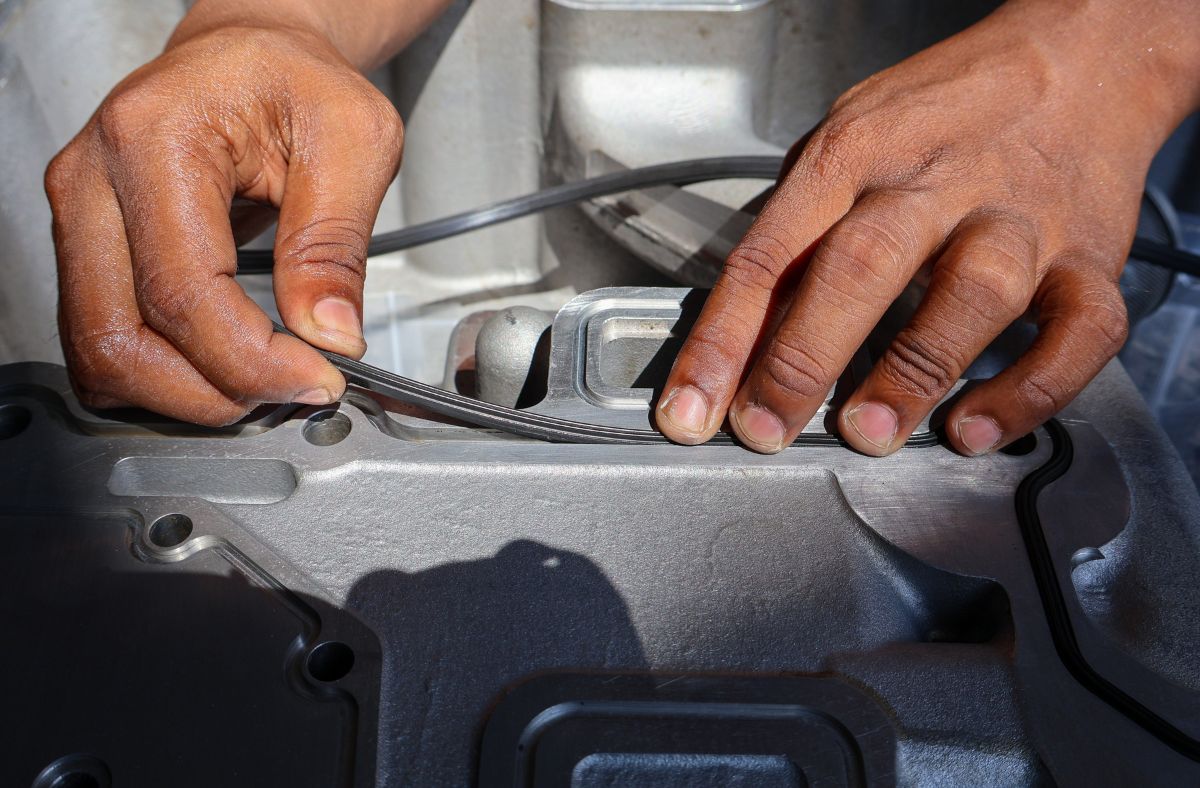
For manufacturers of automotive rubbers and seals and specialist bespoke rubber products, understanding the difference between genuine British Standard compounds and commercial-grade substitutes is essential. Fuel system gaskets must resist hydrocarbon attacks, while engine bay seals should tolerate high temperatures and ozone exposure. Suspension bushings must absorb vibration without losing structural integrity, and oil seals have to remain flexible, despite constant contact with lubricants and thermal cycling.
Certified rubber sheeting manufactured to British Standards remains an essential component within supply chains. Driver and Vehicle Standards Agency data identifies the specific rubber failures for MOT tests in the UK. Leading the statistics, more than two million vehicles fail each year due to rubber tyre defects, with about one million of these classified as dangerous.
Around 3% of all MOT failures, equating to hundreds of thousands of cars, are caused by severely deteriorated CV joint boots. Deteriorating suspension dust covers account for 2.7% of failures; these include split, missing, or perished rubber dust covers on suspension joints, which let dirt destroy internal components. Leaking, cracked, or excessively damaged flexible rubber brake hoses account for around 16% of braking defects.
The hidden risks to safety-critical components
Unfortunately, lower commercial-grade compounds can closely resemble genuine British Standard rubbers in terms of colour, hardness, thickness and even basic specifications. However, visual similarity doesn’t guarantee performance equivalence.
Fuel tank gaskets require exceptional resistance to petrol, diesel and hydrocarbons. Oil seals must maintain elasticity, and suspension bushes rely on specific properties to protect ride quality and vehicle stability. Engine bay diaphragms should withstand repeated pressure, while resisting heat degradation and ozone attacks.
Using inferior compounds can be catastrophic. Premature swelling, hardening, cracking, compression loss and structural failure can occur, long before the intended service life has been reached.
In genuine British Standard compounds, polymer content is carefully controlled to achieve precise mechanical and chemical properties. However, unscrupulous manufacturers may try to reduce production costs by altering rubber formulations through excessive use of cheap fillers such as clay, chalk, calcium carbonate and mineral extenders. This disrupts balance, reducing elasticity, tensile strength, abrasion resistance and chemical compatibility.
Under automotive operating conditions, these weaknesses quickly become apparent. Contact with oils, fuels, hydraulic fluids and environmental contaminants further compromises the rubber structure. As polymer chains begin to break down, the material loses its ability to maintain sealing pressure and structural integrity. Inferior compounds often swell rapidly when exposed to hydrocarbons, while prolonged heat exposure can cause excessive hardening and embrittlement. Eventually, seals crack, deform, or fail entirely, creating significant safety concerns.
Fluid and chemical resistance: BS 2751 Nitrile vs commercial alternatives
Nitrile rubber, also known as NBR, remains one of the most important synthetic elastomers used throughout the automotive industry. Its exceptional resistance to oils, fuels, grease, hydraulic fluids and hydrocarbons makes it ideal for manufacturing fuel system components, oil seals, gaskets and specialist sealing products.
Genuine BS 2751 Nitrile maintains its physical properties even after prolonged exposure to aggressive automotive fluids. It retains elasticity, preserves dimensional stability and continues delivering reliable sealing performance throughout its operational life.
Commercial alternatives often contain lower polymer concentrations and higher filler content, making their resistance to hydrocarbons inadequate for demanding automotive applications. The consequences can include eventual material disintegration. These failures can lead to warranty claims, production disruptions and costly product recalls.
Rubber sheeting manufactured to BS 2751 specifications eliminates much of this uncertainty by providing documented performance data and consistent properties.
Performance advantages of certified Nitrile rubber
One of its greatest advantages is exceptional resistance to petroleum-based substances, resisting swelling, softening and degradation when exposed to fuels, lubricants and oils over prolonged periods. Nitrile also demonstrates resistance to many industrial chemicals, solvents and hydraulic fluids. Although no elastomer is universally resistant to all chemicals, certified Nitrile compounds are reliable across a broad range of automotive environments.
Nitrile also offers impressive tensile strength, abrasion resistance and mechanical durability, maintaining structural integrity under continuous mechanical stress. Its hydrophobic characteristics help it to resist the penetration of oil-based and water-based fluids.
Thermal and environmental durability of BS 2752 Neoprene
BS 2752 Neoprene has been developed to provide excellent performance, with its resistance to weathering, oxidation, ozone and high temperatures making it an ideal choice for many automotive uses. Certified BS-grade compounds maintain flexibility and structural integrity throughout prolonged environmental exposure, including in challenging applications within the engine.
By comparison, commercial Neoprene compounds may exhibit earlier hardening, surface cracking and loss of elasticity once thermal degradation begins.
Batch testing vs guesswork
Perhaps the most significant advantage of genuine British Standard materials is traceability. Certified manufacturers perform rigorous batch testing to ensure every production run meets strict performance criteria. Tensile strength, elongation, hardness, compression set, chemical resistance and dimensional stability are all verified through documented testing procedures. This provides procurement teams, engineers and quality managers with measurable evidence that the supplied material will perform as specified.
Lower commercial-grade compounds rarely provide this level of assurance. Without documented testing data or batch traceability, manufacturers are effectively relying on assumptions rather than evidence. The automotive industry operates under some of the most demanding quality standards in global manufacturing. Supplier audits, customer validation programmes, regulatory inspections and warranty assessments all require evidence of material performance and consistency.
Using certified British Standard rubber helps manufacturers to maintain compliance, while the use of uncertified materials can expose businesses to operational and financial risks.