Horse care across the UK has been dominated by one persistent challenge over the past few months – exceptionally wet weather.
With January recording above average rainfall across much of the country, the ground has been saturated for weeks on end. This has created the kind of environment that can quickly turn idyllic paddocks into muddy, high-risk zones for skin infections such as mud fever.
Understanding how to treat mud fever and the important role horse stable mats play in preventing it can help owners combat this painful condition.
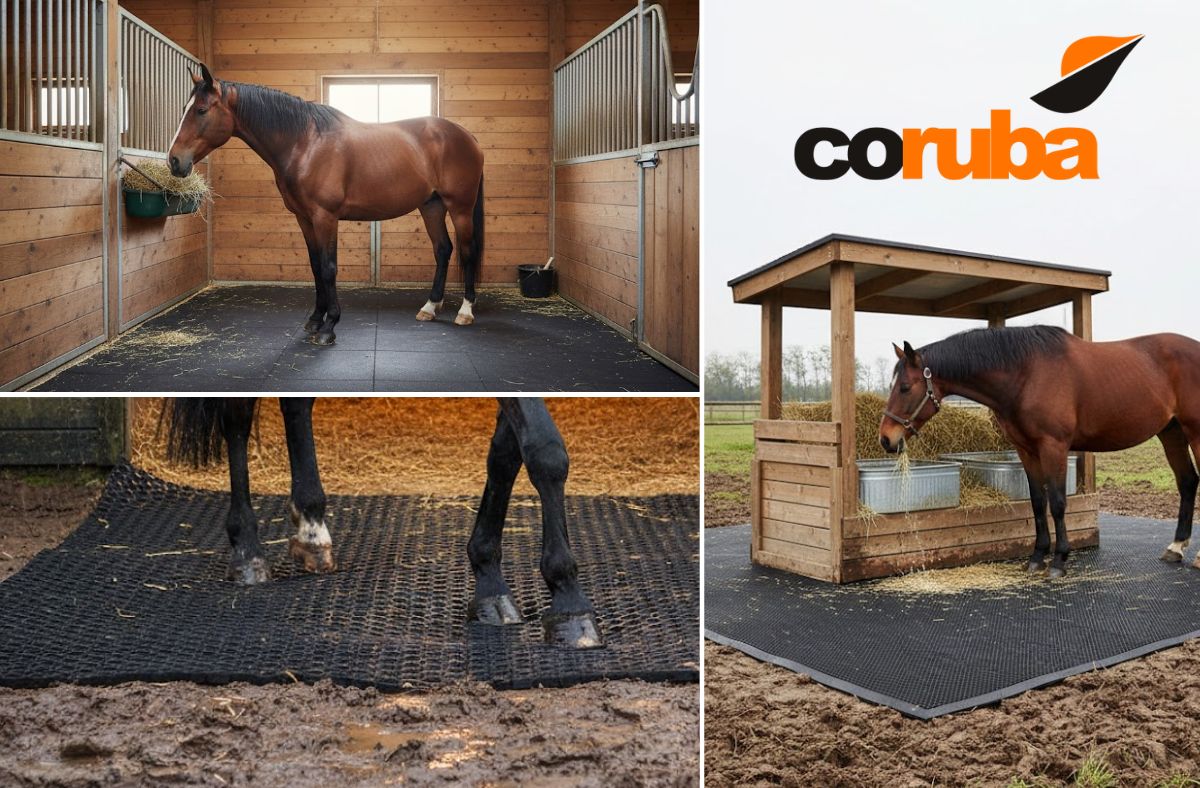
© Images generated by AI
Impact of wet conditions on horses
Figures from the Met Office reveal the UK has recorded significant rainfall in January. Southern England saw around 74% more rain than usual for the month, while Northern Ireland experienced its second wettest January since records began in 1794.
The result has been continually waterlogged ground, fields churned up by hooves and stable entrances and high-traffic zones that are perpetually wet and muddy. These conditions strip the protective oils from the skin on a horse’s lower legs and create the perfect breeding ground for bacteria.
For horse keepers, particularly those with long-term paddocks or turnout areas, this combination of wet ground and frequent rain is a familiar and frustrating challenge. It also reinforces the importance of creating dry, well drained surfaces wherever possible, whether that’s around gateways and feeding areas, or within the stable itself.
Using rubber stable mats
While good grooming and hygiene practices are central to treating mud fever, the best strategy is prevention – and that starts with the living environment. One of the most effective tools for improved stable and turnout surfaces is heavy-duty rubber stable matting with the durable, moisture-resistant surface preventing water from soaking directly into the ground.
In contrast to bare concrete or soft earth, mats help keep feet and legs cleaner and drier. When placed in stables, gateways, high-traffic zones and around water troughs or feeding stations, mats reduce the accumulation of mud and waterlogging that leaves skin vulnerable to infection.
The right stable matting not only keeps horses cleaner, but it also makes daily maintenance easier. Rubber surfaces are simple to hose down and disinfect, reducing bacterial and fungal build-up. Less mud and muck trapped in bedding or on floors means a healthier, more hygienic environment overall.
Comfort and safety benefits
It’s worth noting that rubber matting does more than just help with mud fever prevention. Horses stand more comfortably on cushioned surfaces, which can lead to better overall limb health. Quality mats also offer improved traction, reducing slips and falls in wet conditions.
There are many matting choices to fit different needs. For example, lightweight EVA stable mats, with thickness options of 24mm or 34mm, can offer a good balance of cushioning and practicality for stables or small turnout areas. Their linkable design and relatively light weight make them easy to adjust and reposition.
On the heavier end, moulded rubber stable mats with an anti-slip surface and excellent insulation properties are ideal for larger stables or barn areas. Some reversible mats have different textures on each side, one to assist with drainage and another to provide grip, giving flexibility for use in wet or dry seasons.
Rubber mats are also excellent around gateways and water points, where repeated hoof traffic quickly churns up soil. A compressive surface helps reduce mud build-up and keeps these critical zones firmer and cleaner.
Mats provide an insulated, comfortable layer on top of concrete floors, and many keepers find they can reduce bedding by up to 80% without compromising horse comfort. Over time, this can result in significant savings, both in bedding costs and in the time spent handling it.
With wet weather trends continuing to challenge horse owners across the UK, now is an excellent time to consider how your stable environment can support both mud fever prevention and overall equine wellbeing.