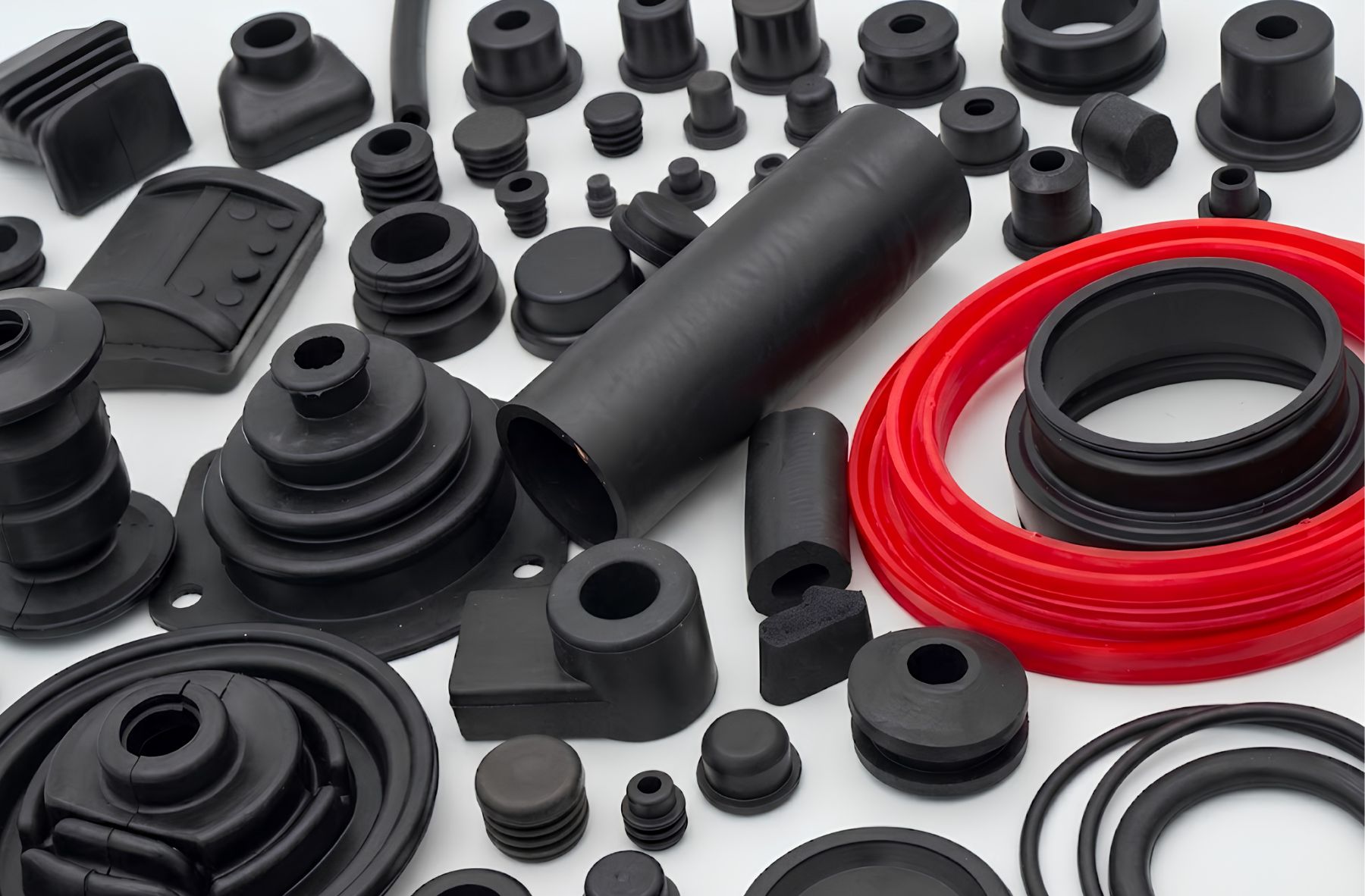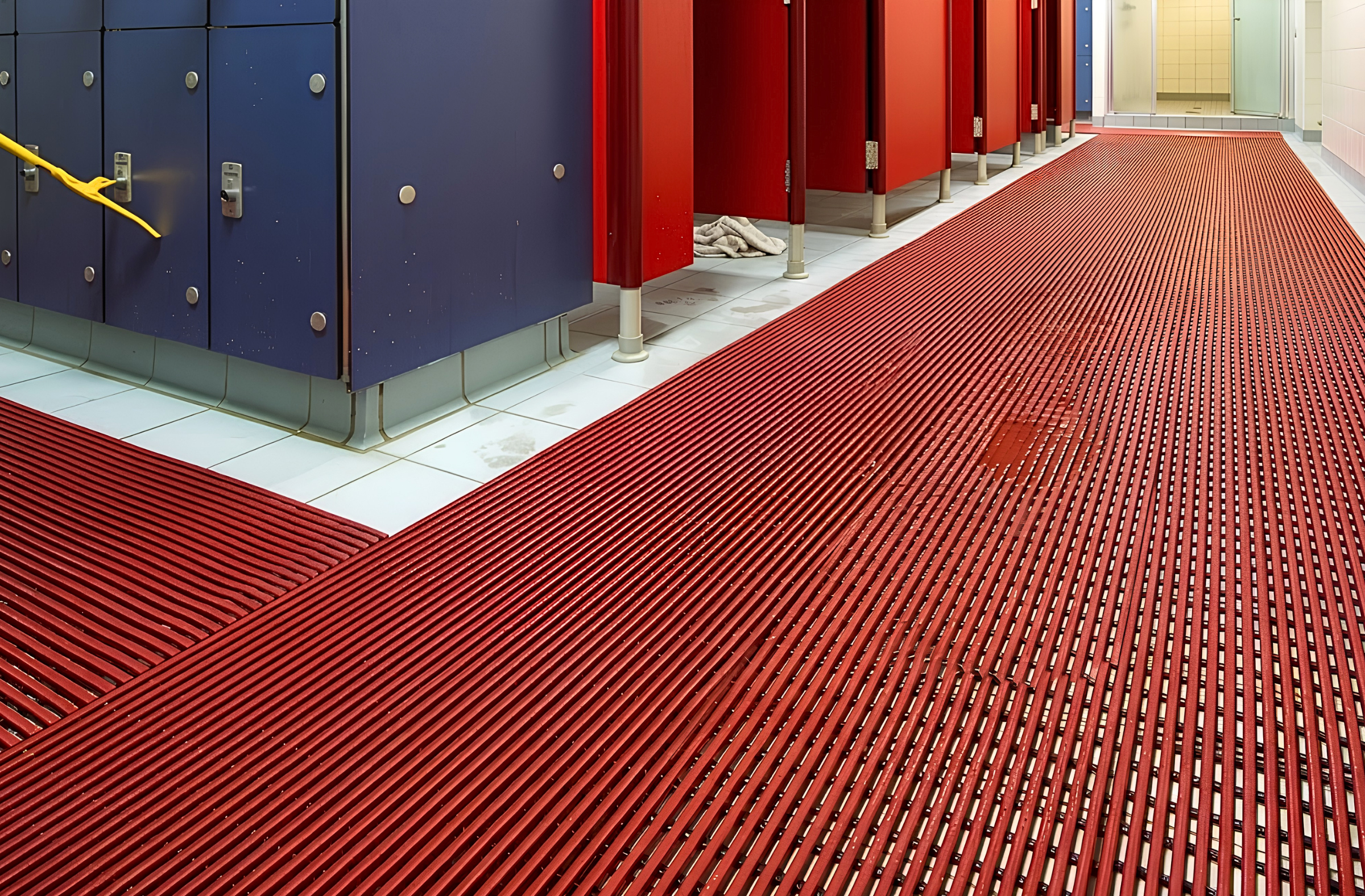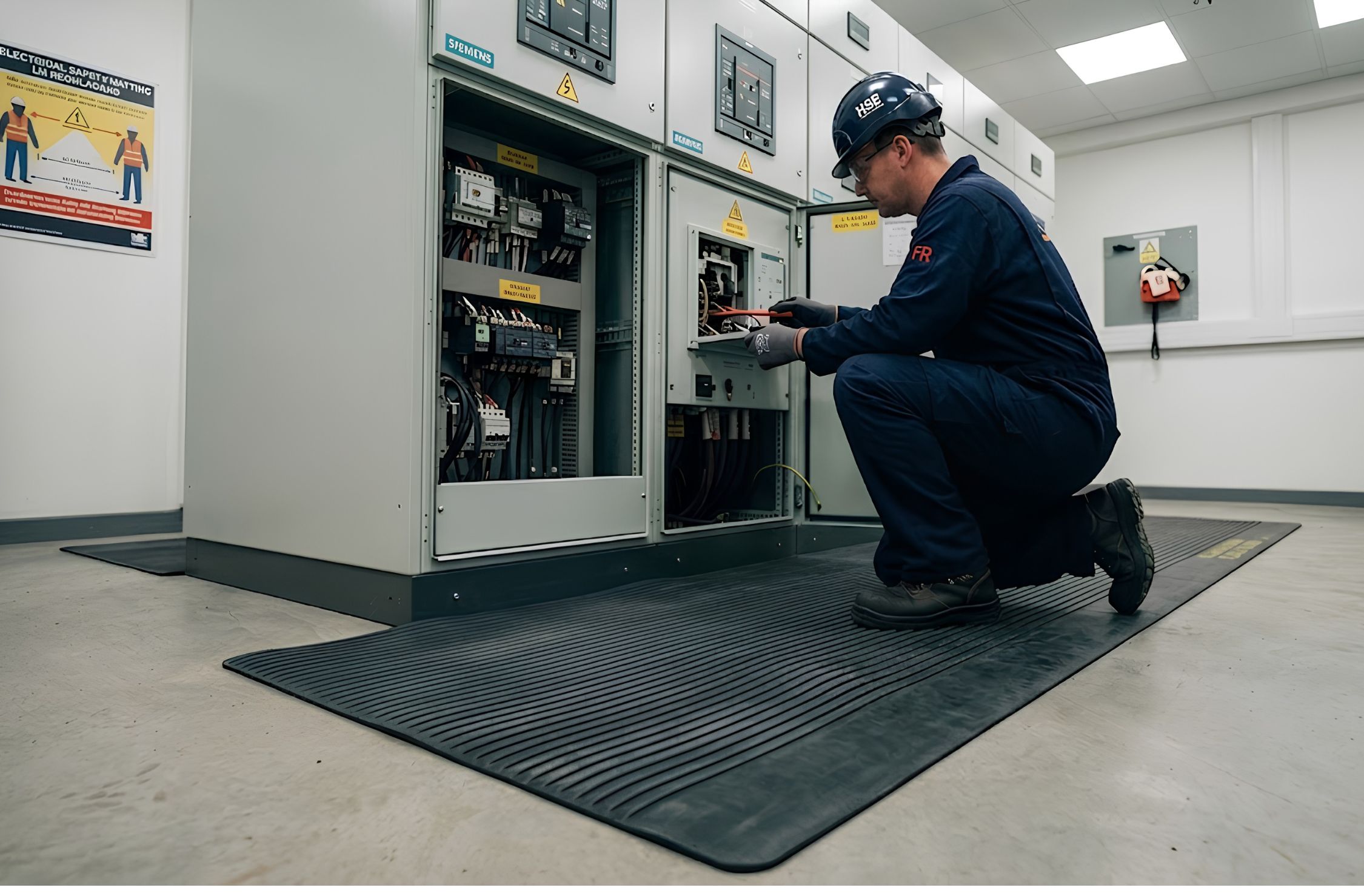
Rubber is one of those unassuming materials that quietly powers modern life, cushioning our rides, sealing machinery, insulating cables and protecting workers underfoot, but behind every piece of modern rubber matting and durable rubber sheeting lies a fascinating story of discovery, innovation and global transformation.

© ideation90 / Shutterstock
When was rubber invented?
Technically, rubber was never “invented” – it was discovered, harnessed and refined. If we consider the moment it became an industrial material, this honour belongs to Charles Goodyear. In 1839, the American chemist and manufacturing engineer changed the rubber industry forever.
While experimenting in his kitchen, he accidentally dropped a mixture of natural rubber and sulphur onto a hot stove. To his surprise, the rubber didn’t melt; it hardened, yet stayed flexible. This process, later patented in 1844, became known as vulcanisation – named after Vulcan, the Roman god of fire. The process allowed rubber to maintain elasticity while resisting heat and ageing. This single discovery transformed rubber from a curiosity into one of the world’s most valuable industrial materials.
Rubber history in ancient times
Long before the industrial world discovered this versatile material, the indigenous peoples of South and Central America were already well acquainted with it. They tapped the milky latex from trees known locally as cau-chu or “weeping wood” and used it to waterproof clothing, craft shoes, and make elastic balls for ceremonial games. When Christopher Columbus arrived in the Americas in 1493, he became the first European to encounter this remarkable material, but it would take centuries before the Western world understood what to do with it.
The term “rubber” was coined in 1770, when British chemist Joseph Priestley observed that this curious substance could literally “rub out” pencil marks. At that time, rubber was unstable, as it became sticky in heat and brittle when cold, making it unsuitable for large-scale industrial use.
The Industrial Revolution: a catalyst for change
The 19th century was a time of extraordinary innovation. The Industrial Revolution had set new demands for materials that could insulate wires, waterproof machinery and cushion moving parts. Factories, railways and ships all needed durable, flexible components; rubber fit the bill perfectly.
The first major industrial use came in 1823, when Scottish chemist Charles Macintosh created waterproof fabrics by sandwiching a layer of rubber between two pieces of cloth. These “Macs” were the first raincoats, sparking an early wave of commercial interest in rubber goods.
It was Goodyear’s vulcanisation process that truly unleashed rubber’s potential. By the 1840s and 1850s, demand soared across Europe and North America. The new material was essential for machinery belts, hoses and gaskets. Entrepreneurs rushed to secure sources of natural latex, leading to one of the most remarkable and tumultuous booms in rubber history.
Rubber from the Amazon
The rubber boom began in the Amazon Basin, where wild Hevea Brasiliensis trees flourished. The trade turned once-sleepy towns like Belém, Manaus and Iquitos into wealthy, bustling cities. Between 1827 and 1848, Brazil’s rubber exports increased sixty-fold. Lavish opera houses and grand European-style architecture appeared deep in the jungle, symbols of an economic miracle built on tree sap.
Rubber tapping became so profitable that many Brazilian farmers abandoned agriculture entirely to join the trade. At one point, Brazil had to import food because so much labour had shifted to rubber collection. However, the boom came at a cost. The industry depended heavily on the exploitation of indigenous workers and the fragile rainforest ecosystem.
Eventually, the monopoly of the Amazon was broken. In 1876, British explorer Henry Wickham took thousands of Hevea seeds out of Brazil and delivered them to Kew Gardens in London. From there, seedlings were shipped to Southeast Asia, where plantations in India, Sri Lanka and Indonesia would soon dominate the global supply of natural rubber.
From tree sap to usable material
Extracting usable rubber from latex required skill and precision. The tapped sap was first filtered and diluted with water, then treated with acid to coagulate the rubber particles. These were rolled into thin sheets and smoked. The final product, known as “smoked sheets”, was then pressed into bales for export.
In 1845, Scottish engineer Robert William Thomson patented the first pneumatic tyre, but his design wasn’t widely adopted. It was fellow Scot John Boyd Dunlop who reinvented and popularised the concept in 1888. The groundbreaking innovation transformed transportation.
The pneumatic tyre made bicycles lighter, faster and far more comfortable, igniting a global cycling craze. Soon after, as the automobile industry emerged, rubber’s importance skyrocketed once again. French industrialist and engineer Edouard Michelin’s success in developing detachable tyres for bicycles, and later automobiles, paved the way for brands like Goodyear, Dunlop and Michelin to become household names.
Tyres, hoses, fan belts and seals all required vast quantities of rubber. The 19th-century boom evolved into a 20th-century industrial necessity, tightly intertwined with the rise of modern engineering and manufacturing.
Global plantations and industrial power
By the late 1800s, the centre of rubber production had shifted from the Amazon to Southeast Asia. The British, Dutch and French established vast plantations, taking advantage of the region’s ideal climate. This move ensured a steady, scalable supply of natural rubber. For automotive engineers, this was a dream come true: consistent quality, predictable costs and materials that could meet the growing technical demands of transportation and manufacturing.
Today, companies such as Coruba continue this legacy by supplying high-quality rubber materials for modern industries. From precision-engineered rubber matting for electrical safety to advanced rubber sheeting designed for oil resistance and high-temperature environments, these products remain essential to the functioning of machinery, vehicles and infrastructure across the globe.
The birth of synthetic rubber
Natural rubber’s dominance didn’t last forever. By the early 20th century, industrial demand had outstripped supply. In addition, natural rubber’s vulnerability to oil and fuel posed a growing problem for increasingly complex machines.
The first breakthroughs in synthetic rubber came from Germany, but it was World War II that made it a strategic necessity. When Axis forces cut off Allied access to Southeast Asian plantations, scientists in the United States developed styrene-butadiene rubber (SBR) as an alternative. Synthetic rubber not only replaced natural rubber during the war, but also paved the way for specialised compounds that could withstand oil, heat and chemical exposure.
By the 1970s, synthetic varieties had overtaken natural rubber in production volume. Today, both remain indispensable, natural rubber for its resilience and elasticity, and synthetic rubber for its engineered performance.
A legacy that endures
Rubber’s story is one of constant reinvention. The boom of the 19th century laid the foundations for global industries that continue to evolve today. Automotive engineers still rely on rubber’s unique combination of flexibility, strength and resistance, whether in the form of durable tyres, vibration-damping mounts, or precision seals.
As a leading UK manufacturer of industrial rubber products, Coruba carries this heritage forward. With an extensive range of rubber matting, rubber sheeting, gaskets, seals and bespoke fabrications, our products serve critical roles in machinery, transport and infrastructure worldwide. From flame-retardant to oil-resistant compounds, our rubber products highlight how far technology has evolved since Goodyear’s accidental discovery.