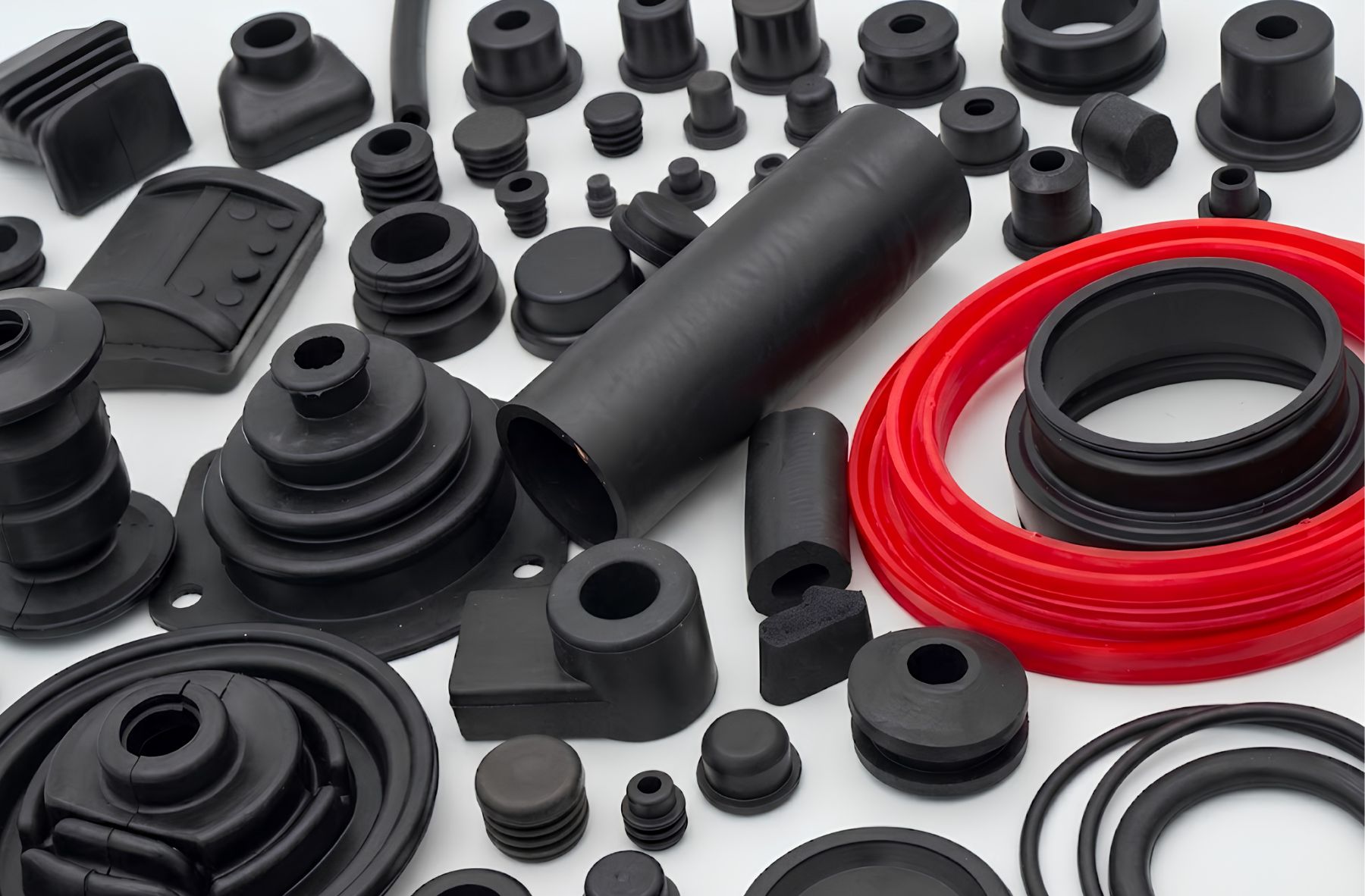
Safety standards in the rubber industry are crucial to ensure the products meet not only customers’ requirements, but also mandatory legal specifications. Key standards ensure safety, quality and consistency in areas such as manufacturing processes, materials testing and product performance, with the International Organisation for Standardisation playing a crucial role.

© nitpicker / Shutterstock
There are several common rubber industry certifications and safety standards covering every aspect of production including quality management, environmental impact, occupational health and safety management, protection from chemicals, and more.
ISO 9001
As one of the ISO’s better known standards, the ISO 9001:2008 certification addresses quality management. Derived from a combination of ISO 9000 and ISO 9004, it provides guidance for businesses and organisations to ensure their products and services consistently meet customer requirements.
It is based on eight management principles: process approach, involvement of people, customer focus, leadership, system approach, continual improvement, factual approach to decision making, and mutual benefit supplier relationship.
ISO 14001
The ISO 14001:2004 certification relates to various aspects of environmental management and sustainability, providing predefined tools to help companies and organisations identify and control their environmental impact, while enabling them to continually improve performance.
Applicable to any organisation that needs to establish, implement, maintain and improve its environmental management system, the standard assures conformity with the relevant policies. It also demonstrates conformity to other parties, offering reassurances to customers and external organisations and partners.
REACH
REACH certification relates to chemical safety in the workplace. The Registration, Evaluation, Authorisation and Restriction of Chemicals law entered the statute books on 1st June 2007, with the aim of protecting people’s health and the environment from the risks posed by chemicals. It requires manufacturers and importers of chemical substances to register and provide information about the chemicals’ properties and hazards to the European Chemicals Agency. This enables the early identification of the properties of hazardous chemical substances produced in the EU.
Following Brexit, under the European Union (Withdrawal) Act 2018, the REACH regulation was introduced into UK statute on 1st January 2021. Now known as UK REACH, the European law was replicated to make it viable in a domestic context, with the key principles being retained.
FDA
The FDA regulations cover food and medical safety in rubber products. An agency of the US Department of Health and Human Services, the Food and Drug Administration is responsible for protecting public health through the regulation and supervision of various products. It enforces the legislation through the Public Health Service Act and associated laws. Coruba’s Food Grade rubber sheeting is approved by the US-FDA through SGS Laboratory Testing Services.
Importance of safety standards
When purchasing rubber products, customers want to know they offer the necessary quality, performance and safety standards to meet their needs. Certification is crucial to enable informed purchasing decisions when buying everything from rubber matting and rubber sheeting to food grade rubber products and more. For example, compliance with ISO 9001 certification ensures that manufacturers maintain consistent product quality, while ISO 14001 focuses on reducing environmental impact through sustainable practices.
Coruba holds many certifications including BS6920-1:2000; ISO 9001:2008; ISO14001:2015; ISO 14001:2004; RoHS Certificate (Restriction of Hazardous Substances); US-FDA Certification; CE-certification relating to European health, safety and environmental protection; REACH compliance; and WRAS Testing compliance under the Water Regulations Advisory Scheme.
Commitment to quality and safety
The many certifications reflect our company’s commitment to producing high-quality, environmentally responsible rubber products. Consumers can identify certified products by looking for certification logos or checking product specifications.
For further information on any of our quality standards, please contact our team for details.