Winter weather brings a fresh set of challenges for horse owners, who must keep their animals warm and safe from rain, winds and freezing temperatures.
Staying outdoors for long periods isn’t an option, but a hard concrete stable floor can be cold and uncomfortable, so providing extra bedding is a common solution to keep horses warm, particularly overnight.
© Barisa / Shutterstock
Rubber matting for stables provides a comfortable, practical and cost-effective solution, keeping stables insulated, clean and dry.
Why use rubber stable matting?
Almost 90% of horse owners have used rubber matting, according to a poll of 300 people published by Your Horse, with 46% saying preventing wetness is their main concern. Other reasons why they choose rubber matting for horse stables include saving money on bedding and ease of mucking out.
Research shows using rubber stable mats means you’ll need only around 20% of your usual bedding materials, such as straw and wood shavings, so the mats will pay for themselves over time. Rubber provides a layer of insulation on the floor and extra comfort for your horses, protecting their joints, especially on winter nights. Easy to keep clean, you will save time on mucking out and reduce the amount of waste at the yard.
Wet bedding can also lead to respiratory issues, thrush and hoof problems through contact with damp and mould spores: rubber mats can help reduce unhealthy bedding materials.
Keep busy walkways safe
It’s not just stable matting that offers winter benefits, as rubber field and walkway mats can help to keep the areas around field gates and busy walkways in better shape, reducing the risk of accidents.
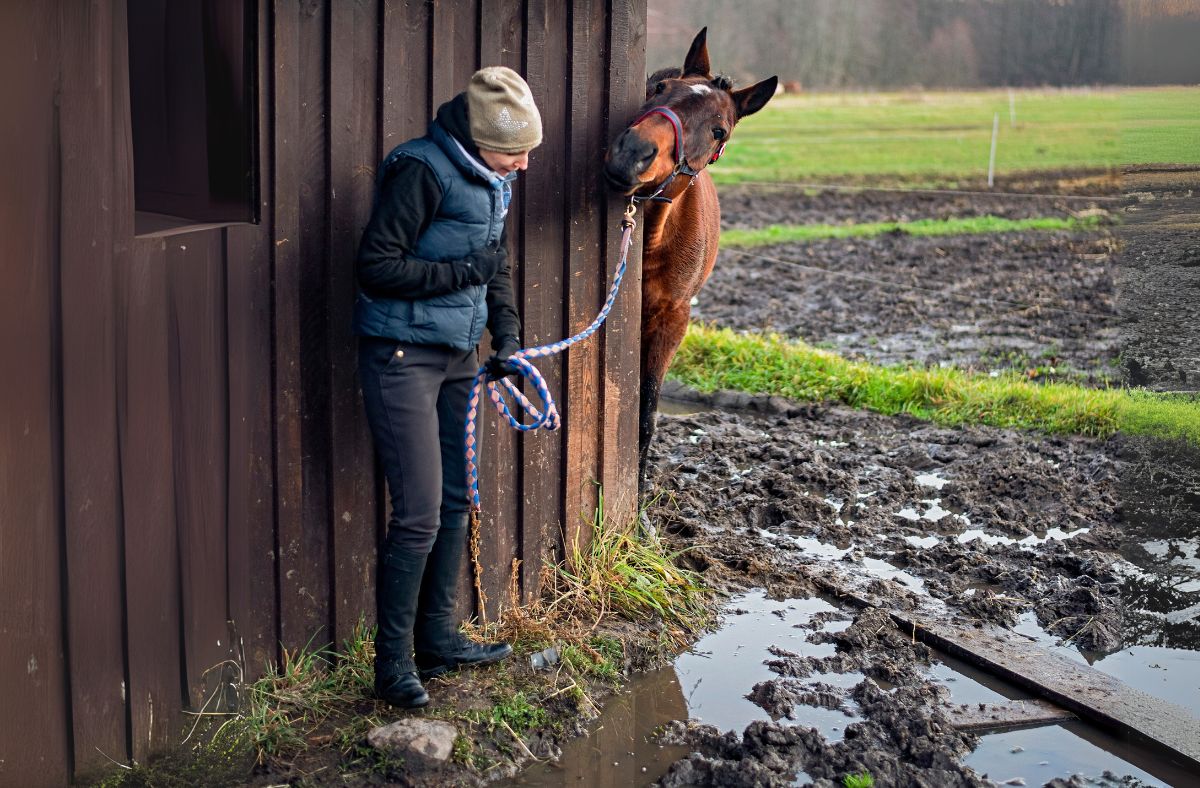
Mud can build up quickly in areas with high traffic, especially if the drainage is poor and rainwater collects there. If vehicles, including tractors, are going through the gates regularly, they pick up mud on their tyres and deposit it in the field, with the holes around the gate getting muddier and deeper all the time in wet weather, making it difficult for both people and horses to move around safely, while also causing damage to the ground and increasing maintenance costs.
Rubber walkway mats can help prevent injuries. As well as falling, horses may injure themselves by scrambling to keep their balance in mud, causing strains and sprains, or hitting themselves on fences, gates and trees. The matting improves traction, helping to keep both horses and handlers safe.
What is ‘mud fever’ in horses?
When horses walk through soggy winter fields, mud can get packed into their hooves, putting pressure on their feet. This can lead to lameness. In addition, bacteria can enter the hoof, leading to more serious health conditions.
Rainy days are a typical feature of winter, which means horses are likely to spend more time in muddy, wet paddocks, increasing the risks of a condition called ‘mud fever’. This non-contagious skin irritation caused by bacteria leads to severe discomfort in the lower legs. Sometimes called ‘mud rash’, it usually forms on the area of the leg between the hoof and fetlock.
Characterised by the formation of scabs and broken skin, if left untreated, it emits a discharge and leads to matted hair, bald patches and raw skin underneath. The horse can also suffer pain, heat and swelling in their lower limbs and lameness in serious cases. Mud fever can be hard to treat, not least because the horse will be in pain and won’t permit their legs and feet to be touched.
Keeping walkways and areas around gates free from mud by installing rubber mats can help prevent bacteria from accumulating and entering the hooves. Check the horses’ legs and feet daily in wet weather to look for any symptoms and treat them immediately if you suspect mud fever.
Cleaning rubber horse matting
While rubber mats are low-maintenance, it’s important to keep them clean and inspect them for damage regularly to maximise their lifespan. Sweep rubber horse mats to remove debris and hose them down to keep them free from mud. Clean deeply using a mop with warm water and a mild detergent, before rinsing thoroughly to avoid soap residue. In the case of stable mats, take the mats outside, clean them thoroughly and spray their top side with an animal-friendly disinfectant, letting them dry thoroughly before returning them to the stables.
Horse care in winter is important; protecting them from adverse weather and the associated illnesses, you shouldn’t leave anything to chance.