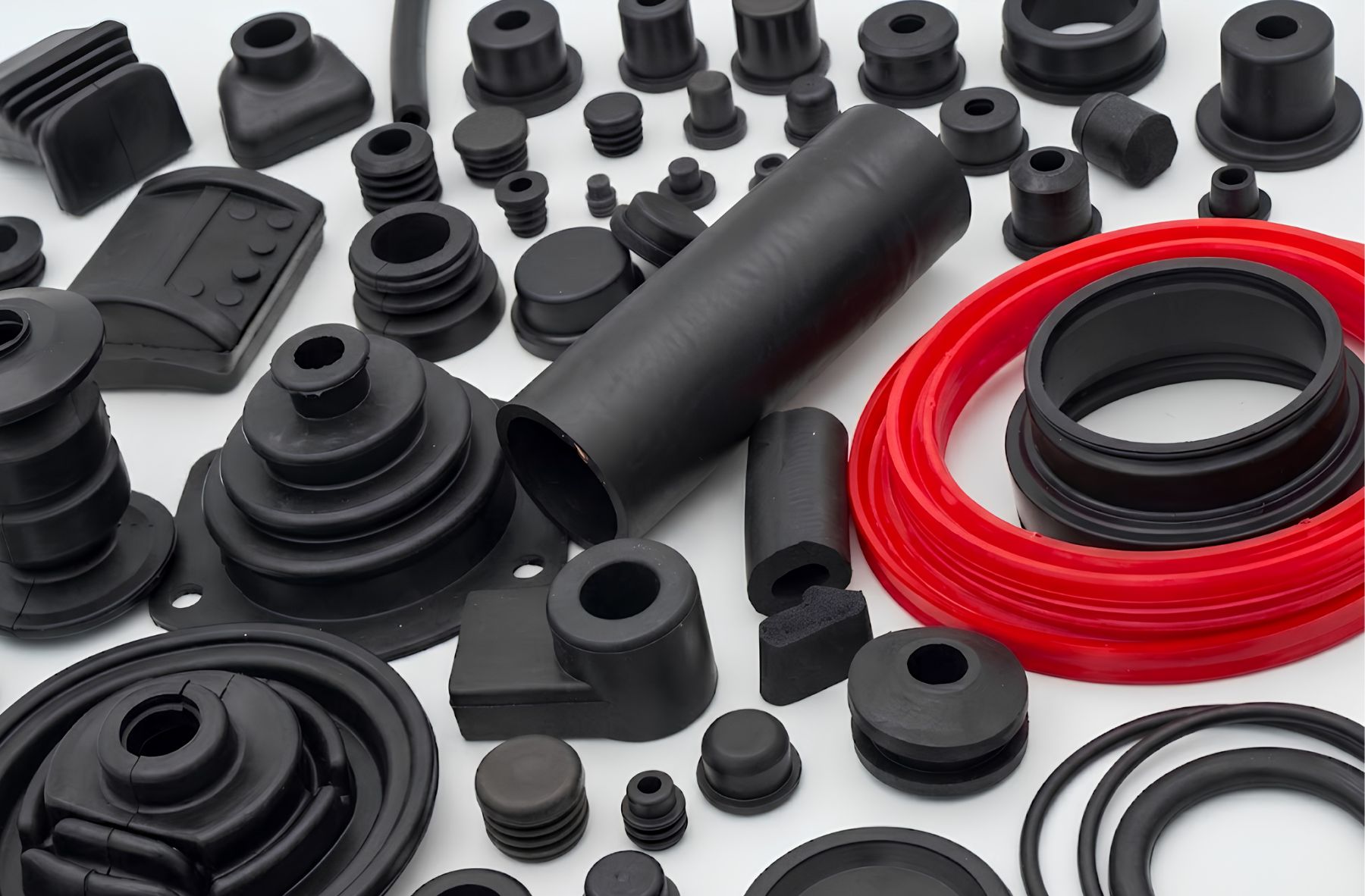
Bespoke rubber mouldings are crucial to fulfil the requirements of many different applications, spanning a wide range of commercial and industrial uses across various sectors.
A selection of materials is used to manufacture our custom rubber mouldings including EPDM, neoprene, natural rubber, nitrile and many more. The process transforms raw rubber compounds into the final product in the required shape.
Rubber is a durable elastomer, so its naturally elastic properties permit any moulded item to return to its original shape easily after applying pressure.
Different processes
Injection and compression presses are used to create unique rubber mouldings, with each process having its own advantages.
Rubber injection moulding involves a rubber compound being injected under high pressure into a closed mould. A wide range of materials are used including EPDM, neoprene and silicone. The process enables manufacturers to make a variety of moulded rubber items. Its advantages include a fast cycle time, minimal material waste, quick production and high tolerance levels.
Compression moulding is an older and simpler process that moulds rubber using a combination of pressure and heat. The rubber is shaped using a heated tool and pressure is applied using a clamping press. The vulcanisation or curing process takes place prior to removing and cooling the finished part.
The advantages of compression moulding include a low level of waste, cost-effectiveness, simpler tools and an ability to produce highly durable, stiff materials and parts with a larger cross-section area.
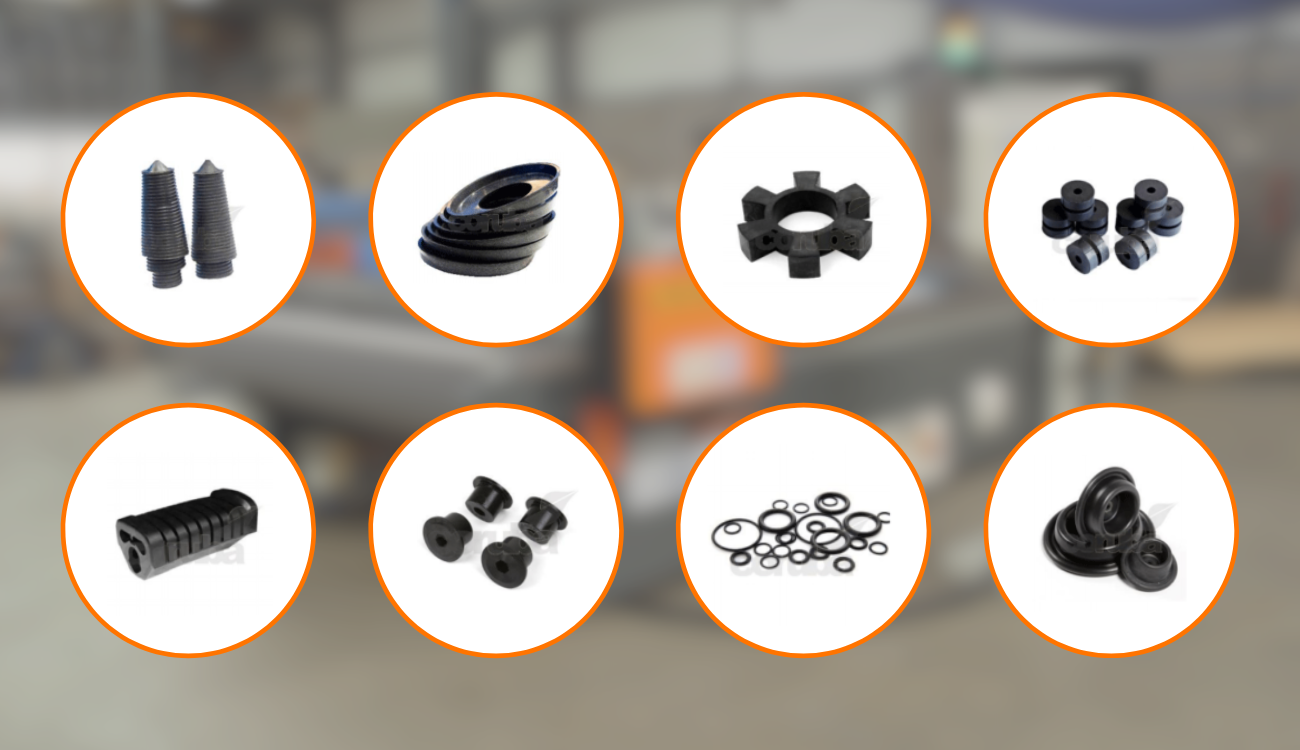
The different types of rubber mouldings are as follows:
Rubber O Rings
First created in the early 20th century, O ring seals are still widely used. Known for their simplicity, they are almost identical to the ones produced around 120 years ago.
The name refers to their classic “doughnut” shape. They are used to provide a leak-proof seal between two other parts to prevent liquids or gases from escaping.
They are used in a high-pressure environment, where a regular rubber or cork gasket would be more likely to be ineffective.
Rubber Cones
Rather than having to bore holes in rubber bungs, cones are commonly used in funnels to make filtration processes smoother. They are also used in laboratory testing.
Rubber suspension cones are an integral part of car manufacturing. They were famously used by Dr Alex Moulton as a part for the iconic MK1 Mini in 1959, to create the smooth driving experience the car owners expected.
The high-quality rubber compound used to manufacture cones means they can also be used in fenders for marine berthing applications.
Rubber Caps
Commonly used to enhance furniture and for various small projects, rubber caps are often used on furniture legs, chairs, stools, closet racks, exercise equipment, garden furniture and more.
They can give a new finish and aesthetic appeal to items and will stop sharp ends from sticking out and causing damage. They will also protect hard floors from scratches and prevent carpets from getting snagged when moving items around the home or workplace.
Rubber Spider Couplings
A transmission coupling commonly used in motion control applications, such as in a motor, these mouldings connect two shafts, minimising vibrations and compensating for angular, axial and parallel misalignment.
They comprise three parts: an elastomer insert, known as a “spider”, is sandwiched between two metal hubs. The three parts are pressed together, with the metal “jaw” of each hub meshing with the spider’s lobes. Torque transmits through the elastomer spider when compressed.
Rubber Footrests
Used in various applications, including in the manufacture of motorbikes, rubber footrests provide a safer and more comfortable ride for motorcyclists and pillion passengers, offering extra grip and reducing vibration.
Tough and durable, they can be designed and retro fitted to offer the rider a lower foot position in comparison with the standard original part.
Rubber Bushings
Rubber bushings are used in the manufacture of cars and other motor vehicles. They are fitted to control and reduce vibrations.
Commonly made of natural rubber or polyurethane, they provide a cushion to control the amount of movement in the vehicle’s suspension.
Rubber Handles
With many advantages, rubber handles are cheaper to manufacture compared with some other materials and provide a better grip.
You can have rubber handles custom made to provide a perfect fit and they are also extremely durable. Tougher rubbers are almost indestructible and can withstand heavy wear.
Rubber Diaphragms
A flexible rubber membrane that can be reinforced with fabric, these are placed strategically to create a seal that will stop the unwanted transfer of substances between two different places.
A diaphragm is versatile, in that it can separate a liquid and a gas that must not mix, two gases, or two liquids.
Rubber Washers
A flat rubber circle with a hole in the centre: the hole permits fluids to flow through or accommodate fasteners.
The round rubber washer is an extremely versatile component. It can protect surfaces, stop leaks and decrease the impact of vibrations. A durable and flexible part, it provides a tighter seal than a metal washer.
Commonly used for heating, plumbing, air conditioning and ventilation systems; it is also used for marine applications, such as boats and in pools, as well as for products where it will come into contact with water.
A rubber washer insulates against electric charges in thermal and electronic applications. It can absorb shock and makes a great spacer in machinery to prevent damage to regularly moving parts. The rubber’s non-abrasive properties make it an ideal choice for extending the lifespan of many pieces of equipment.
The versatility of bespoke rubber mouldings means they are a staple of many applications in industry. We work with our clients, from the material’s selection through to the final manufacturing processes and supply, to ensure the end product meets the required high standards.