While most people look forward to some sunny days, the prospect of droughts and other extreme weather conditions are becoming more common in the UK. Sadly, due to climate change, scientists predict droughts are likely to be the norm in future.
As global temperatures rise, with a high greenhouse gas emission scenario, experts believe there’s a risk of much of southern Europe and Great Britain becoming drier. As the temperature continues to rise, it’s likely the dry regions will start to extend further north across Europe.
© whitcomberd / Adobe Stock
Current drought
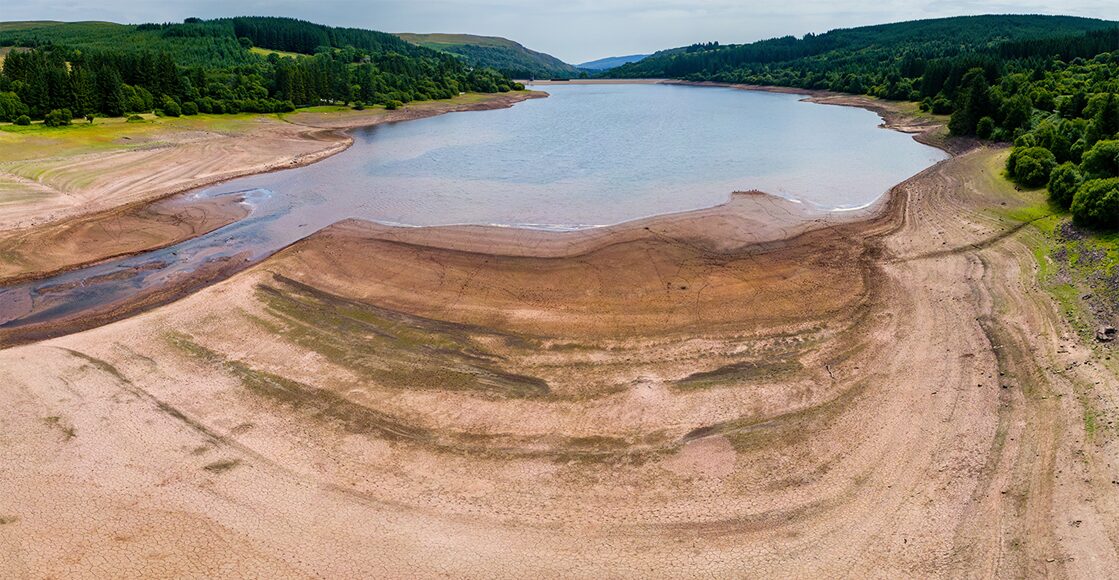
The current drought is an example of what we might expect in Britain in the future. The first seven months of 2022 were the driest on record since 1976. As a result, an official drought was declared earlier this month in many regions, as low water levels and exceptionally dry conditions continued.
Eight parts of England, including Kent, Devon, Cornwall, Lincolnshire and East Anglia, are affected. During an official drought, water companies are permitted to impose strict controls on the use of water. This can include hosepipe bans and taking more water from rivers to ensure domestic drinking water supplies aren’t impacted.
People who break the law by failing to observe the restrictions can face hefty fines of up to £1,000 if they use a hosepipe to water the garden, fill a paddling pool or wash the car. The Environment Agency and water companies are monitoring the situation and other regions might be put on drought status in the coming weeks.
Yorkshire Water has joined the growing list of water companies implementing hosepipe bans, announcing a ban would begin on 26th August.
Currently, the Environment Agency has said essential water supplies are safe. However, despite the recent heatwave starting to break, the drought is likely to continue for a “long time”, according to the Environment Agency. There may even be possible restrictions on crop-growing in some regions, which will seriously impact the agriculture sector.
The long spell of dry weather, combined with July’s record-breaking temperatures and August’s heatwave, have depleted reservoirs, rivers and aquifers – the bodies of rock and sediment that hold groundwater.
A new UK record-high temperature of 40.3°C in Coningsby, Lincolnshire, in July, was confirmed by the Met Office. Currently, large regions of England are bone-dry, with yellow grass and parched earth becoming an all too familiar sight. The probability of long, hot summers in the UK is five times more likely now, compared with the 1970s.
How do rainfall changes affect droughts?
The link between rainfall and droughts is a rather complex one. Considering the current situation, you might be surprised to hear that scientists predict there will be greater rainfall in the future, due to climate change.
Extreme weather conditions such as heatwaves, wildfires, storms, flooding and extremely cold snaps will become more common. Scientists say new patterns of the frequency and severity of extreme weather events are emerging all the time.
As the climate warms in general, the risk of floods will go up. This is because it will rain less often, but more heavily. Scientifically speaking, the hotter air holds more moisture, leading to more intense rainfall.
According to the United Nations Intergovernmental Panel on Climate Change, rainfall in the UK will have increased by around 10% by 2100, compared with the rainfall between 1986 and 2005. However, it will be more likely to cause severe flooding, rather than simply replenishing depleted water supplies.
The long-term average weather conditions are starting to change significantly, with extremes of heat, drought, storms and floods hitting the headlines all the more. Many scientists say it is being impacted by the climate emergency, mainly caused by emissions of greenhouse gases, such as CO2 from fossil fuels.
How do droughts impact the UK?
Rivers and reservoirs are currently running at 20% lower than expected at this time of year in some parts of the UK. The drought has led to a higher risk of fires, with the national Fire Severity Index assessing that there’s a “very high risk” of fires at present for most of England and Wales.
In Cresswell, a major incident was declared, leading to police evacuating around 50 homes, when a field fire raged out of control.
In Bristol, homeless people living on the streets were struggling with the extreme heat, reporting it was making people sick, even in the shade. Volunteers at the charity, Bristol Street Outreach Team, operated by St Mungo’s, were working extra shifts to hand out free water and sun protection for people at risk.
The agriculture industry is hit hard in the event of a drought. It can slow the growth of crops, leading to a decline in the quality and size of produce. As farmers experience lower yields, consumers may see further price rises due to a drop in supplies.
In severe cases, crops might die altogether, leading to a financial crisis in the agriculture sector and severe shortages on supermarket shelves.
How does the water industry cope during a drought?
When a drought is declared, water companies in the affected areas can start putting their emergency drought plans into action. They don’t need further permission from the government to do so.
The government doesn’t announce a drought situation lightly. Ministers make the decision after a meeting has taken place of the National Drought Group, when water companies, conservation groups and farming leaders have their say. Looking at predictions for future weather in the UK, sadly, droughts are something we’re going to be hearing a lot more about in the years to come.