Electrical safety at big events, such as live music concerts, is of the utmost importance to keep artists, employees and audience members safe. In the UK, the Health and Safety Executive provides an advisory role and makes sure event organisers adhere to the law.
Upcoming major events include the Eurovision Song Contest grand final in Turin, Italy, on Saturday 14th May; and Glastonbury Festival at Worthy Farm, Shepton Mallet, from 22nd to 26th June. Around 18,000 people are expected to pack into the Palasport Olimpico to watch the Eurovision final, while 200,000 festival goers are expected at Glastonbury.

© Review News / Shutterstock.com
With numbers this high, event organisers will be doing their utmost to provide the highest levels of event safety. When erecting temporary installations outdoors, such as stages, electrical equipment should be shielded from rain and other adverse weather conditions.
It is also recommended that access by unauthorised people to electrical systems is limited. This includes untrained personnel and members of the public. A risk assessment tailored to the layout of the venue must be completed. This includes performance, traders’ and public areas and all access routes.
Power requirements
The event organiser must obtain details of the mains power supply and know where the access points are. This includes the location of any buried cables or overhead power lines. The HSE defines the electrical environment under standard BS 7909.
A timetable of power requirements must be completed including the use of generators, the routing of temporary overhead or underground cables, earthing and the main isolators controlling the electrical supply to the stage lighting, lifting equipment, special effects, sound and emergency lighting.
Additional power supplies will be needed for other equipment such as hoists, portable tools and electrical equipment from other countries with different power requirements. There are also electrical needs for first-aid points, catering equipment, CCTV cameras, heating or air conditioning and the incident control room.
The generator enclosures must be accessible for authorised personnel to carry out normal operations and for emergency situations, but they must be segregated from the venue’s public areas.
Stage management
The positioning of cables onstage is a paramount consideration when artists are performing a live set. Exposed wires running across the performance area will not only look unsightly, but they will also likely affect the fluidity of the production.
I’ve been to live DJ performances at venues where there has been no consideration extended to the stage layout. Members of the Crew have wandered backwards and forwards, and I have actually witnessed a tripping incident, over exposed cables, that affected the overall performance.
Safety standards
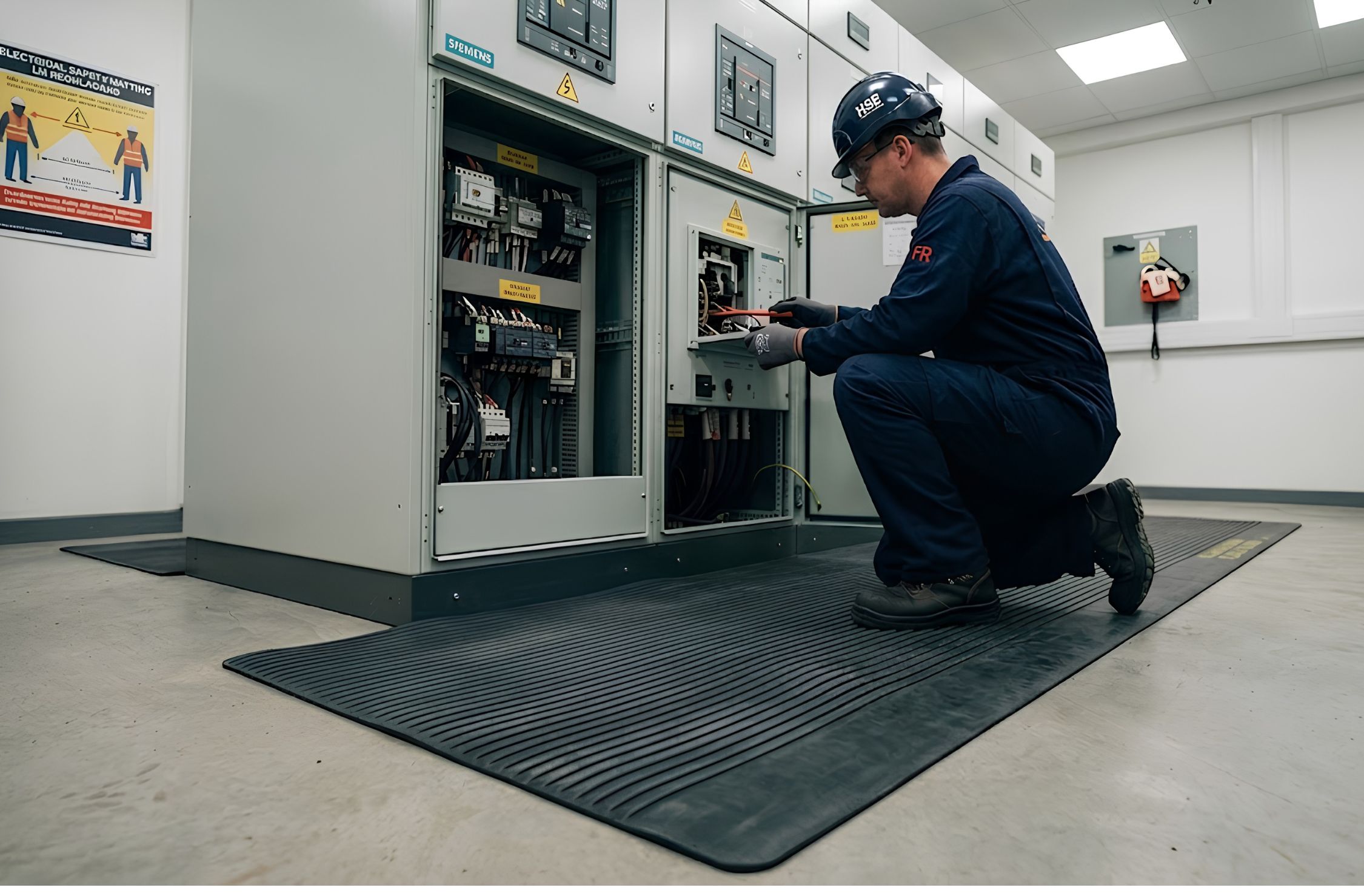
All cables should be rated to meet the required electrical safety standards. The professionals choose rubber to cover electrical wires safely at big events – rubber electrical matting offers excellent insulating properties.
In addition, cable matting protects cables from physical damage, thermal shock and moisture. It also prevents tripping accidents, especially where there is high footfall and in performance areas.
The most recurring injuries at music festivals are caused by slip, trip and fall accidents, according to research by First Personal Injury. Ankle injuries, such as breaks and fractures, are more commonly sustained. The majority of compensation claims are due to people who have suffered injuries due to slips and trips.
As an event organiser, however big or small, you should never let commercial gain make you compromise on health and safety. Remain alert throughout the performance and ensure your team watches out for all the hazards you’ve identified and assessed, plus anything else that may crop up throughout the event.
Everything needs to be monitored, from the electrical equipment and power connections to the stage, spectator stands and all entry and exit routes. Further guidance on electrical safety at events is provided by the HSE website.
Remember, safety first!