
*Terms and conditions apply
If you would like to discuss this product, or you require a sample, please call 01702 560194. Alternatively, you can use our contact form.
Please note: All cut material is non-returnable unless faulty as these are non-sellable and have been cut to specific requirements.
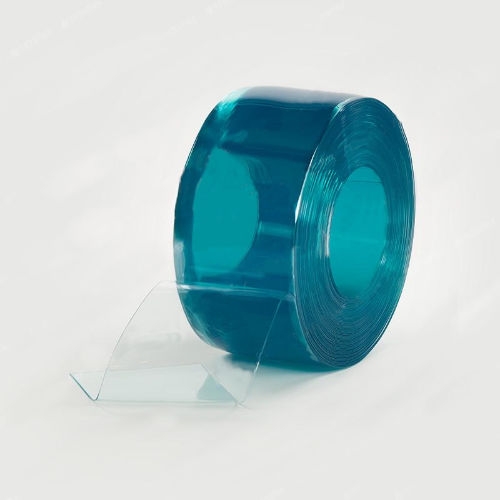
Super Polar Low Temperature Flexible Clear PVC Strips
- Flexible and crack-resistant down to -60°C
- Provides high levels of thermal insulation
- Highly transparent
- UV resistant
From £40.52 Incl. VATFrom £33.77 Excl. VAT
You save (%)
Our Super Polar PVC Sheets are useful for environments with extremely low temperatures, remaining flexible and resistant to breaking or cracking in temperatures as low as -60°C.
Well suited for use in blast freezers and cold containers, they provide high levels of thermal insulation. Ideal for use as a partition in cold environments, they can reduce energy loss and therefore help you to save money.
The clear PVC sheets are highly transparent, making them a good choice for areas in which see-through partitions are required.
<tdSh A
|
Property |
Standard |
Units |
Standard |
Description |
|
Light Transmittance |
ASTM D 1003 |
% |
85 |
Visible light rate transmitted through the material. |
|
Shore A Hardness |
EN ISO 868 |
62 |
Index based on a flat indenter’s penetration depth. Scale from 0 (Soft) to 100 (Hard) |
|
|
Tearing Resistance |
DIN 53515 |
N/mm |
25 |
Minimum tensile stress required to tear a pre-slit sample. |
|
Tensile Strength At Break |
ASTM D 638 EN ISO 527 |
N/mm2 |
10 |
Maximum tensile stress that a material can be subjected to before break. |
|
Elongation At Break |
% |
420 |
Elongation of the specimen at the break point under tensile stress. |
|
|
Residual Elong. (After Break) |
% |
80 |
Permanent elongation of the specimen measured after rupture in a tensile test |
|
|
Thermal Conductivity |
ASTM C 177 |
W/m.k |
0.16 |
Ability to conduct heat. The lower it is, the more insulation. |
|
Cold Bend Brittle Temp. |
ISO 8570 |
ºC |
-65 |
Temperature at which the specimen breaks under torsion stress. Brittle point (Clash-Berg) |
|
Min. Usage Temp |
EN 1876 |
ºC |
-60 |
Temperature range where material keeps its mechanical properties (flexibility). |
|
Max. Usage Temp |
ºC |
+15 |
||
|
Vicat Softening Temp. |
EN ISO 306 |
ºC |
46 |
Temperature at which the specimen is penetrated to a depth of 1mm by a 1kg flat indenter of 1sq. mm. |
|
Specific Heat Capacity |
ISO 11357 |
kJ/kg.K |
1.6 |
Heat energy required to increase the temperature of one kilogram of the material by one degree Celsius. |
|
Sound Reduction |
DIN 52210 |
dB |
>35 |
Average sound level (freq. 0.1 to 3.2kHz) decreased by a 1.76sq.m. and 5mm thick PVC curtain. |
|
Reaction To Fire |
EN 13501-1:2007 |
Class |
– |
Standard classifications of material self-extinguishing and resistance to combustion. |
|
UV/IR Filter |
EN 1598 & ISO 25980 |
– |
– |
Ability to filter welding rays allowing the use of this material as a welding protection screen. |
|
UV Resistance |
ISO 4892 |
– |
Yes |
Ability to resist to UV (Sun, welding arc). |
|
Surface Resistivity |
ASTM D257 |
1010 Ω/sq |
3 |
Material surface electric resistivity measured with a 100V direct voltage. |
|
Water Absorption |
EN ISO 62 |
% |
-0.2 |
Material mass variation after exposure to humid conditions. (<0 if released / >0 if absorbed) |
|
Anti-Insect |
– |
– |
No |
Special ability to keep insects away. (Food processing plants, tropical regions) |
|
Density |
ASTM D 792 |
g/cm3 |
1.18 |
Mass per unit volume. |
<tdSh A
|
Property |
Standard |
Units |
Standard |
Description |
|
Light Transmittance |
ASTM D 1003 |
% |
85 |
Visible light rate transmitted through the material. |
|
Shore A Hardness |
EN ISO 868 |
62 |
Index based on a flat indenter’s penetration depth. Scale from 0 (Soft) to 100 (Hard) |
|
|
Tearing Resistance |
DIN 53515 |
N/mm |
25 |
Minimum tensile stress required to tear a pre-slit sample. |
|
Tensile Strength At Break |
ASTM D 638 EN ISO 527 |
N/mm2 |
10 |
Maximum tensile stress that a material can be subjected to before break. |
|
Elongation At Break |
% |
420 |
Elongation of the specimen at the break point under tensile stress. |
|
|
Residual Elong. (After Break) |
% |
80 |
Permanent elongation of the specimen measured after rupture in a tensile test |
|
|
Thermal Conductivity |
ASTM C 177 |
W/m.k |
0.16 |
Ability to conduct heat. The lower it is, the more insulation. |
|
Cold Bend Brittle Temp. |
ISO 8570 |
ºC |
-65 |
Temperature at which the specimen breaks under torsion stress. Brittle point (Clash-Berg) |
|
Min. Usage Temp |
EN 1876 |
ºC |
-60 |
Temperature range where material keeps its mechanical properties (flexibility). |
|
Max. Usage Temp |
ºC |
+15 |
||
|
Vicat Softening Temp. |
EN ISO 306 |
ºC |
46 |
Temperature at which the specimen is penetrated to a depth of 1mm by a 1kg flat indenter of 1sq. mm. |
|
Specific Heat Capacity |
ISO 11357 |
kJ/kg.K |
1.6 |
Heat energy required to increase the temperature of one kilogram of the material by one degree Celsius. |
|
Sound Reduction |
DIN 52210 |
dB |
>35 |
Average sound level (freq. 0.1 to 3.2kHz) decreased by a 1.76sq.m. and 5mm thick PVC curtain. |
|
Reaction To Fire |
EN 13501-1:2007 |
Class |
– |
Standard classifications of material self-extinguishing and resistance to combustion. |
|
UV/IR Filter |
EN 1598 & ISO 25980 |
– |
– |
Ability to filter welding rays allowing the use of this material as a welding protection screen. |
|
UV Resistance |
ISO 4892 |
– |
Yes |
Ability to resist to UV (Sun, welding arc). |
|
Surface Resistivity |
ASTM D257 |
1010 Ω/sq |
3 |
Material surface electric resistivity measured with a 100V direct voltage. |
|
Water Absorption |
EN ISO 62 |
% |
-0.2 |
Material mass variation after exposure to humid conditions. (<0 if released / >0 if absorbed) |
|
Anti-Insect |
– |
– |
No |
Special ability to keep insects away. (Food processing plants, tropical regions) |
|
Density |
ASTM D 792 |
g/cm3 |
1.18 |
Mass per unit volume. |