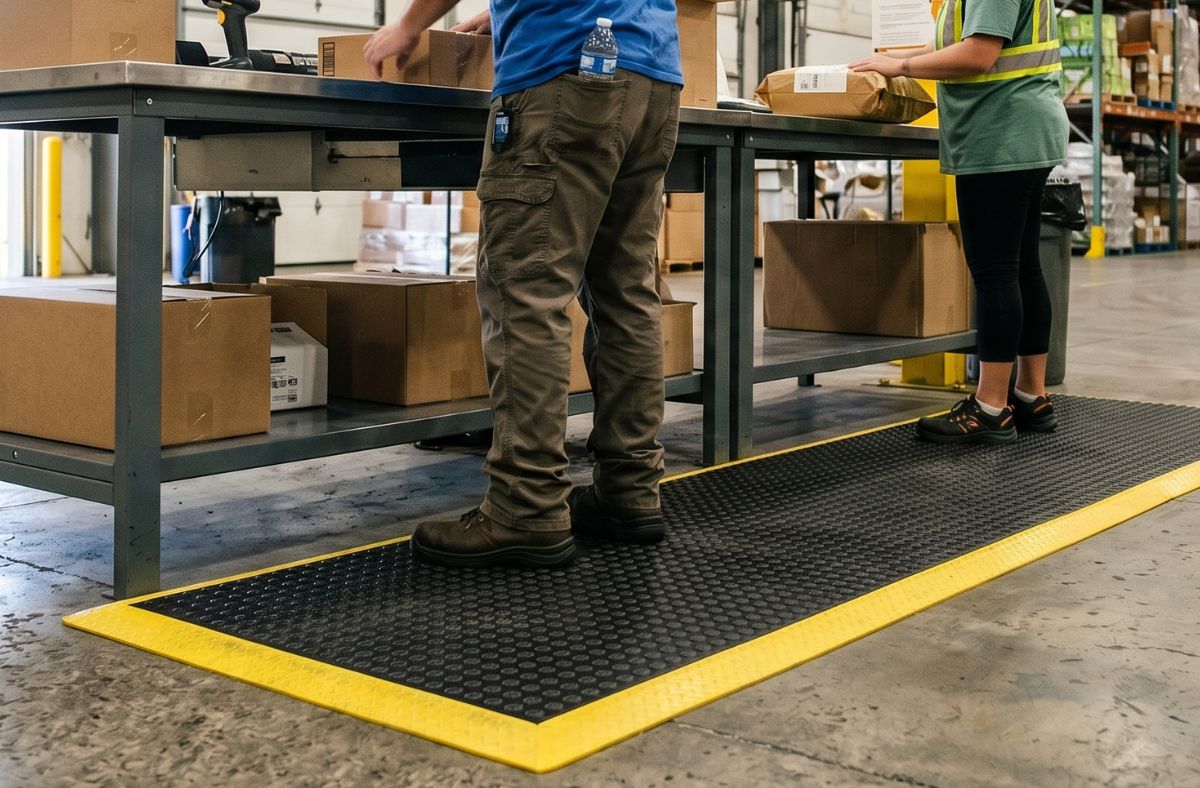
Commonly used in factory and industrial settings, the hospitality industry and in hospitals to benefit staff; anti-fatigue matting is important in the workplace to ensure the safety, comfort and productivity of employees who stand for long periods to carry out their duties.
Our body isn’t meant to stand in one position without mobility. An environment where employees are standing still can not only cause discomfort, but it can also lead to long-term health issues. In particular, standing on a hard surface, such as concrete, can be a problem.
© Jelena Zelen / Shutterstock
Health issues can include back pain, varicose veins, fallen arches, pain and stiffness in the shoulders and arms and plantar fasciitis – painful inflammation of fibrous tissue on the bottom of the foot. These can cause health-related absences from work and can reduce employee productivity.
If a company doesn’t assist those who are struggling, it can even lead to compensation claims in the event of health problems.
What are anti fatigue mats?
Anti fatigue matting is a simple and effective means of preventing health issues for a relatively low cost.
Designed to reduce the strain on employees’ legs and the rest of their body with a flexible and comfortable surface; by providing workers who are required to stand with anti-fatigue rubber matting at their workstations, this can help alleviate the problems.
What does an anti-fatigue mat do?
The flexible surface enables a small amount of leg movement in the muscles to maintain balance. Non-disruptive and subtle, the movements, even though small, encourage blood flow through the legs.
The rubber used in anti-fatigue mats is soft and comfortable for the feet, while it provides extra support. Trials of different solutions have proved that this is much more beneficial than alternative solutions, such as wearing in-shoe padding.
The non-slip nature of rubber anti fatigue mats provides an extremely stable surface to stand on. This puts far less strain on the legs, even after extended periods of immobility.
Anti-fatigue mat benefits
Tired legs are more prone to slips and near-slips, contributing to the health problems.
When employees are more comfortable, they also tend to be more productive, so investing in work mats for standing is worthwhile expenditure.
By reducing foot pressure; limiting discomfort and injury to the knees, back, feet and neck; alleviating general aches and pains; aiding blood circulation; and reducing slipping hazards; combined, these factors will increase productivity.
Industrial anti-fatigue mats are also durable and capable of resisting everyday damage, making them a cost-effective choice. They can be used for months, or even years, with little wear and tear. Tests show they can create a long-term solution that offers a good ROI for a relatively low investment.
Which sectors require employees to stand?
There are many sectors where workers are required to stand for long periods. The most common include manufacturing, warehousing and logistics, factories, engineering, shops, commercial kitchens, pharmacies and research facilities.
Kitchen anti fatigue mats, used in restaurant and bar kitchens, play a dual role, as they can also reduce the risks of slipping in an environment where spillage and slippery floors are more likely.
Kitchens are among the busiest areas in commercial establishments such as restaurants, bars and cafes. This means it’s particularly important to use high quality rubber anti fatigue mats in these environments of high traffic.
They can also help employers to adhere to health and safety legislation, monitored by the Health and Safety Executive, to make sure employee needs are catered for.